

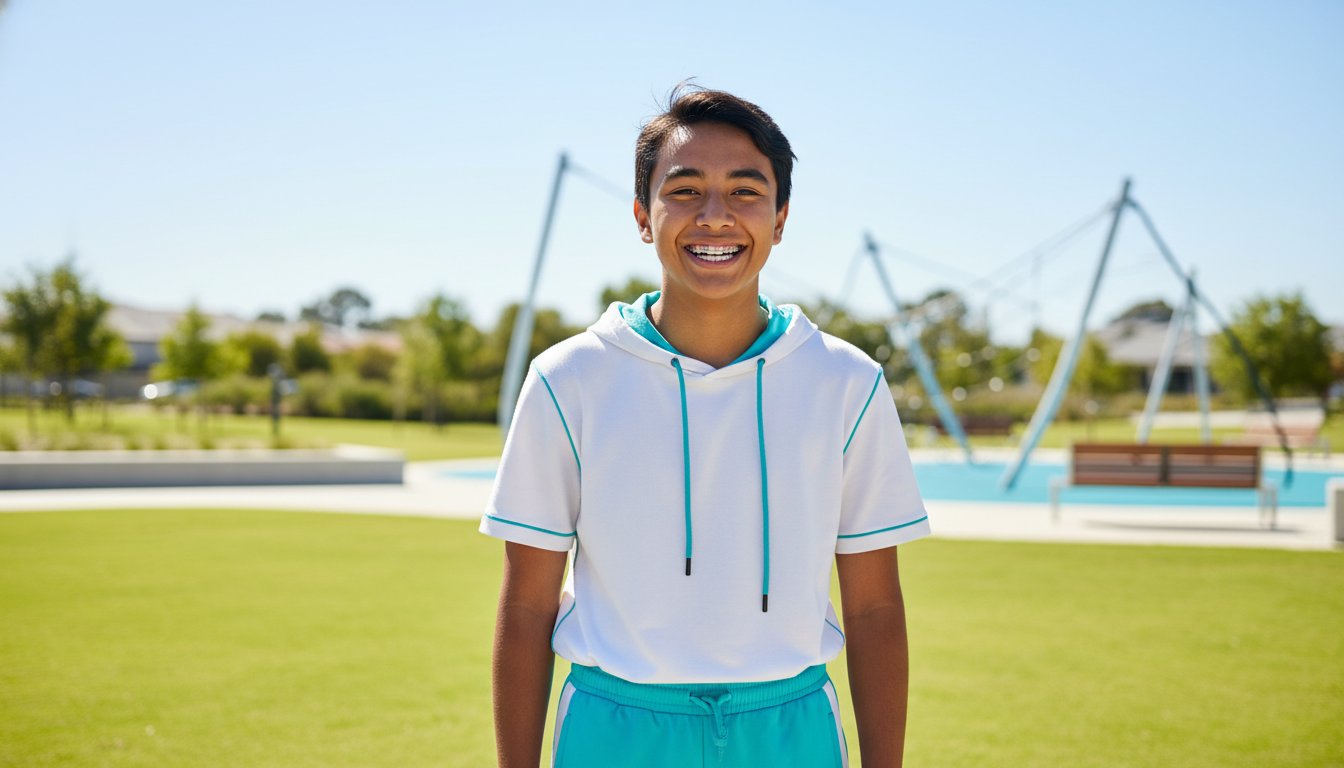
Imagine your teenager is gearing up for a big AFL match at Town Centre Recreation Reserve, yet they’re more concerned about their smile than the final score. You want them to feel confident in every school photo and social outing, but the thought of “metal mouth” or constant trips to the dentist feels overwhelming. It’s completely normal to worry about how orthodontic work will fit into your family’s busy Melbourne lifestyle or your household budget. You aren’t alone in wanting a solution that’s both effective and discreet.
We believe that teeth straightening for teens should be a positive journey that builds self-esteem rather than causing anxiety. This guide provides everything Caroline Springs parents need to know in 2026 about modern orthodontic options, from traditional braces to the latest clear aligners. You’ll discover how new technologies like 3D scanning and AI-powered planning can streamline the process and reduce the number of in-person visits. We’ll also look at how to manage treatments around school and sports, ensuring your child achieves a healthy, radiant smile that fits their active life.
Key Takeaways
- Understand why the teenage growth spurt provides a unique physiological window to guide jaw development and enhance facial symmetry.
- Compare different methods of teeth straightening for teens, from reliable traditional braces to discreet clear aligner options like Invisalign.
- Get practical tips on maintaining hygiene at school and ensuring your teen stays safe on the field during AFL or netball matches.
- Learn what to expect during the initial consultation, including how modern digital scanning allows you to see the predicted outcome before treatment begins.
- Discover the benefits of choosing local care in the Western Suburbs to better balance orthodontic visits with your family’s school and sports commitments.
Why the Teenage Years are the ‘Sweet Spot’ for Teeth Straightening
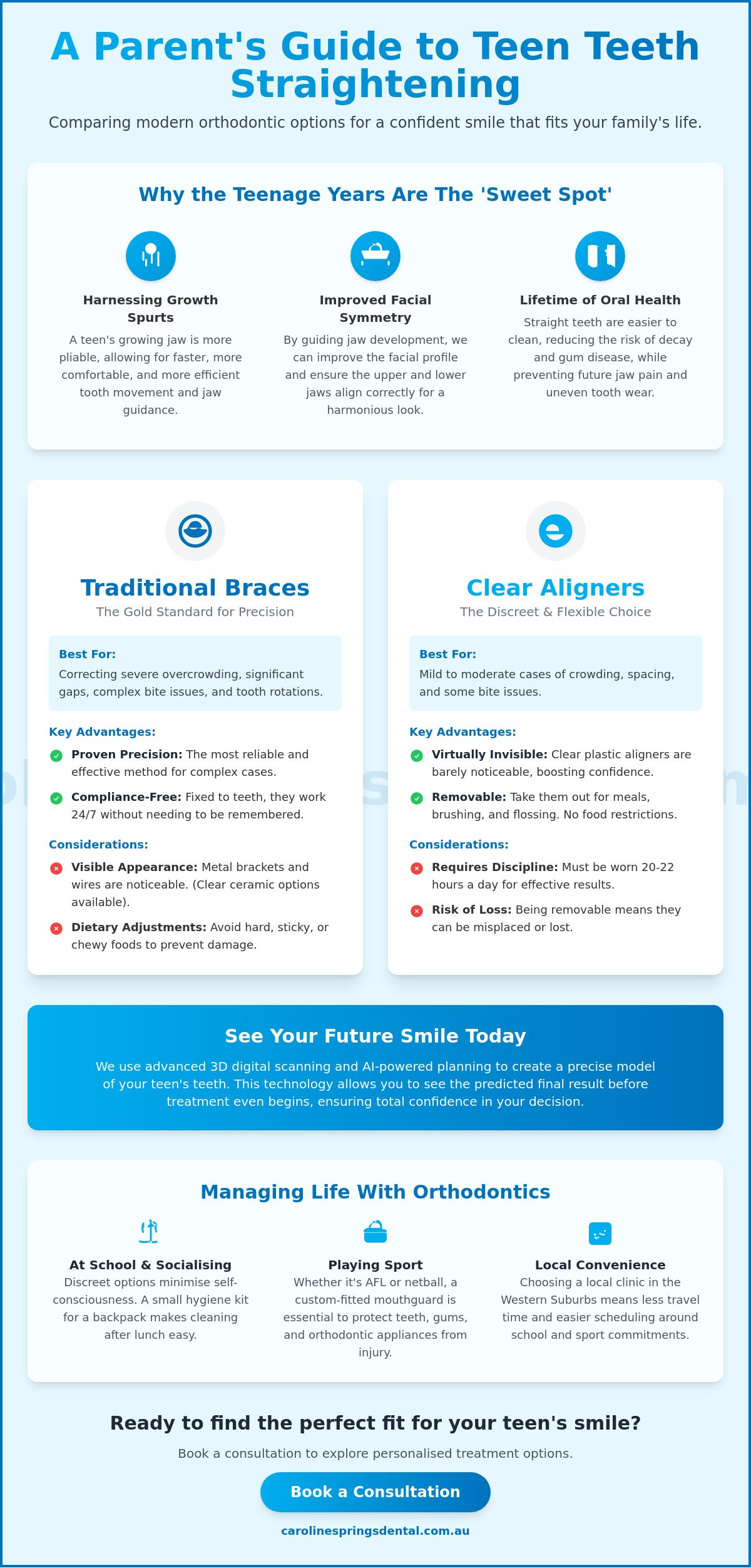
Most parents in the Western Suburbs wonder if they should wait until their child’s adult teeth are fully settled before seeking treatment. However, the period between ages 12 and 15 is widely considered the “biological window” for orthodontic care. During these years, your teenager is likely going through significant growth spurts. Because their jawbone hasn’t finished hardening, it’s much more responsive to gentle pressure. This makes teeth straightening for teens more efficient and often more comfortable than waiting until adulthood.
To understand the broader field of what is orthodontics, it helps to look at how we align teeth and jaws to improve both function and appearance. When we treat a teen during puberty, we aren’t just moving teeth; we’re often guiding the growth of the jaw itself. This proactive approach can improve facial symmetry and ensure the upper and lower arches sit together correctly as they develop. It’s a chance to harmonize their smile with their changing facial features, providing a massive boost to their self-esteem during those sensitive high school years.
The Role of Growth Spurts in Orthodontics
The jaw is still growing. By working with this natural development, we can often create enough space for crowded teeth to move into their correct positions without needing to remove healthy permanent teeth. If you wait until the jaw has finished growing, typically in the late teens or early twenties, correcting these same issues becomes significantly more complex. Adult bone is denser and less “plastic,” which can lead to longer treatment times and a higher overall cost. Addressing alignment now means we can use your teen’s natural biology to our advantage, often achieving a more stable result in a shorter timeframe.
Long-term Oral Health Benefits
Straightening teeth is about much more than just a beautiful photo for the school formal. It’s a long-term investment in your child’s health. We often see that crowded or overlapping teeth are much harder to keep clean, which increases the risk of tooth decay and gum disease over time. By aligning the teeth properly, you’re making daily brushing and flossing far more effective. Correcting a “bad bite” now also prevents future problems such as:
- Uneven wear on tooth enamel that can lead to sensitivity.
- Jaw alignment issues and chronic TMJ pain.
- Difficulty chewing or speaking clearly.
- The need for expensive children’s dentistry interventions or restorative work later in life.
Investing in teeth straightening for teens today helps ensure their smile remains healthy and functional well into their adult years. It’s about setting them up for a lifetime of dental wellness and confidence.
Comparing Orthodontic Options: Braces vs. Clear Aligners
Traditional Braces: Proven Precision
Metal braces are often called the “workhorse” of orthodontics for a good reason. They remain the most reliable option for correcting severe overcrowding, significant gaps, or complex tooth rotations. According to the American Dental Association on braces, fixed appliances provide the constant, precise pressure needed to guide teeth into their correct positions effectively. Modern brackets are now much smaller and smoother, reducing the irritation to cheeks and gums that was common in the past. Because they are permanently attached during treatment, they are “compliance-free,” meaning you won’t have to worry about your teen losing their appliance or forgetting to put it back in after lunch.
For those who want a more subtle look but still need the power of fixed braces, ceramic options are an excellent middle ground. These use clear or tooth-coloured brackets that blend in with the natural enamel, making them far less noticeable in school photos while still delivering the same clinical precision as metal versions. If you’d like a detailed side-by-side breakdown of your options, our guide on braces alternatives Caroline Springs families are considering in 2026 covers the honest pros and cons of each approach.
Clear Aligners: The Modern Teen Choice
For many students in the Western Suburbs, Invisalign Caroline Springs has become the preferred way to achieve a straighter smile. These clear, removable trays are virtually invisible, which is a major benefit for teens who are self-conscious about their appearance or active in public-facing roles like student leadership or the performing arts. One of the most practical advantages is the lack of food restrictions. Since the aligners are removed for eating, your teen can still enjoy crunchy canteen snacks or sticky treats without the risk of breaking a bracket.
Parents often worry about whether their child will actually wear the aligners as instructed. To solve this, Invisalign for Teens includes built-in “compliance indicators,” which are small blue dots that fade as the trays are worn. This allows you and your dentist to track progress easily. If your teen is disciplined and values a discreet look, aligners offer a flexible path to a confident smile. If you’re ready to see which option suits your child’s personality, you can book a consultation to discuss a personalised treatment plan.
Managing Life with Orthodontics: School, Sport, and Socialising
Life in the Western Suburbs doesn’t slow down just because your child has started their smile journey. Between Saturday morning matches at Burnside Heights and busy days at school, your teenager needs a plan that keeps up with them. Successful teeth straightening for teens depends on more than just the technology used; it’s about how well the treatment integrates into their daily routine. With a few simple adjustments, they can continue to enjoy their favourite activities without missing a beat.
Sports and Mouthguards for Teens
For many local families, weekends are defined by AFL, netball, or rugby. If your teen wears fixed braces, protecting their mouth is non-negotiable. A standard “boil and bite” mouthguard from a chemist often isn’t suitable. These generic guards are designed to be rigid, which can interfere with the planned movement of the teeth or even get stuck on the brackets. More importantly, they don’t provide the specialised clearance needed to protect the soft tissues of the cheeks and lips from the metal components during a collision.
We recommend a custom-fitted mouthguard designed specifically for orthodontic patients. These allow for tooth movement while providing a high level of protection against impact. This proactive approach is a key part of Children’s Dentistry, ensuring that while we work on the future of their smile, we’re also protecting their current oral health on the field.
The School Day Routine
The biggest hurdle for most students is maintaining hygiene during school hours. We suggest putting together an “essential locker kit” containing a travel toothbrush, interdental brushes, and orthodontic wax. A quick rinse or brush after lunch is vital to prevent plaque buildup around brackets or inside aligner trays. If your teen has chosen clear aligners, the challenge is discipline. They must remember to pop their trays back in immediately after eating at the canteen to meet the required 22-hour daily wear time.
It’s also common for teens to experience a slight lisp or speech change during the first few days of a new appliance. Encourage them to practice speaking or reading aloud at home; the tongue usually adapts within a week. Whether they’re giving a speech in class or heading to a birthday party, remind them that any initial awkwardness is temporary. Modern teeth straightening for teens is designed to be as low-profile as possible, so most peers won’t even notice the change.
In the event of a minor emergency, such as a poking wire or a lost aligner, don’t panic. Orthodontic wax can soothe irritation from a sharp edge until you can visit us. If an aligner goes missing, have them wear their previous set to prevent teeth from shifting while you contact the clinic to organise a replacement.
The Road to a Straighter Smile: What to Expect
The journey toward a healthier smile is a structured process that transforms both your child’s teeth and their self-esteem. It begins with a comprehensive initial consultation where we focus on gathering precise data. In 2026, this means moving away from the uncomfortable, messy putty impressions of the past. Instead, we use digital intraoral scanners to create a highly accurate 3D model of your teenager’s mouth. Combined with diagnostic X-rays, this allows us to understand the position of the roots and the development of the jaw before any movement begins.
Once the custom treatment plan is finalised, the fitting appointment takes place. Whether they are receiving traditional brackets or their first set of clear aligners, we spend time teaching your teen how to maintain their oral hygiene. After the initial fitting, you will typically visit the clinic every 6-8 weeks. These progress checks are vital. They allow us to make fine adjustments, monitor the health of the gums, and ensure the teeth straightening for teens is tracking exactly as planned.
Digital Smile Design in 2026
The Importance of Retainers
The most critical phase of teeth straightening for teens often happens after the braces come off. Teeth have a natural “memory” and will try to shift back to their original positions if they aren’t supported. This is why retention is non-negotiable. We generally discuss two main options for our patients:
- Fixed Retainers: A thin, discreet wire bonded to the back of the teeth. It’s a “set and forget” solution that works 24/7.
- Removable Retainers: Clear trays worn primarily at night. These are easy to clean but require the discipline to wear them every single evening.
Choosing the right retainer depends on your teen’s lifestyle and their ability to keep track of removable appliances. We’ll guide you through this choice to ensure their new smile remains stable for life. If you’re ready to explore the best path forward for your child, organise your teen’s initial consultation today to receive a personalised treatment plan.
Why Caroline Springs Families Choose Local Orthodontic Care
Managing your family’s weekly schedule in the Western Suburbs shouldn’t feel like a full-time job. When you choose a local provider for teeth straightening for teens, you’re doing more than just picking a convenient location. You’re ensuring that the frequent appointments required for adjustments or progress checks don’t interfere with your child’s education or your own work commitments. Being just a few minutes away from home or school makes it much easier to pop in for a quick 15-minute visit before a netball practice or during a study break.
Proximity also plays a vital role when the unexpected happens. While modern appliances are durable, a poking wire or a misplaced aligner can cause significant discomfort. Having your dental team nearby means you can resolve these minor issues quickly. You won’t have to face a stressful, hour-long commute to the CBD just to have a bracket re-bonded or a wire trimmed. This immediate support provides peace of mind for parents and keeps your teenager’s treatment on track without unnecessary delays.
We also understand the financial considerations that come with long-term dental care. Local clinics are well-versed in how Australian private health insurance works, particularly regarding the “major dental” or “extras” cover that often resets in January or July. We can help you navigate your policy’s lifetime limits and organise flexible, interest-free payment plans. These arrangements are designed to spread the cost into manageable instalments, making the highest standard of care accessible for families throughout our community.
Community-Focused Care
Our practice is deeply rooted in the local area, often treating siblings and families across Caroline Springs, Deanside, and Taylors Hill. This community connection allows us to build genuine, long-term relationships with our patients. You aren’t just another file in a system; you’re a neighbour. Our team stays mindful of the Victorian school term dates and local sports seasons, allowing us to schedule appointments that respect your teen’s busiest times of the year. You can learn more about our commitment to personalised care by visiting our About Us page.
Next Steps for Your Teen
If you’ve noticed your child is becoming more self-conscious about their smile, or if their regular dentist has suggested an orthodontic review, the best first step is a comprehensive assessment. During this visit, we’ll evaluate their jaw development and tooth alignment to determine if they’ve reached that ideal “biological window” for treatment. To make the most of your first appointment, it’s helpful to bring:
- Any previous dental X-rays or records you may have.
- Your private health insurance details to check for rebates.
- A list of any questions your teen has about the process.
- Information regarding their sports or extracurricular commitments.
Ready to start the journey toward a more confident smile? You can easily book an orthodontic consultation online. We look forward to partnering with your family to achieve a healthy, radiant result that lasts a lifetime.
Investing in Your Teenager’s Future Confidence
Choosing the right path for teeth straightening for teens is about more than just aesthetics; it’s about setting your child up for a lifetime of oral health and self-assurance. We’ve explored how modern technology like 3D scanning makes the process more predictable and how treating teeth during a growth spurt offers unique biological advantages. Whether your teen prefers the reliability of traditional braces or the flexibility of clear aligners, the goal is a result that fits their active lifestyle and unique personality.
Our team has been serving the Caroline Springs community for years, providing specialised care in both Invisalign and traditional orthodontics. We understand that family budgets are a priority, which is why we offer flexible payment options to make high-quality treatment more accessible for local households. You don’t have to navigate these clinical decisions alone. If you’re ready to explore the best options for your child’s smile, Book a Teen Orthodontic Consultation in Caroline Springs. We look forward to helping your teenager step into their future with a healthy, radiant smile.
Frequently Asked Questions
What is the best age for a teen to start teeth straightening?
The ideal timeframe for most teenagers is between the ages of 12 and 15 while their jaw is still actively developing. This “biological window” allows us to guide tooth movement more efficiently by utilising natural growth spurts. While we can successfully treat adults, starting during these early high school years often leads to more stable results and can sometimes reduce the need for complex dental interventions later in life.
How much does teen teeth straightening cost in Caroline Springs?
The investment for orthodontic care depends on your child’s specific alignment needs and whether you choose traditional braces or clear aligners. Because every smile is unique, we provide a detailed, personalised quote after a comprehensive initial assessment. Most families in the Western Suburbs find that flexible, interest-free payment plans make the cost of teeth straightening for teens much easier to manage alongside other household expenses.
Can my teen still play contact sports with braces?
Your teenager can absolutely stay active in contact sports like AFL, rugby, or netball while undergoing orthodontic treatment. If they have fixed braces, it’s essential to use a specialised mouthguard that fits comfortably over the brackets to protect both their teeth and the soft tissues of their mouth. For those using clear aligners, the trays are simply removed during play and replaced immediately after the match or training session ends.
Will clear aligners like Invisalign affect my teen’s speech?
Most teenagers experience a slight lisp for the first 24 to 48 hours as their tongue adjusts to the presence of the aligner trays. This is a completely normal and temporary transition. Encouraging your child to practice speaking or reading aloud at home helps the tongue find its new position quickly. After this short adjustment period, their speech will return to normal, and most peers won’t even notice they’re wearing them.
How long does the average orthodontic treatment take for a teenager?
While every patient’s journey is different, most teenagers complete their orthodontic treatment within a 12 to 24-month period. Simple alignment issues might be resolved in under a year, while more complex bite corrections can take longer. We monitor progress every 6 to 8 weeks to ensure the teeth are moving efficiently. Staying disciplined with aligner wear time or maintaining excellent hygiene with braces helps keep the treatment timeline on track.
What happens if my teen loses their clear aligner at school?
If an aligner is lost, your teen should contact the clinic immediately and wear their previous set of trays in the meantime. This prevents their teeth from shifting back while we organise a replacement. It’s always a good idea for students to keep their aligner case in their school bag to avoid accidentally throwing trays away during lunch. Promptly addressing a lost aligner ensures the overall treatment schedule stays on course.
Are traditional braces more effective than clear aligners for teens?
Modern technology has made both traditional braces and clear aligners highly effective options for teeth straightening for teens. Braces are often the preferred “workhorse” for severe overcrowding or complex root movements because they provide constant, high-precision pressure. Clear aligners are equally effective for a wide range of cases and offer the benefit of being removable. The best choice depends on your teen’s clinical needs and their ability to follow a daily wear schedule. For a comprehensive look at how these two approaches compare across cost, comfort, and lifestyle factors, see our Invisalign vs traditional braces comparison for Caroline Springs families.
Does my teen need to see a dentist or an orthodontist first?
You don’t need a formal referral to see us for an orthodontic assessment, and you can book a consultation directly. While your regular family dentist might be the first to notice alignment issues during a check-up, we specialise in identifying the best timing for treatment. Starting with a comprehensive consultation allows us to take digital scans and create a tailored plan that considers your child’s long-term oral health and facial development.