


What if the most important part of your wisdom tooth procedure isn’t the surgery itself, but how you handle the first 72 hours at home? It’s completely natural to feel a bit of a wobble when thinking about your wisdom teeth removal recovery. You might be worried about the risk of dry socket, which affects roughly 3% to 4% of routine extractions, or perhaps you’re feeling anxious about managing post-operative swelling and pain effectively.
We understand that you want to get back to your normal routine and enjoy your favourite foods as quickly as possible. That’s why we’ve created this professional day-by-day guide to help you master the healing process with confidence. By following a structured plan, you can significantly reduce the risk of infection and ensure a smooth, comfortable transition back to health. This checklist provides a clear roadmap through the first week of your journey. It covers everything from safe eating habits to identifying the difference between normal healing and signs that might need a professional’s eye.
Key Takeaways
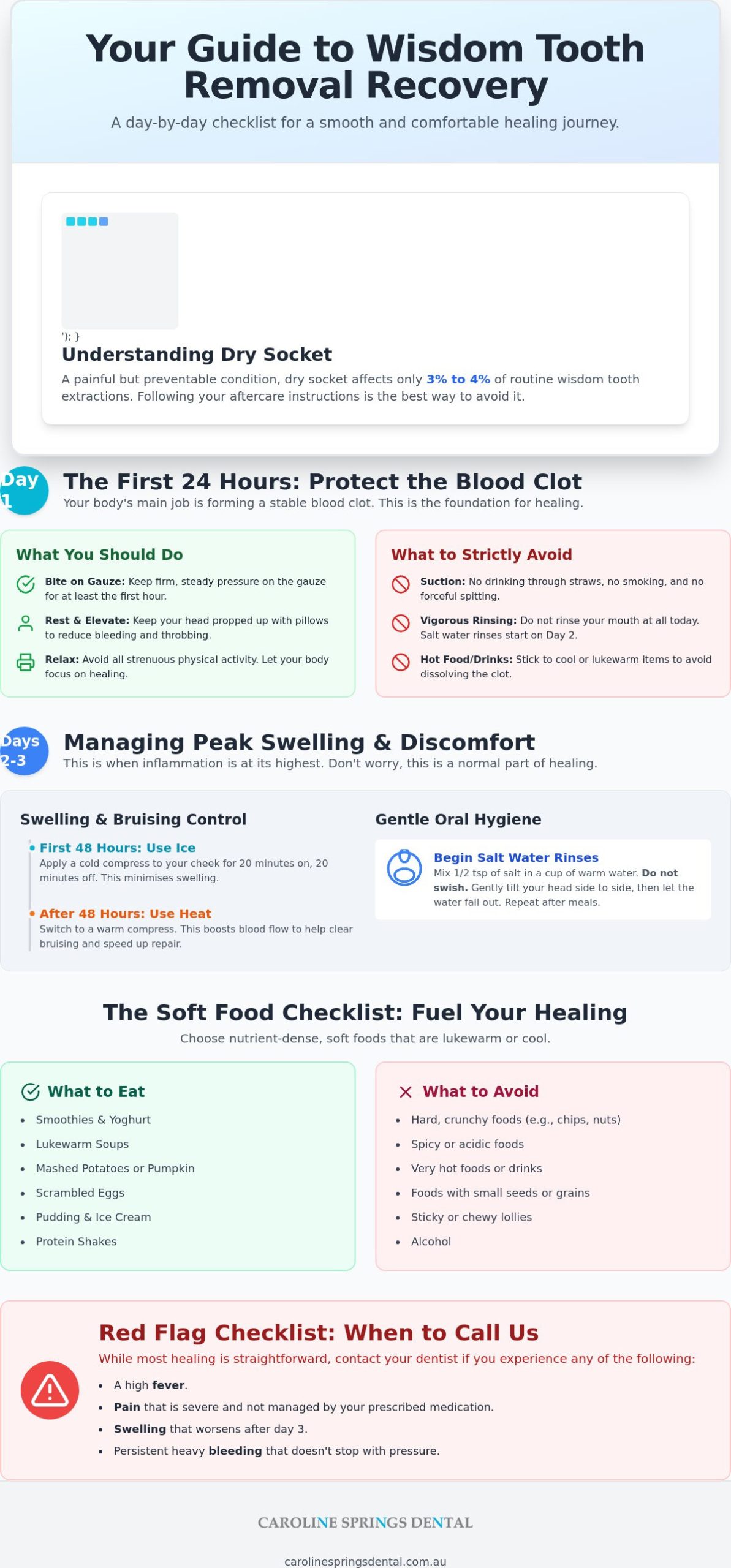
- Learn how to protect the initial blood clot during the critical first 24 hours by avoiding suction and managing gauze correctly.
- Discover the most effective ways to manage peak swelling and discomfort to keep your wisdom teeth removal recovery moving forward smoothly.
- Identify which nutrient-dense soft foods are best for your healing journey and why keeping your meals lukewarm or cool is vital for comfort.
- Master the salt water rinse routine and gentle brushing techniques needed to keep the site clean and prevent the risk of dry socket.
- Understand exactly when to reach out for professional advice by learning to spot red flags like fever or pain that isn’t managed by medication.
The First 24 Hours: Protecting the Blood Clot
The first day following your procedure is the most critical window for a successful wisdom teeth removal recovery. During these initial hours, your body’s primary goal is to form a stable blood clot in the empty socket. This clot acts as a protective layer over the underlying bone and nerve endings, serving as the foundation for new tissue growth. Many patients find it helpful to understand what wisdom teeth are and why their position often necessitates a more careful healing approach compared to other teeth.
To give this clot the best chance to form, you must keep the surgical gauze in place for at least the first hour. Apply firm, steady pressure by biting down gently but consistently. This physical pressure helps to stop the active bleeding and encourages the clotting process to begin. Avoid the temptation to “peek” at the site too early, as shifting the gauze can disrupt the fragile bond your body is trying to create.
Protecting this site also means being mindful of your mouth’s internal pressure. You should strictly avoid any form of suction for the first 24 hours. This means no drinking through straws, no smoking, and no forceful spitting. These actions create a vacuum in the mouth that can easily dislodge the clot, leading to a painful condition known as dry socket. If you feel the need to clear your mouth, it is better to let any excess saliva or fluid drool into a sink or swallow very gently. Similarly, do not rinse your mouth vigorously during this first day; even a gentle salt water rinse should wait until the following morning.
When you get home, make sure you rest with your head elevated. Use two or three pillows to prop yourself up in bed or on the lounge. Keeping your head above the level of your heart helps to lower the blood pressure in your jaw, which significantly reduces the risk of post-operative throbbing and excessive bleeding.
Managing Initial Bleeding
It’s perfectly normal to experience some oozing or “pink” saliva for up to 24 hours after your wisdom tooth extraction. Don’t be alarmed if you see a small amount of blood mixed with saliva; it often looks like more than it actually is. Only change your gauze if it becomes completely soaked. If bleeding persists, you can try biting on a moistened tea bag for 20 minutes. The tannic acid in the tea helps to constrict blood vessels and promote clotting naturally.
Immediate Activity Restrictions
Today is the day for quiet relaxation. You should avoid all strenuous physical activity, including gym sessions, heavy lifting, or even brisk walking. Increasing your heart rate can cause the surgical site to start bleeding again. Keep your talking to a minimum to allow the muscles around the jaw to remain still. Settle in with a good book or a favourite film and let your body focus its energy entirely on the healing process.
Days 2–3 Checklist: Managing Peak Discomfort and Swelling
Days two and three are often the most challenging part of your wisdom teeth removal recovery. This is when inflammation typically reaches its peak. While the surgery itself is over, your body’s immune response is now in high gear. You might wake up on day two feeling more “puffy” than you did immediately after the wisdom tooth extraction procedure. Don’t worry; this is a sign that your body is working hard to heal the area.
Once the first 24 hours have passed, you can begin gentle salt water rinses. Mix half a teaspoon of salt into a cup of warm water. Do not swish vigorously. Instead, tilt your head from side to side to let the water bathe the site before letting it drool out into the sink. This helps keep the area clean and reduces the risk of infection without disturbing the delicate clot. You may also experience “trismus”, which is a clinical term for jaw stiffness. It might feel like you can’t open your mouth as wide as usual. This is a protective reflex of the jaw muscles and should gradually improve as the swelling subsides.
Swelling and Bruising Control
For the first 48 hours, stick with ice. Apply a cold compress to the outside of your face for 20 minutes on, then 20 minutes off. This constricts the blood vessels and keeps the swelling manageable. After the 48-hour mark, you should switch to a warm compress. This transition encourages blood flow to the area, which helps clear away bruising and speeds up tissue repair. You might notice some yellow or blue bruising on your cheeks or even down your neck. This is quite common, especially for more complex extractions, and will fade over the coming week.
Pain Management Protocol
Managing discomfort is about staying ahead of the curve. Don’t wait for the pain to become severe before taking your next dose. Many patients find success by alternating between paracetamol and ibuprofen, as this targets pain through different pathways. Always keep a written log of your medication times to ensure you don’t miss a dose or take too much. Be sure to avoid aspirin, as it can thin your blood and increase the risk of bleeding at the surgical site. If you have any specific concerns about your medications, our team is always available to provide further patient information to guide you through this phase.
The Soft Food Checklist: What to Eat and Avoid
Fueling your body with the right nutrients is a cornerstone of a successful wisdom teeth removal recovery. While you might feel like skipping meals when your jaw is tender, your tissues require protein and vitamins to repair themselves effectively. The golden rule for the first few days is ‘soft and cool’. You want to choose foods that require absolutely no chewing; this helps protect the surgical site from mechanical trauma and keeps the area undisturbed.
Temperature is just as important as texture during this phase. Always ensure your food and drinks are lukewarm or cool before consuming them. Piping hot liquids, such as a fresh cup of tea or boiling soup, can actually dissolve the forming blood clot or increase blood flow to the area, which might lead to renewed bleeding. Staying hydrated is vital for a smooth recovery after wisdom teeth removal, so keep plenty of water or electrolyte drinks nearby. Just remember to skip the straws and sip directly from a cup or use a spoon to avoid any dangerous suction.
Safe Foods for the First 72 Hours
Focus on high-quality, nutrient-dense options that are easy on your healing gums. Some excellent choices include:
- Smoothies and Shakes: These are great for a vitamin boost, but remember to eat them with a spoon rather than a straw.
- Mashed Potatoes or Pumpkin: These Aussie favourites are filling, soft, and easy to swallow when mashed to a smooth consistency.
- Scrambled Eggs: Soft-set eggs provide the essential protein your body needs for tissue repair without requiring any heavy chewing.
- Greek Yoghurt or Custard: These are soothing on the throat and provide a nice cooling sensation if the area feels inflamed.
Foods to Strictly Avoid
Some foods can pose a direct threat to your healing socket by causing physical damage or becoming trapped. Avoid these entirely until your dentist gives you the all-clear:
- Popcorn, Nuts, and Chips: These crunchy items can easily poke or scratch the sensitive surgical site.
- Rice and Small Grains: Tiny particles like rice or quinoa are notorious for getting lodged deep inside the extraction socket, which can lead to irritation or infection.
- Spicy or Acidic Foods: Chillies, citrus juices, and vinegar-based dressings can sting and irritate the raw tissues.
If you’re unsure whether a specific food is safe, it’s always better to err on the side of caution. If you have questions about your specific tooth extraction aftercare, don’t hesitate to ask for a quick clarification. It’s better to be safe while your mouth is in this delicate state.
Days 4–7: Preventing Dry Socket and Returning to Routine
By the fourth day, you’ve likely navigated the peak of your discomfort. You’re now entering a transitional phase where the focus shifts from managing pain to protecting the new tissue. While you might feel more like your usual self, your wisdom teeth removal recovery still requires a gentle touch. It’s essential to keep up with your salt water rinses after every meal to flush away any stray bits of food that could irritate the socket. A healthy socket usually looks dark where the clot is seated, or it may develop a white or yellowish covering. This is a positive sign in your wisdom teeth removal recovery, as it shows granulation tissue is forming to heal the site.
You can return to your normal brushing routine for the rest of your mouth, but take extra care near the extraction sites. We suggest using a manual toothbrush for the first week. The intense vibrations from an electric brush can be quite jarring for the sensitive gums and may disrupt the maturing clot. As your jaw stiffness begins to ease, you can start reintroducing more solid foods, but try to keep the chewing away from the back of your mouth for a few more days.
The Dry Socket Prevention Checklist
Dry socket remains the most common complication during this window. It happens when the blood clot is lost too early, exposing the bone and nerves. Watch out for these red flags:
- Severe, radiating pain that travels up to your ear or temple.
- A visible lack of a blood clot in the socket, making it look bone-white and empty.
- An unpleasant taste in your mouth or persistent bad breath.
Continue to avoid smoking or vaping during this time. Nicotine constricts blood vessels and significantly slows down the delivery of the oxygen and nutrients your body needs to finish the healing process.
Gradual Return to Activity
Pay close attention to the signals your body is sending. If you try a light walk and feel your jaw start to throb, you’re doing too much. Tissue repair is an energy-intensive process that mostly happens while you sleep, so prioritise getting a full eight hours of rest each night. You can slowly reintroduce firmer foods like soft pasta or well-cooked vegetables as your jaw stiffness subsides, but keep the chewing on the opposite side of your mouth for now. If you feel something isn’t quite right or the pain is increasing, please book a check-up so we can ensure your recovery is staying on the right path.
When to Contact Caroline Springs Dental Clinic: The Red Flag Checklist
While most patients find their wisdom teeth removal recovery follows a predictable and steady path, we want you to feel empowered to recognise when your body might need a professional’s eye. It’s completely normal to feel tender for a few days, but severe pain that is not relieved by your recommended medication is a signal we need to investigate. We also ask you to stay mindful of your overall temperature. If you develop a fever or experience chills, these are often the first indicators that a post-operative infection is attempting to take hold, and a quick check-up can help us nip it in the bud.
Sensory changes are another area where we value your feedback. While the local anaesthetic will keep things numb for several hours after your appointment, any persistent tingling or loss of sensation in your lip, tongue, or chin once the drugs have cleared should be discussed with our clinical team. This helps us monitor your nerve health as you heal. On a more urgent note, if you ever experience sudden difficulty breathing or swallowing, please bypass the clinic and head straight to the nearest hospital emergency department for immediate attention, as these symptoms require urgent medical intervention.
Signs of Infection
Infection typically presents itself after the initial peak of swelling has passed. If you notice that your cheeks are becoming more swollen after day four, rather than gradually returning to their normal shape, it’s a sign that the healing process has been interrupted. You might also experience a persistent bad taste in your mouth or notice pus or discharge coming from the socket. These symptoms indicate that the area needs a professional clean or perhaps a course of antibiotics to ensure your wisdom teeth removal recovery stays successful and pain-free. Catching these signs early prevents minor issues from becoming more complex dental problems later on.
Our Commitment to Your Recovery
Our dedicated team at Caroline Springs Dental Clinic is committed to seeing you through every stage of your journey. We don’t just perform the procedure; we’re here for the essential follow-up care that guarantees your long-term comfort and health. For our neighbours in Taylors Hill and Deer Park, please remember that no question is too small. If you’re worried about a strange sensation or a bit of unexpected bruising, just give us a bell. We prioritise dental emergencies for our local families and existing patients, making sure you get the care you need right when you need it most. We’re proud to be your trusted local guide to a healthy, confident smile and a stress-free experience.
Take the Next Step Toward Your Healthy Smile
Mastering your wisdom teeth removal recovery is all about staying proactive and patient during that first critical week. By protecting the initial clot and gradually reintroducing your favourite soft foods as the swelling subsides, you’re setting the foundation for long-term oral health. We understand that every healing journey is unique; which is why we prioritise personalised, individual attention for every patient who walks through our doors.
Our team is deeply committed to serving the Caroline Springs community with gentle, family-focused care. Whether you’re visiting us from Deanside, Taylors Hill, or St Albans, you can rely on our clinical expertise in complex restorative dentistry and wisdom tooth management to guide you through the healing process. Are you concerned about your healing or simply need to book a follow-up? Book your post-operative check-up at Caroline Springs Dental Clinic today. We look forward to helping you return to your healthy, confident best.
Frequently Asked Questions
How long does wisdom teeth removal recovery take?
Most patients find their initial wisdom teeth removal recovery takes between seven and ten days. While the soft tissue usually closes up within this first week, the underlying bone can take several months to heal completely. You’ll typically feel the most improvement after the third day once the peak swelling begins to subside and you can move your jaw more freely.
What can I eat after wisdom teeth removal?
You should stick to nutrient-dense soft foods that require no chewing, such as mashed pumpkin, avocado, Greek yoghurt, and scrambled eggs. It’s essential to ensure all meals are lukewarm or cool to avoid irritating the surgical site. Avoid seeds, grains, or crunchy items like popcorn that could become trapped in the healing socket and cause a painful infection.
When can I stop worrying about dry socket?
The risk of dry socket is highest during the first three to four days after your procedure. Once you reach the five-day mark, the blood clot is usually stable enough that the risk drops significantly. Continuing to avoid smoking and straws during this entire first week is the best way to ensure your wisdom teeth removal recovery stays on track without complications.
Is it normal to have a hole in my gums after wisdom tooth extraction?
Yes, it’s perfectly normal to see a small hole or indentation where the tooth used to be. This is simply the empty socket, and it will gradually fill in with new gum tissue and bone from the bottom up. It can take several weeks for the hole to close completely, so keep up with your gentle salt water rinses to keep it clear of food debris.
Can I brush my teeth after wisdom teeth removal?
You can brush your other teeth as usual on the night of your surgery, but you must avoid the extraction site for the first 24 hours. After the first day, you should brush very gently near the area using a manual toothbrush. Avoid electric toothbrushes in that specific corner of your mouth for the first week to prevent any jarring movements from disturbing the maturing clot.
How do I know if my wisdom tooth socket is healing correctly?
Correct healing is usually marked by a gradual decrease in pain and swelling after the third day. When you look at the socket, you should see a dark blood clot or a white, yellowish layer of granulation tissue, which is a normal part of the body’s repair process. If the pain is manageable and the site isn’t bleeding, you’re likely on the right path to health.
Why do I have bad breath after wisdom teeth removal?
Bad breath is common after surgery and is often caused by bacteria, trapped food particles, or the natural breakdown of the blood clot. While it’s usually nothing to worry about, persistent foul breath accompanied by severe, radiating pain can be a sign of dry socket or infection. If the odour is strong and won’t go away with gentle rinsing, it’s worth a quick check-up at our clinic.
When can I go back to work after having my wisdom teeth out?
Most people can return to work or school within two to three days after their extraction. If your job involves heavy lifting or intense physical activity, you may need to wait up to a week to avoid increasing your blood pressure and causing the site to bleed. Listen to your body and give yourself permission to rest if you’re still feeling a bit flat after the procedure.