


Imagine it is 2 am and a sharp, throbbing sensation in your jaw is making sleep impossible. You are lying there wondering if it is just a temporary ache or a genuine emergency that requires immediate attention. It is completely normal to feel a sense of dread about the potential for a root canal or the costs involved, especially when the cause of the discomfort is such a mystery. Dental pain is often your body’s early warning system, yet for many of us, the uncertainty of what comes next is just as stressful as the ache itself.
We understand that these situations can be both physically exhausting and mentally taxing. Our goal is to help you identify the likely cause of your discomfort and learn exactly how to manage it safely before your appointment at our Caroline Springs clinic. In this article, we will look at common triggers for toothaches, provide practical tips for immediate relief at home, and explain how our gentle, local team works to fix the issue permanently. You will gain a clear understanding of your situation so you can move forward with confidence and peace of mind.
Key Takeaways
- Understand why discomfort usually means an issue has bypassed your enamel and reached the sensitive internal pulp of the tooth.
- Learn to decode your specific symptoms to distinguish between reversible issues and those requiring urgent emergency attention.
- Identify the common triggers for dental pain across different age groups, including specific trends seen in local school-aged children.
- Discover safe home-management strategies to keep you comfortable while waiting for your clinical appointment.
- Find out how our Caroline Springs team prioritises your comfort while providing permanent restorative solutions to dental issues.
What is Dental Pain and Why Does it Happen?
When you feel dental pain, your body is sending a clear neurological signal that the delicate tissues inside or around your tooth are under stress. Unlike your skin, which can often heal from a minor graze, your teeth are encased in a hard shell that cannot expand. This means that even a small amount of inflammation can lead to significant discomfort. Understanding what is a toothache involves recognising that the pain is rarely just a local annoyance; it is a vital warning from your nervous system.
It is helpful to distinguish between different types of discomfort. You might experience ‘referred pain’, where an issue in your sinuses feels like a toothache because the nerves are so closely linked. However, most cases are ‘odontogenic’, meaning the source is the tooth itself. Because teeth cannot repair themselves once decay has set in, this type of dental pain almost never resolves on its own. Ignoring the signal usually means the underlying issue is simply getting more complex and harder to treat.
The Anatomy of a Toothache
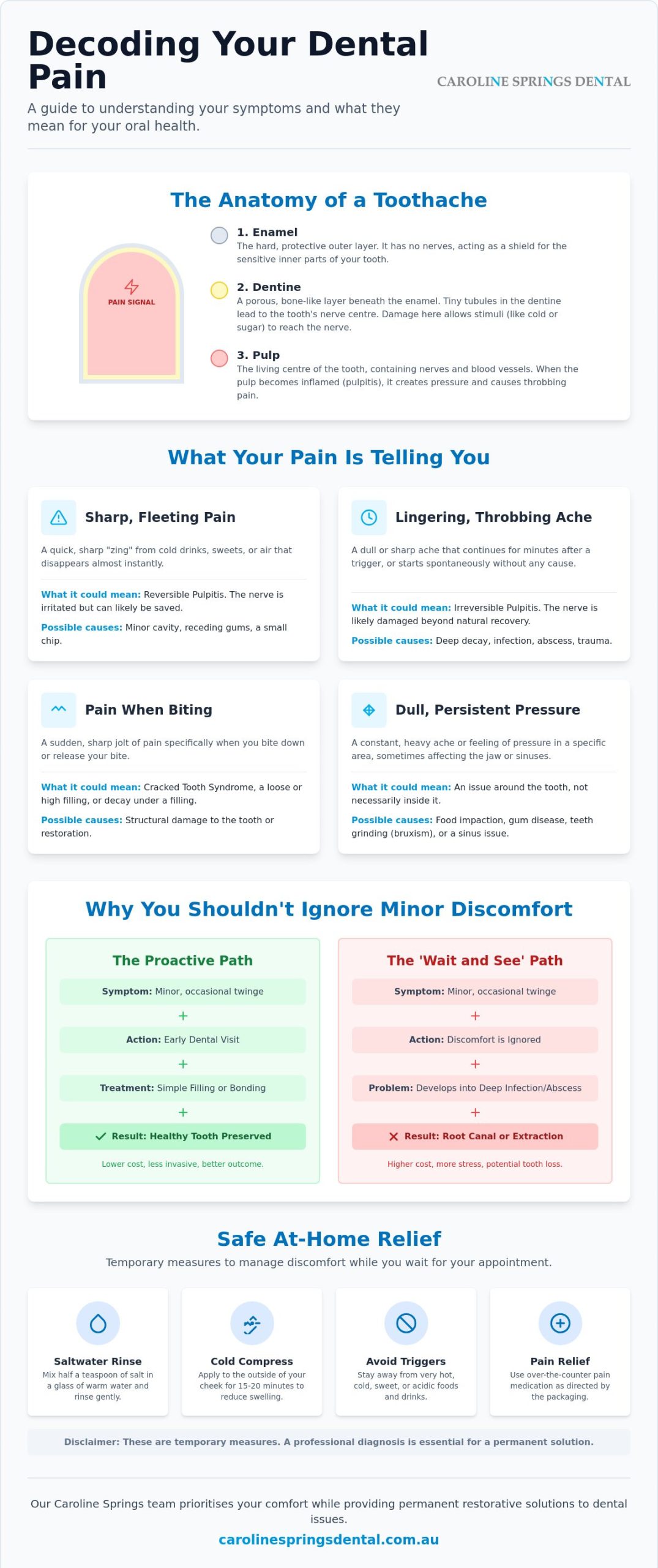
Your teeth are composed of three distinct layers. The outer enamel is the hardest substance in your body and has no nerves. Below that is the dentine, a porous layer that contains tiny tubules leading directly to the centre. The innermost part is the pulp, which is rich in blood vessels and sensitive nerves. When decay or a crack breaches the enamel and reaches the dentine, external stimuli like cold water or sugar can trigger a sharp reaction. If the pulp itself becomes inflamed, the pressure builds up within the rigid tooth structure. Pulpitis is the most common cause of internal tooth throbbing.
Why You Shouldn’t Ignore ‘Minor’ Discomfort
A small, occasional twinge might seem easy to ignore, but it often indicates a cavity that is slowly migrating toward your nerve. In the dental world, early intervention is always the gentler and more cost-effective path. A simple composite filling is a straightforward procedure that preserves your natural tooth structure. If you choose a ‘wait and see’ approach, that minor cavity can transition into a major infection or an abscess. This often leads to the need for more intensive procedures such as root canal treatment or even a full extraction. Addressing dental pain while it is still manageable saves you from the stress of a midnight emergency and the higher costs of restorative surgery later on.
Decoding Your Symptoms: What Your Pain is Telling You
Not all dental pain is created equal. The specific sensation you feel is a vital clue that helps our team diagnose the problem before you even sit in the chair. In clinical terms, we often look at whether your discomfort is ‘reversible’ or ‘irreversible’ pulpitis. Reversible pulpitis means the nerve is irritated but can be saved with a simple intervention. Irreversible pulpitis suggests the nerve is too damaged to recover on its own. The key is the ‘trigger’. If a cold drink causes a sharp zing that vanishes the moment you swallow, the issue is likely reversible. If the ache lingers for minutes or starts without any trigger at all, the nerve is in significant distress. Managing a toothache effectively starts with identifying these patterns early.
Sharp, Stabbing Pain When Biting
Does it feel like a sudden jolt of electricity when you chew? This sharp sensation is a classic sign of ‘Cracked Tooth Syndrome’ or perhaps a loose filling. When you bite down, the pressure causes the microscopic crack to flex; when you release, it snaps shut, irritating the internal nerve. For minor cracks or chips, composite bonding can often seal the area and restore comfort instantly. If the crack is more significant, you might require dental crowns to provide a protective ‘cap’ that prevents the tooth from splitting further.
Dull, Persistent Aching or Pressure
A constant, heavy ache is usually less about a sharp nerve trigger and more about localised pressure. This type of dental pain can be caused by several factors:
- Food impaction: Debris trapped between teeth can inflame the gums and create a deep ache.
- Gum disease: Chronic inflammation often feels like a dull pressure rather than a sharp sting.
- Bruxism: If you grind your teeth at night, you may wake up with a sore jaw and aching molars.
Sometimes, your teeth are just innocent bystanders. If your upper molars ache and you have a head cold, it might actually be sinus pressure mimicking a tooth issue.
Severe Throbbing and Sensitivity to Heat
If you are experiencing an intense, rhythmic throb that keeps you awake at night, the situation has likely progressed to an infection. Sensitivity to heat is a major red flag. When an infection forms an abscess at the root, gases build up. Heat causes these gases to expand, which increases the pressure inside the rigid tooth shell. This is a clear signal that emergency dentistry is necessary to drain the infection and provide immediate relief. If any of these descriptions sound familiar, you can book a consultation with our friendly local team to get a definitive answer and a gentle plan for relief.
Common Causes of Dental Pain in Adults and Children
The source of your discomfort often depends on where you are in life’s journey. While dental pain always feels urgent, the underlying cause for a six-year-old in Caroline Springs is usually quite different from that of a young adult in their twenties. According to national data, around 27% of children aged 5 to 10 have at least one tooth with untreated decay. This statistic is reflected in our daily practice, where we frequently see school-aged children from across the Western Suburbs presenting with preventable cavities. Understanding the common causes of dental pain across different age groups allows us to provide targeted, age-appropriate care that addresses the root of the problem.
Dental Pain in Children and Toddlers
For our youngest patients, ‘erupting’ pain is a common milestone. Teething is a natural process, but it’s often confused with early childhood caries, or decay. If a toddler is distressed, it’s vital to check if the pain is from a new tooth breaking through or an actual cavity. Early intervention through children’s dentistry is the best way to prevent early tooth loss. We often recommend fissure sealants for kids as their permanent molars emerge; these thin coatings act as a shield, preventing decay in the deep grooves of the teeth before pain ever has a chance to start.
Wisdom Teeth and Impacted Molars
As we move into the late teens and early twenties, the ‘back of the mouth’ ache becomes a major theme. This is usually the sign of third molars attempting to erupt. If there isn’t enough room, these teeth can become impacted, leading to a painful condition called pericoronitis. This is an infection of the gum tissue surrounding a partially emerged tooth, often causing swelling and a foul taste. For many young adults in the local area, a professional tooth extraction is the most predictable path to long-term relief and prevents the crowding of existing teeth.
Gum Disease and Periodontal Abscesses
Sometimes, the source of dental pain isn’t actually the tooth itself, but the ‘foundations’ holding it in place. Gum disease can lead to periodontal abscesses, which feel like intense pressure and throbbing. You might notice a small, pimple-like bump on your gum, accompanied by redness and swelling. This is often linked to chronic issues like bleeding gums, which shouldn’t be ignored. When the supporting structures are compromised, the discomfort can be just as severe as a deep cavity. Addressing these issues early preserves your natural smile and prevents the infection from spreading to the bone.
Managing Pain at Home: Safety and Effectiveness
When dental pain strikes after hours or over a weekend, your immediate priority is finding a way to manage the discomfort until you can see a professional. It is vital to remember that home remedies are a ‘bridge’ to clinical treatment, not a permanent cure. While these steps can provide much-needed relief, they won’t resolve the underlying infection or decay discussed in previous sections. Think of home care as a way to keep you comfortable and functional while you wait for your appointment at our Caroline Springs clinic.
The ‘Gold Standard’ for Dental Pain Relief
Many Australians head straight to their local chemist for relief, and for good reason. Current clinical guidance suggests that a combination of paracetamol and ibuprofen is often the most effective approach for managing dental pain. This specific combination frequently outperforms codeine-based products for dental-specific inflammation because it targets the swelling directly at the source. Always ensure you consult your pharmacist or GP first to confirm these medications are safe for your specific medical history and won’t interact with any existing prescriptions.
Immediate Comfort Measures
Beyond medication, several physical adjustments can make a significant difference in your comfort levels. Keeping your head elevated, especially when resting or sleeping, helps reduce the blood pressure in the head and jaw, which can lessen that intense throbbing sensation. It is also crucial to avoid ‘old wives’ tales’ that can cause more harm than good. For example, never place an aspirin tablet directly against the gum near the sore tooth; this does not help the pain and will actually cause a painful chemical burn on your delicate gum tissue. Instead, try these safe alternatives:
- Warm salt water rinses: Mix half a teaspoon of salt in a glass of warm water to help reduce bacteria and soothe inflamed gums.
- Cold compresses: Apply a cold pack to the outside of the cheek for 20 minutes on and 20 minutes off to help manage external swelling.
- Trigger avoidance: Stick to lukewarm, soft foods and avoid extremely hot, cold, or sugary items that might trigger a sharp nerve response.
Preparation for Your Emergency Visit
When you call to speak with our receptionist, being prepared helps us prioritise your care and prepare our team for your arrival. Be ready to describe exactly when the pain started, whether the sensation is sharp or a dull ache, and what specific triggers make it worse. It is also helpful to bring a written list of any medications you have taken for the pain, including the dosages and the times they were taken. This ensures our dentists can provide the safest possible treatment. You can also review our payment options online before you arrive to ensure your visit is as smooth and predictable as possible.
If you are currently struggling with persistent discomfort, don’t wait for the issue to escalate into a more complex problem. Book your emergency assessment today so our gentle team can provide the permanent relief you deserve.
Why Caroline Springs Dental is Your Partner in Pain Relief
At Caroline Springs Dental, we believe that effective dentistry is about more than just repairing a damaged tooth. It’s about caring for the person behind the smile. When you’re dealing with dental pain, you need a team that listens to your concerns and respects your boundaries. We’ve built our practice on a foundation of gentle, family-oriented care, specifically designed to support nervous patients who may have delayed treatment due to anxiety. Whether you’re in Caroline Springs, Fraser Rise, or Taylors Hill, you can rely on us as your local partners in long-term health.
Our philosophy is simple: we treat the patient, not just the clinical issue. This means taking the time to explain your options clearly and ensuring you feel comfortable at every stage of your treatment. From straightforward composite fillings to more advanced restorative work, we prioritise your peace of mind and physical comfort above all else.
Emergency Care for the Western Suburbs
We know that a toothache doesn’t wait for a convenient time. That’s why we’re committed to seeing patients in pain as quickly as possible. Our clinic is centrally located for residents in Burnside Heights, Deanside, and Melton, making us a reliable choice for urgent care in the Western Suburbs. We use modern diagnostic technology, such as digital X-rays, to identify the source of your discomfort with speed and precision. This allows us to move straight to a solution, avoiding unnecessary guesswork and getting you back to your daily routine faster.
Long-term Solutions for a Pain-Free Life
Once we’ve managed your immediate discomfort, our focus shifts toward ensuring the problem doesn’t return. Transitioning from emergency relief to a tailored preventative care plan is the best way to maintain your oral health for years to come. Regular professional cleans and check-ups play a vital role in spotting issues like early decay or gum disease before they escalate into painful emergencies. For those who have already experienced tooth loss due to chronic infection, we offer permanent restorative options like dental implants to return function and confidence to your smile.
Our team is dedicated to helping you move past the cycle of dental pain and toward a future of predictable, healthy outcomes. We take pride in being a part of the local community and helping our neighbours achieve the smiles they deserve. Don’t suffer in silence or let a minor twinge become a major disruption to your life. To take the first step toward a healthier, pain-free future, book your consultation today at our Caroline Springs clinic.
Take the First Step Toward a Pain-Free Smile
Living with dental pain can be exhausting, but it doesn’t have to be a permanent part of your life. By decoding your symptoms and knowing when to seek professional help, you’ve already taken the most important step toward recovery. Our clinic has been serving the Western Suburbs for years, offering a gentle approach specifically designed to lower the anxiety of our nervous patients. We combine this empathetic care with deep expertise in complex restorative dentistry to ensure your relief is both immediate and long-lasting.
You deserve a dental experience that feels supportive rather than stressful. Whether you need a simple solution or more involved restorative work, our team is here to guide you through the process with clarity and kindness. Don’t let uncertainty or fear keep you from the comfort you need. Book Your Emergency Appointment at Caroline Springs Dental today. We look forward to helping you feel like yourself again and ensuring your smile remains healthy and confident for years to come.
Frequently Asked Questions
Can a toothache go away on its own?
A toothache rarely disappears without professional intervention because the underlying cause, such as decay or infection, cannot heal itself. While the pain might vanish for a few days if the nerve becomes non-vital and stops sending signals, the bacteria are still present and will eventually lead to a more serious abscess. It’s always best to have a quick check-up to identify the issue before it escalates into a more complex problem.
Is a throbbing toothache always an emergency?
A persistent, throbbing sensation often indicates that the internal pulp of your tooth is severely inflamed or infected. While it might not always require immediate surgery, it is considered a dental emergency that needs a prompt professional assessment. This type of dental pain typically won’t respond to home remedies alone and needs a dentist to relieve the internal pressure and prevent the infection from spreading.
What is the best painkiller for severe dental pain in Australia?
For most adults in Australia, a combination of paracetamol and ibuprofen is highly effective because it targets both the pain signal and the inflammation. This dual-action approach often provides better relief than taking either medication on its own for dental-specific issues. However, you should always speak with your local pharmacist or GP to ensure these are safe for your specific medical history before taking any new medication.
Why does my tooth hurt more when I lie down at night?
Your tooth may feel more painful at night because lying down flat increases the blood pressure in your head and jaw. This extra pressure puts more stress on the sensitive, inflamed nerves inside your tooth, making the throbbing sensation much more intense than when you are standing or sitting. Propping your head up with an extra pillow can help reduce this blood flow and provide some temporary comfort while you rest.
Can sinus issues cause tooth pain in my upper jaw?
Yes, it is quite common for sinus congestion or infections to feel like a dull ache in your upper molars. Because the roots of your upper teeth sit very close to your sinus cavities, any inflammation in that area can put pressure on the dental nerves. If you have a head cold or seasonal allergies alongside the ache, your sinuses might be the primary cause of the referred discomfort.
What should I do if a tooth is knocked out or broken?
If a tooth is knocked out, time is critical; you should try to see a dentist within 30 to 60 minutes for the best chance of saving it. Handle the tooth only by the crown, never the root, and try to place it back in the socket or keep it in a small container of milk or your own saliva. For a broken tooth, rinse your mouth with warm water and keep any fragments to show your dentist during your emergency visit.
How much does an emergency dental visit in Caroline Springs cost?
The cost of an emergency visit depends entirely on the type of treatment required to resolve the pain, ranging from a simple filling to more complex restorative work. Every patient’s situation is unique, so our team provides a clear breakdown of costs after your initial assessment and diagnosis. We recommend checking your private health insurance “extras” cover or reviewing our payment options online to help you plan for the investment in your health.
What happens if I ignore a tooth infection?
Ignoring a tooth infection can lead to a painful abscess that may eventually spread to your jawbone, neck, or even your bloodstream. Once the infection reaches this stage, it becomes a much more serious systemic health risk that may require intensive treatment or hospitalisation. Early intervention for dental pain is the safest and most effective way to prevent these dangerous complications and preserve your natural teeth for the long term.