


It is 2 AM in Caroline Springs, and instead of sleeping, you are pacing the lounge room because a sharp, throbbing toothache refuses to let you rest. Perhaps it started as a fleeting wince when you sipped a cold drink, but now it has grown into a constant pressure that makes it impossible to focus. It is completely normal to feel a bit anxious or confused when you can’t tell if you are dealing with a simple cavity or a more serious issue that requires urgent care.
We understand that when you are in pain, you need clear answers and a gentle hand rather than clinical detachment. This article will help you identify the likely cause of your dental distress and provide safe, practical steps to manage the discomfort at home. You will also learn how to find professional, local treatment in Melbourne’s West that prioritises your comfort. We will preview the best restorative options available, from protective fillings to root canal therapy, to ensure you can return to enjoying your favourite meals without a second thought.
Key Takeaways
- Learn to decode the signals your nerves are sending and identify whether your toothache is caused by a simple cavity or something more complex.
- Master immediate first-aid techniques, such as warm salt water rinses, to reduce inflammation and manage pain safely before your appointment.
- Explore professional restorative options like composite fillings and gentle root canal therapy designed to save your natural teeth.
- Discover how regular preventative care with a local Caroline Springs dentist can protect your family from future dental emergencies.
What is a Toothache? Understanding Dental Pain
Think of a toothache as a biological distress signal rather than just a source of frustration. To truly understand What is a Toothache?, we must look at the anatomy of your smile. Beneath that hard, protective layer of enamel lies the dentine and a soft centre called the pulp, which is rich with nerves and blood vessels. When this area becomes irritated or infected, it sends a clear message to your brain that something is wrong. Our role is to act as your trusted local guide, helping you interpret these signals so you can move from confusion to a clear plan for relief.
Dental pain is rarely one-size-fits-all. It can be sharp, throbbing, constant, or intermittent, and it often feels like it is radiating through your entire face. It is also important to distinguish between localised dental pain and referred pain. For instance, a congestion-heavy sinus infection can cause significant pressure on your upper molars, making it feel like a cavity when the teeth are actually healthy. Similarly, grinding your teeth at night can lead to a sore jaw that mimics a toothache. Recognising these differences is the first step in avoiding unnecessary worry and finding the most effective treatment path.
The Different “Colours” of Dental Pain
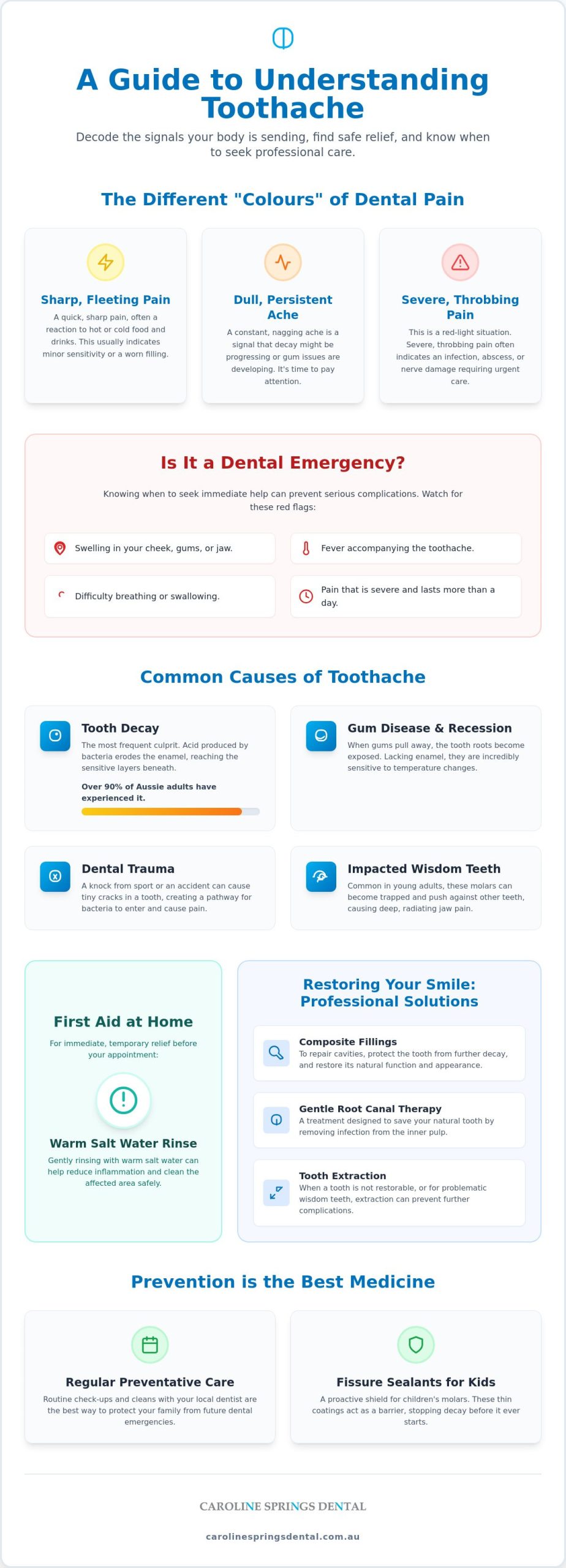
We often describe dental pain through different “colours” or intensities to help you gauge what is happening. A sharp, fleeting pain is usually a reaction to external stimuli, like a cold gelato or a hot coffee, often indicating minor sensitivity or a worn filling. A dull, persistent ache is more of a yellow-light signal; it suggests that decay might be progressing or that gum issues are starting to take hold. However, a severe, throbbing pain is a red-light situation. This level of discomfort often indicates pulpitis, where the nerve is under intense pressure, or a developing abscess that needs urgent care to save the tooth.
When Toothache Becomes a Dental Emergency
Knowing when a toothache has crossed the line into a dental emergency can save you from significant complications. There are certain signs you simply cannot ignore. If you notice swelling in your cheek or jaw, experience a fever, or have any difficulty breathing or swallowing, you need to contact a professional for emergency dentistry right away. An abscess, for example, is a pocket of infection that won’t resolve on its own and can become dangerous if left untreated. We recommend a 24-hour rule: if your pain is severe and persists for more than a day or two without any sign of improvement, it is time to stop the home remedies and let a professional identify the underlying cause.
Common Causes of Toothache: Why It Hurts
Identifying the source of a toothache is often a process of elimination. With over 90% of Australian adults having experienced tooth decay at some point according to recent health data, it remains the most frequent culprit. When bacteria in your mouth feast on sugars, they produce acid that gradually erodes your enamel. Once this protective shield is breached, the bacteria reach the sensitive dentin, leading to that familiar sharp twinge. This is why early intervention is key, helping to avoid the 63,000 preventable hospitalisations for dental conditions seen in Australia each year.
Gum disease and recession also play a significant role in local dental distress. If your gums begin to pull away from the tooth, the roots become exposed. Unlike the crowns of your teeth, these roots lack a thick layer of enamel, making them incredibly sensitive to temperature changes. You might find that a simple glass of cold water from the tap suddenly feels like an electric shock. Similarly, dental trauma from a mishap on the footy field or a trip at home can cause cracks that let bacteria deep into the tooth’s structure.
For young adults in Melbourne’s West, impacted wisdom teeth are a common source of deep, radiating jaw pain. As these third molars struggle to find space in the dental arch, they can push against neighbouring teeth or become partially trapped in the gum, leading to inflammation. If you suspect your molars are under pressure, a professional assessment for wisdom tooth extraction can prevent further crowding and discomfort.
Toothache in Children: A Special Note for Parents
Little ones experience dental pain differently, and their “baby teeth” require just as much care as adult ones. While teething is a natural milestone, early childhood caries can develop quickly if sugary snacks aren’t managed. We often recommend fissure sealants as a proactive shield. These thin coatings act as a barrier for the deep grooves in molars, stopping decay before it starts. Never assume a child’s dental pain is just part of growing up; these teeth hold essential space for their future adult smile.
Non-Dental Causes of Tooth Pain
Sometimes, the pain isn’t coming from the tooth at all. Sinusitis is a classic example. Because the roots of your upper teeth sit close to your maxillary sinuses, inflammation there can mimic a severe toothache. Bruxism, or nocturnal teeth grinding, is another frequent issue that leads to morning jaw aches. For those seeking Immediate Toothache Relief, understanding these non-dental triggers is vital for choosing the right treatment. If you are unsure why you are hurting, our team is here to help you book a thorough consultation to get to the bottom of the problem.
Immediate Relief: Toothache First Aid and Home Care
When a toothache strikes, your immediate priority is finding a way to dial down the discomfort. While home care is never a permanent substitute for professional treatment, it can provide much-needed relief while you wait for your appointment. A simple, effective starting point is a warm salt water rinse. This natural disinfectant helps to flush out debris and reduce inflammation by drawing fluid away from swollen tissues. It is a gentle way to cleanse the area without the harshness of some alcohol-based mouthwashes.
You should also carefully floss around the affected area. Sometimes, the source of intense pressure is simply a piece of food trapped between the teeth or under the gum line. Removing this physical irritant can often provide instant, though perhaps partial, relief. If you notice any visible swelling on your cheek, applying a cold compress to the outside of your face for 20 minutes at a time can help numb the area and restrict blood flow to the site of the inflammation. While we have already touched on the Common Causes of Toothache, these physical interventions address the immediate symptoms you are experiencing.
Night-time often feels like the hardest period to manage. When you lie flat, blood pressure increases in your head, which can make a throbbing sensation feel significantly worse. Try propping your head up with extra pillows to keep it elevated above your heart. This small adjustment in sleep positioning can often be the difference between a restless night and getting a few hours of essential sleep. It is all about managing the pressure until you can see a professional.
Safe Use of Over-the-Counter Relief
Managing pain often involves a trip to your local Caroline Springs chemist. They can provide professional advice on the appropriate dosages of paracetamol or ibuprofen to suit your specific health needs. It’s a common myth that placing an aspirin tablet directly against the gum near a hurting tooth will provide faster relief. In reality, this can cause a painful chemical burn to your delicate soft tissues. Always swallow medication as directed. While traditional remedies like clove oil contain eugenol, a natural anaesthetic, they should be used with caution as they can be irritating if they come into contact with other parts of your mouth.
What to Eat (and Avoid) During a Flare-up
Your diet plays a huge role in managing sensitivity during a flare-up. Stick to soft, lukewarm foods such as yoghurt, mashed potatoes, or blended soups. Avoiding extreme temperatures is vital; that piping hot coffee or ice-cold water will likely trigger a sharp pain response. Stay away from sugary or acidic snacks, as these can further irritate a tooth where the enamel is already compromised. If you find yourself struggling to eat even soft foods, it is a clear sign you should book an appointment to have the underlying issue addressed by a professional.
Professional Treatments: Restoring Your Smile
Once home care has reached its limit, professional intervention becomes the only way to address the actual source of your discomfort. Mapping your specific symptoms to the right clinical solution is how we ensure a predictable and comfortable outcome. For minor decay or small chips that cause that sharp, fleeting twinge, dental fillings and bonding are our primary tools. These procedures use durable, tooth-coloured composite resin to seal the breach in your enamel, preventing bacteria from journeying deeper into the sensitive dentin.
When a toothache has progressed to a deep, radiating throb, it often indicates the inner pulp is compromised. In these instances, root canal treatment is the most effective way to save your natural tooth while permanently eliminating the infection. If the structural integrity of a tooth is heavily damaged or a tooth is missing entirely, dental crowns and bridges provide a resilient solution. These restorations are designed to withstand the daily pressures of biting and chewing while blending seamlessly with your surrounding smile.
The Root Canal: Debunking the Fear
Many patients feel a surge of anxiety at the mention of a root canal, but modern technology has completely transformed this experience. Today, the process is quite similar to receiving a standard filling. We use precise local anaesthetics to ensure the area is completely numb before gently removing the infected tissue. This procedure is actually the solution to your pain, not the cause of it. After the treatment, we often place a protective crown to ensure the tooth remains strong for years to come. If you are tired of a persistent ache, book your restorative consultation today to discuss how we can help.
Extractions and Implants: A Fresh Start
There are times when a tooth is too heavily damaged or impacted to be saved. This is frequently the case with third molars, where a wisdom tooth extraction becomes the kindest option for your overall jaw health. Removing a source of constant infection or pressure often provides an immediate sense of relief. If an adult tooth must be removed, we focus on what comes next to prevent your other teeth from shifting. Dental implants are considered the gold standard for replacement because they mimic the natural root structure. This helps to maintain your jawbone density and provides a foundation that feels and functions just like a real tooth.
Preventing Toothache: Your Local Care Plan in Caroline Springs
While we have discussed how to manage and treat dental discomfort, the most rewarding approach is ensuring a toothache never has the chance to develop. Moving from reactive treatments to a proactive care plan allows you to maintain your natural smile with far less stress. The most powerful tool in this plan is the six-monthly check-up. These routine visits allow our team to monitor the health of your enamel and gums, identifying microscopic changes long before they manifest as physical pain. By addressing a small area of concern early, we can often avoid the need for the more complex restorative procedures mentioned earlier.
For those living an active lifestyle in Melbourne’s West, physical protection is just as important as hygiene. Whether you are playing footy in Burnside Heights or soccer in Deanside, a custom-fitted mouthguard is an essential piece of equipment. Unlike generic store-bought versions, a professional mouthguard is designed to distribute impact forces evenly, significantly reducing the risk of cracked teeth or trauma-induced pain. This simple preventative step can save you from an unexpected trip for emergency care after a weekend match.
Preventative Care for the Whole Family
Building a foundation of health starts with teaching the youngest members of your family that a visit to the dentist is a positive experience. We focus on gentle childrens dentistry to help kids develop lifelong habits that protect their smiles. Beyond daily brushing, professional cleans are vital for removing calculus that a toothbrush simply cannot reach. We also work with parents to identify hidden dietary triggers, such as the high acidity found in some fruit juices, which can weaken enamel and lead to future sensitivity.
Booking Your Visit in Caroline Springs
Our clinic is ideally positioned to support residents from Taylors Hill, Fraser Rise, and across the Western Suburbs. We understand that your time is valuable, which is why we maintain a methodical and calm environment designed to make every appointment feel predictable and stress-free. Our goal is to be your long-term partner in health, providing the guidance you need to keep your family smiling year-round. Don’t wait for a minor niggle to become a major disruption. Book your consultation at Caroline Springs Dental Clinic today and secure your path to lasting oral wellness.
Taking the First Step Toward a Pain-Free Smile
Resolving a toothache involves more than just masking the symptoms; it requires a thoughtful approach to identifying the cause and choosing the right restorative path. From immediate home care to advanced treatments like root canals, you now have the framework to make an informed decision about your oral health. Taking action early ensures that a small discomfort doesn’t escalate into a significant disruption to your life or your ability to enjoy time with your family.
At Caroline Springs Dental Clinic, we specialise in providing gentle family and restorative care for residents across Melbourne’s Western Suburbs. Our convenient location makes it easy for those in Deanside and Taylors Hill to access professional support in a reassuring, community-focused environment. You deserve a smile that feels as good as it looks. Relieve your pain and book an appointment with the gentle team at Caroline Springs Dental Clinic today. We are here to support you at every stage of your long-term health journey.
Frequently Asked Questions
How do I know if my toothache is a dental emergency?
A toothache becomes a dental emergency if you experience facial swelling, fever, or persistent pain that prevents you from sleeping. These symptoms often indicate an abscess or a spreading infection that requires immediate professional attention. If you also have difficulty breathing or swallowing, you should head to the nearest hospital emergency department. Early intervention is the best way to prevent a minor issue from becoming a serious health risk.
Can a toothache go away on its own without a dentist?
While the discomfort might temporarily subside, the underlying cause of a toothache rarely resolves without professional intervention. If the pain vanishes suddenly, it could actually mean the nerve inside the tooth has died, but the infection will continue to linger in the jawbone. It is vital to have a professional assessment even if the ache seems to have gone away to avoid future complications.
What is the best way to stop tooth pain at night so I can sleep?
To manage tooth pain at night, keep your head elevated with extra pillows to reduce blood pressure in the dental pulp. This simple change in position helps minimise the throbbing sensation that often intensifies when lying flat. You can also consult your local chemist for appropriate over-the-counter relief, but remember that these are only temporary measures until you can see a dentist for a permanent solution.
Why does my tooth hurt only when I eat something sweet or cold?
Sensitivity to sweet or cold triggers usually suggests that your protective enamel has worn down, exposing the sensitive dentin underneath. This can be caused by a small cavity, a loose filling, or gum recession that leaves the roots unprotected. While it might only be a minor twinge now, these early signs of a toothache are the perfect opportunity to address the issue before it develops into a constant ache.
Is it normal for a tooth to ache after a filling or crown procedure?
It is quite common for a tooth to feel slightly tender or sensitive for a few days after receiving a filling or a crown. Your tooth has undergone a minor surgical procedure and needs time for the nerves to settle down. However, if the pain feels sharp when you bite down or if the discomfort persists for more than a week, you should contact your dentist to check if the restoration needs a slight adjustment.
How can I tell the difference between a toothache and a sinus infection?
You can often distinguish a sinus infection from dental pain if the ache affects multiple upper teeth and is accompanied by nasal congestion or pressure behind the eyes. Sinus-related pain also tends to intensify when you lean forward or move your head suddenly. If the pain is isolated to a single tooth and persists despite your sinus symptoms clearing up, the issue is likely dental in nature.
What should I do if my child has a toothache?
If your child complains of a sore tooth, start by gently checking the area for any trapped food debris that might be causing pressure. Have them rinse with warm salt water and use a cold compress on their cheek if there is any visible swelling. It is important to book a paediatric consultation promptly, as children’s teeth can decay much faster than adult teeth, potentially affecting their future permanent smile.
Are root canals as painful as people say?
Modern root canal procedures are not the painful experiences they are often portrayed to be in popular culture. In fact, most patients report that the sensation is very similar to getting a standard composite filling. The primary goal of the treatment is to remove the source of infection and provide permanent relief from the severe pain you were already experiencing. Modern anaesthetics ensure you stay comfortable throughout the entire process.