

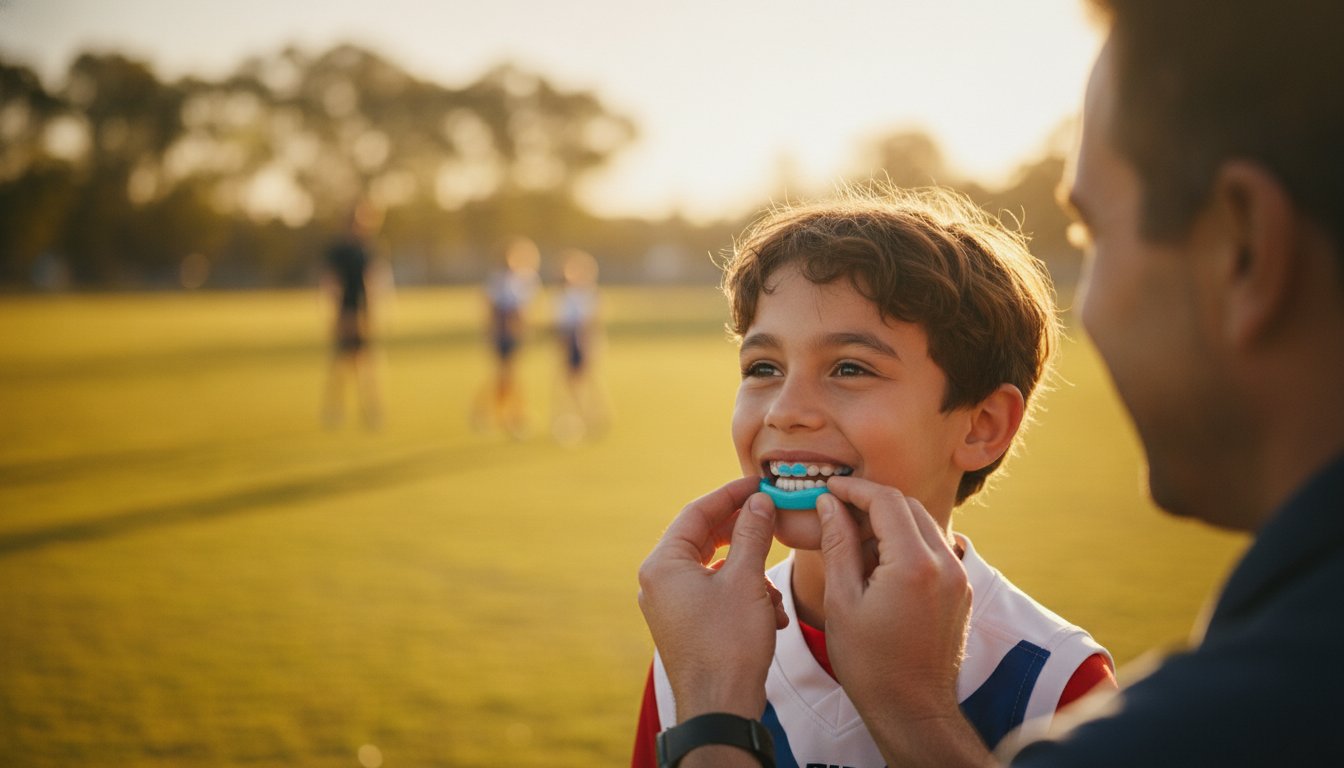
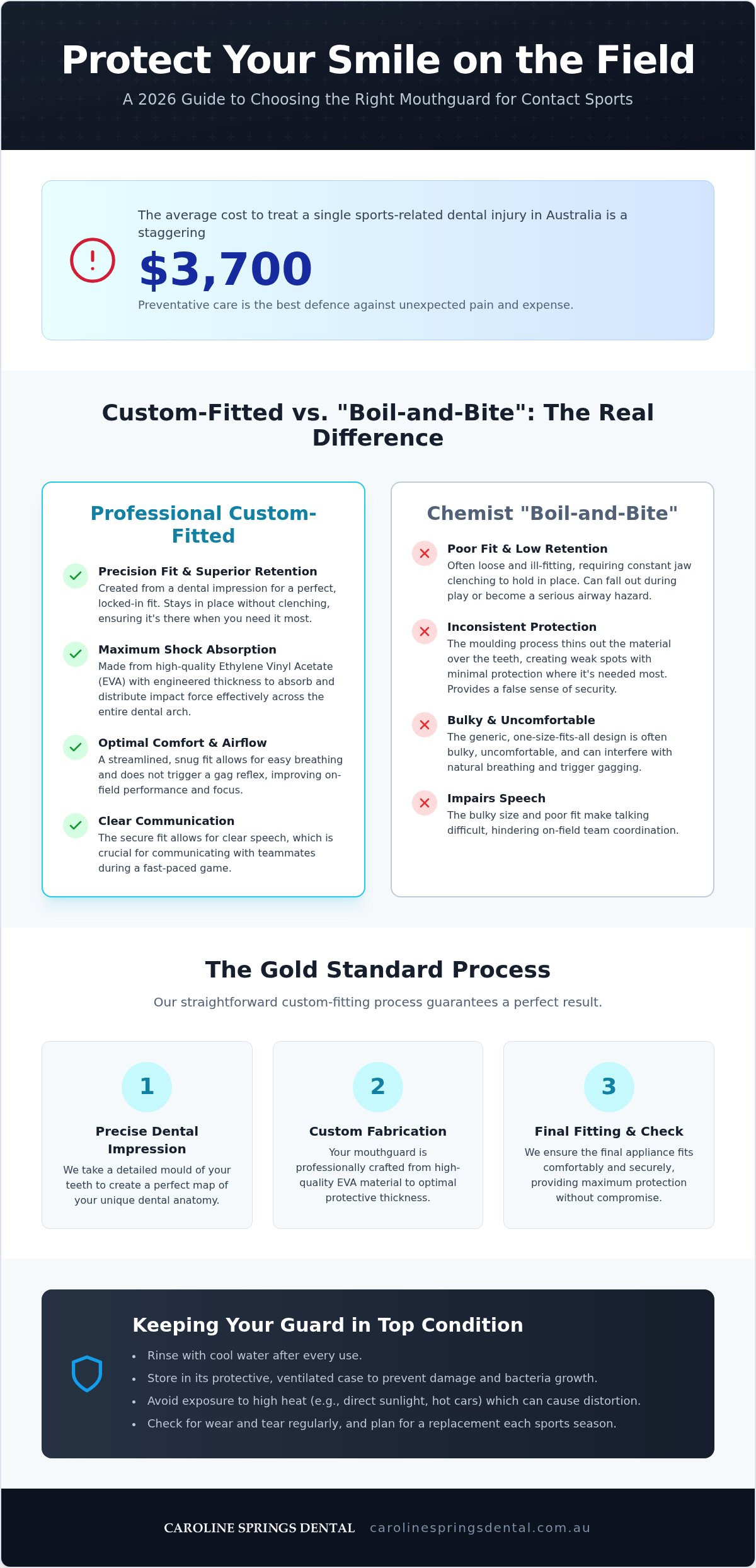
Did you know that the average cost of treating a single sports-related dental trauma case in Australia has now reached approximately $3,700? It is a staggering figure that highlights why choosing the right protection is about more than just ticking a box on the team registration form. While most families recognise that mouthguards for contact sports are essential, many still settle for basic “boil-and-bite” versions from the local chemist. These often feel bulky, make it hard for kids to talk to their teammates, and frequently fail to provide the shock absorption needed when a heavy tackle occurs on the footy or rugby field.
At Caroline Springs Dental Clinic, we understand the worry of facing a sudden, expensive emergency dental bill or seeing your child in pain after a weekend match. In this 2026 guide, you will discover why a professional, custom-fitted mouthguard is the only way to truly safeguard your family’s smiles this season. We will look at the latest safety regulations, compare different levels of protection, and show you how a precision fit allows for easy breathing and clear communication during the heat of the game.
Key Takeaways
- Learn why the Australian Dental Association’s “No Mouthguard, No Play” policy is essential for keeping your family safe on the footy and rugby fields.
- Understand the technical differences between high-quality EVA materials and “boil-and-bite” options to ensure you choose the best mouthguards for contact sports.
- Realise the long-term benefits of preventative care in avoiding the high costs and psychological impact of emergency dental surgery or tooth loss.
- Discover our straightforward custom-fitting process that guarantees a comfortable fit, allowing for easy breathing and clear talking during the game.
- Master simple maintenance and hygiene habits to keep your mouthguard in peak condition and identify exactly when it is time for a replacement.
Why Mouthguards for Contact Sports are Essential in 2026
A sports mouthguard is a precision-engineered, shock-absorbing appliance designed to fit comfortably over your upper teeth. While a comprehensive overview of mouthguards highlights their long history in athletics, the 2026 standard for safety has evolved significantly. The Australian Dental Association (ADA) maintains a firm “No Mouthguard, No Play” stance, reinforcing that dental protection is as fundamental to your kit as boots or headgear. By wearing one, you are not just protecting your enamel; you are creating a vital shield against fractured jaws and knocked-out teeth.
At Caroline Springs Dental Clinic, we support athletes across a wide range of disciplines. Whether you are competing in AFL, Rugby League, Rugby Union, Hockey, or Basketball, the risk of a sudden, high-velocity collision is a constant factor. These mouthguards for contact sports are designed to mitigate those risks by absorbing the energy from an impact before it can cause permanent damage to your smile or bone structure.
The “No Mouthguard, No Play” Policy in Australian Clubs
Local sports clubs throughout Melbourne’s West, including those in Burnside and Taylors Hill, are increasingly enforcing mandatory safety standards for every player on the field. In 2026, there is a clear shift towards requiring professional-grade protection rather than generic store-bought alternatives. It is a common mistake to assume that only the “rough” codes need protection; “participation” sports like netball and soccer carry high dental risks from stray elbows or accidental falls. Our team ensures that every athlete, regardless of their level, has access to the preventative care needed to stay in the game.
Beyond the Teeth: Protecting the Jaw and Soft Tissues
A high-quality mouthguard acts as an essential buffer between the soft tissues of your lips and your teeth, significantly reducing the likelihood of deep lacerations during a match. The science of shock absorption involves spreading the force of a blow across the entire dental arch, which helps to protect the jaw and surrounding structures from sudden displacement. Crucially, a properly fitted guard reduces the risk of biting through your tongue or cheek during a heavy collision on the field. This comprehensive level of protection is a cornerstone of how we approach family and children’s dentistry at Caroline Springs Dental Clinic.
Custom-Fit vs. Chemist Mouthguards: What is the Real Difference?
The technical difference between a generic tray and a professional appliance comes down to the quality of the material and the precision of the internal architecture. While chemist-bought options are often made from a single, thin layer of plastic, professional mouthguards for contact sports are constructed from high-quality Ethylene Vinyl Acetate (EVA). This material is chosen for its durability and its ability to maintain a consistent protective thickness even after months of heavy use. Unlike over-the-counter versions that can feel like a generic “one-size-fits-all” solution, dental-grade EVA is engineered to absorb and redistribute force far more effectively during a high-velocity impact.
The False Security of “Boil-and-Bite” Options
The “boil-and-bite” method relies on the user softening a plastic shell and attempting to mould it to their own teeth. This process frequently results in a poor fit because the material thins out significantly where you bite down, leaving the most vulnerable parts of your teeth with almost no protection. These guards often drop out of position during a match, forcing the athlete to constantly clench their jaw to keep the guard in place. This lack of retention is a serious safety concern; a loose guard can become a dangerous airway hazard if a player is winded or knocked unconscious during a collision.
According to the American Dental Association recommendations, an effective mouth protector must be comfortable, resilient, and stay firmly in position without interfering with speech or breathing. Chemist options rarely meet these standards, often feeling so bulky that they trigger a gag reflex or make it impossible to communicate effectively on the field.
Professional Custom-Fit: The Gold Standard
At Caroline Springs Dental Clinic, we use precise impressions to create a perfect map of your unique dental anatomy. This ensures the final appliance has superior retention, meaning it stays “locked” onto the upper teeth even when the mouth is open. This secure fit allows for effortless breathing and clear talking, which are vital for both safety and peak performance. We also offer personalisation options where players can choose their local club colours, helping kids feel like professionals when they take the field. If you want to ensure your family is wearing the best possible protection this season, you can book a consultation with our friendly team to discuss a custom-fit solution.
The True Cost of Sports Dental Injuries
When you are standing in a chemist aisle, the price difference between a generic tray and a professional appliance might seem significant. However, the real cost of choosing inadequate mouthguards for contact sports only becomes apparent when a tackle goes wrong. A single “cheap” mouthguard failure can lead to decades of dental maintenance, often starting with an expensive trip to an emergency dentist. Beyond the immediate financial sting, we often see the psychological trauma that dental injuries inflict on children and teenagers. Losing a front tooth or sustaining a facial scar during a weekend match can deeply affect a young person’s confidence and social wellbeing during their most formative years.
The American Dental Association recommendations highlight that athletes are sixty times more likely to suffer harm to the teeth when not wearing a guard. While modern restorative dentistry can work wonders in repairing sports damage, it is always a second-best option compared to keeping your natural teeth intact. Investing in prevention is not just a health decision; it is a long-term financial strategy for your family.
Common Sports-Related Dental Emergencies
The most distressing injury we treat is an avulsed, or knocked-out, tooth. In these cases, there is a critical 30-minute window to replant the tooth for the best chance of survival. Other frequent emergencies include fractured roots, which often necessitate root canal treatment to save the tooth structure, and deep soft tissue lacerations to the lips or tongue that require stitches. These procedures are complex, time-consuming, and far more invasive than a simple fitting appointment.
Long-term Maintenance: A Lifetime of Treatment
It is a common misconception that a dental bridge or implant is a “set and forget” solution. In reality, these restorations require ongoing care and will likely need replacing multiple times over a patient’s life. The recurring costs of maintaining crowns or veneers can add up to tens of thousands of dollars by the time a child reaches adulthood. The cost of one custom mouthguard is roughly 1% of the cost of treating a major dental trauma over 20 years. Choosing professional protection now prevents a lifetime of clinical appointments and restorative expenses.
The Custom Mouthguard Process at Caroline Springs Dental
Getting your professional gear ready for the season shouldn’t be a chore. At our clinic, we have streamlined the experience to ensure it is as stress-free and efficient as possible. Unlike ordering a generic product online, our process is clinical and thorough, ensuring that your mouthguards for contact sports provide the exact level of protection your specific anatomy requires. The journey from your first visit to game-day readiness involves five clear steps.
- Step 1: The Initial Consultation. We start by checking your overall oral health. It is vital to ensure there are no underlying issues, such as untreated decay or gum sensitivity, before we begin the fabrication process.
- Step 2: Taking the Impression. We use high-quality dental putty or advanced digital scans to create a perfect map of your teeth and gums. This ensures the guard will have the “suction” needed to stay in place during a tackle.
- Step 3: Laboratory Fabrication. Your unique mould is used to precision-craft the appliance. This typically takes between 1 to 2 weeks to complete, ensuring the material is layered correctly for maximum shock absorption.
- Step 4: The Fitting Appointment. Once your guard is ready, you will return to the clinic. We don’t just hand it over; we carefully place it to ensure it doesn’t rub or cause discomfort.
- Step 5: Final Adjustments. We check your bite and your ability to speak clearly. If anything feels slightly off, we make immediate on-site adjustments.
Why a Dentist Must Supervise the Fitting
A 3D scan or a home kit cannot replace the clinical eye of a professional. During the consultation, we specifically look for loose baby teeth or erupting permanent teeth in younger athletes. This is a crucial step because a guard that is too tight can interfere with natural dental development. We also ensure that the appliance is compatible with any ongoing orthodontic treatments, such as Invisalign. A dentist can provide professional advice on how the guard should feel against your gums to prevent irritation or soft tissue damage during long matches.
Personalising Your Guard for Your Local Club
We know that local pride is a big part of the weekend sport experience in Burnside, Melton, and Sydenham. To help kids feel like “pros” and encourage them to wear their safety gear, we offer customisation options to match your local club colours. We can even add names or phone numbers inside the material. This makes the guard easy to identify in a busy change room and gives players that extra boost of confidence. If you’re ready to get your family sorted for the season, you can book your fitting appointment online with our friendly Caroline Springs team today.
Caring for Your Mouthguard and When to Replace It
Investing in professional mouthguards for contact sports is the first step toward long-term dental safety, but the work doesn’t end at the fitting appointment. To ensure your appliance remains effective and hygienic, you must commit to a simple daily care routine. After every training session or match, get into the habit of rinsing your mouthguard immediately with cold water. This removes saliva and debris before they have a chance to harden. For a more thorough clean, use a soft-bristled toothbrush to gently scrub the surfaces, ensuring you reach the deep grooves where bacteria tend to hide.
Storage is just as important as cleaning. Always keep your guard in a sturdy, ventilated mouthguard case. Ventilation is crucial because it allows the material to dry completely, preventing the growth of unpleasant odours. One of the most common ways custom guards are ruined in Australia is through heat exposure. Never leave your equipment in a hot car or on a sunny windowsill. The intense Melbourne sun can quickly warp the high-quality EVA material, destroying the precise fit we worked so hard to achieve during your consultation.
Hygiene and Bacteria Prevention
A neglected mouthguard can quickly become a breeding ground for mould and bacteria, which can lead to gum irritation or even infections. It is a common mistake to think that boiling water will “sanitise” the guard. In reality, hot water will cause the custom-fitted shape to warp and lose its retention. Instead, stick to cold or lukewarm water for daily rinses. For a deeper clean, we recommend using specialised orthodontic cleaning tablets once a week. Simply soak the guard for the time specified on the packet to ensure it remains fresh and safe for use throughout the footy season.
Signs It Is Time for a New Mouthguard
Even with the best care, no mouthguard lasts forever. For our younger patients in children’s dentistry, we generally recommend a replacement every six months. This frequency is necessary to accommodate growing jaws and the eruption of new adult teeth, which can quickly change how the guard sits. For adults, a custom-fitted guard should typically be replaced every one to two years, or sooner if you notice visible signs of wear.
You should regularly inspect your gear for thinned-out areas, cracks, or deep bite marks. If the guard starts to feel loose or if you find yourself needing to clench your jaw to keep it in place, it is no longer providing the shock absorption you need. An ill-fitting guard from last season is not just uncomfortable; it is a safety risk that could lead to the very injuries you are trying to avoid. If you have noticed any changes in the fit of your gear, you can book a check-up with our Caroline Springs team to ensure you are fully protected for your next game.
Protect Your Smile for the Season Ahead
Playing hard on the field shouldn’t mean taking unnecessary risks with your dental health. We have explored why professional mouthguards for contact sports are the only reliable way to absorb impact and prevent the high costs of emergency restorative work. From the precision of the custom-fitting process to the importance of regular seasonal replacements for growing kids, the right gear is an essential investment in total peace of mind. A well-fitted guard doesn’t just protect your teeth; it allows you to focus entirely on your performance without the distraction of a bulky or loose appliance.
Our friendly team at Caroline Springs Dental is proud to be a trusted partner for local families across the Western Suburbs. With an expert children’s dentistry team and flexible payment options available, we make it simple to prioritise your family’s safety without any added stress. Don’t wait for a collision to occur on the footy or rugby field before you take action. You can book your custom mouthguard fitting at Caroline Springs Dental today to ensure everyone is ready for game day. We look forward to seeing you in the clinic and helping you play every match with confidence and a fully protected smile.
Frequently Asked Questions
Do I need a mouthguard if I wear braces?
Yes, it is actually even more critical to wear protection if you have fixed braces. An impact to the face can cause the metal brackets to cause significant lacerations to the inside of your lips and cheeks. We design custom guards that allow for the planned movement of your teeth while providing a protective shield over your orthodontic work, ensuring your treatment stays on track even after a heavy tackle.
How long does it take to get a custom mouthguard made?
The entire process for creating your custom appliance typically takes between 1 and 2 weeks. This timeframe allows our laboratory to precision-craft the guard to your unique dental mould, ensuring maximum shock absorption. We start with an initial impression and follow up with a dedicated fitting appointment to make sure everything feels comfortable and secure before you head out onto the footy field.
Can I use a mouthguard for multiple sports?
In most cases, a single high-quality guard can be used across various activities. However, if you participate in a mix of high-impact sports like rugby and lower-impact sports like basketball, you might require different levels of thickness for optimal safety. Our team can advise whether your specific guard provides enough protection for all the different sports you and your family enjoy playing.
What should I do if my child’s tooth is knocked out during a game?
Act quickly by picking the tooth up by the crown, never the root. If it is clean, try to gently place it back in the socket; otherwise, keep it moist in a container of milk or the patient’s saliva. You must reach an emergency dentist within 30 minutes to give the tooth the best chance of being successfully saved. Having a professional fit helps prevent these distressing situations from occurring in the first place.
How much does a custom-fitted mouthguard cost in Melbourne?
The investment in a custom appliance varies based on the design and materials required for your specific activity. While we provide transparent information at our clinic, we suggest contacting our team for a quote tailored to your needs. Many local families find that high-quality mouthguards for contact sports are a sensible investment when compared to the thousands of dollars required for emergency restorative work after a serious injury.
Does private health insurance cover the cost of sports mouthguards?
Most private health insurance providers with “Extras” cover will include a rebate for sports mouthguards. These are usually listed under general dental services in your policy. Since every fund is different, we suggest checking with your provider to see how much of the cost is covered. Many families in our community find they have very little out-of-pocket expense after their insurance claim is processed.
Are custom mouthguards better for preventing concussions?
The primary role of a professional mouthguard is to protect the teeth and jaw from direct impact. While some athletes believe they help prevent concussions by cushioning the jaw, clinical evidence for this specific benefit is still being studied by experts. Their proven value lies in spreading the force of a blow across the dental arch, which significantly reduces the risk of knocked-out teeth and fractured jawbones during a collision.
Can I talk and breathe easily with a custom-fit mouthguard?
Yes, this is one of the most significant benefits of a professional fit compared to a chemist version. Because the guard is moulded exactly to your dental arch, it stays in place without you needing to clench your teeth. This leaves your airway clear for easy breathing during high-intensity play and allows you to communicate clearly with your teammates without the appliance shifting or falling out.