


Have you ever bitten down on something soft, only to feel a sudden, sharp jolt that makes you wince? That stabbing sensation is often the first sign of cracked tooth pain, a condition that can feel as confusing as it is uncomfortable. You might find yourself wondering if it’s just a sensitive cavity or if your tooth is truly at risk. It’s completely natural to feel a bit of anxiety about what comes next, especially when the pain seems to come and go without warning.
We understand how much this uncertainty can impact your daily life, from enjoying a meal at a local cafe to simply getting through your workday in Caroline Springs. This guide is designed to give you clarity and peace of mind. You’ll learn how to identify the specific signs of a fracture, discover safe ways to manage the ache at home, and understand the gentle restorative options available to save your tooth. We will walk you through the latest treatments in Melbourne’s Western Suburbs, from biomimetic restorations to modern crowns, helping you move from sudden discomfort to a confident, healthy smile.
Key Takeaways
- Spot the subtle signs of a fracture, specifically sharp sensations that occur when you release pressure after biting down.
- Learn how to manage cracked tooth pain safely at home with temporary relief measures until you can see a professional.
- Recognise when a simple crack has progressed into a dental emergency, such as an abscess or serious infection.
- Discover how modern digital imaging and custom crowns can restore your smile’s strength and prevent further damage.
- Understand the common local causes of tooth fractures and how to protect your family’s oral health with preventative care.
What is Cracked Tooth Pain? Understanding the Warning Signs
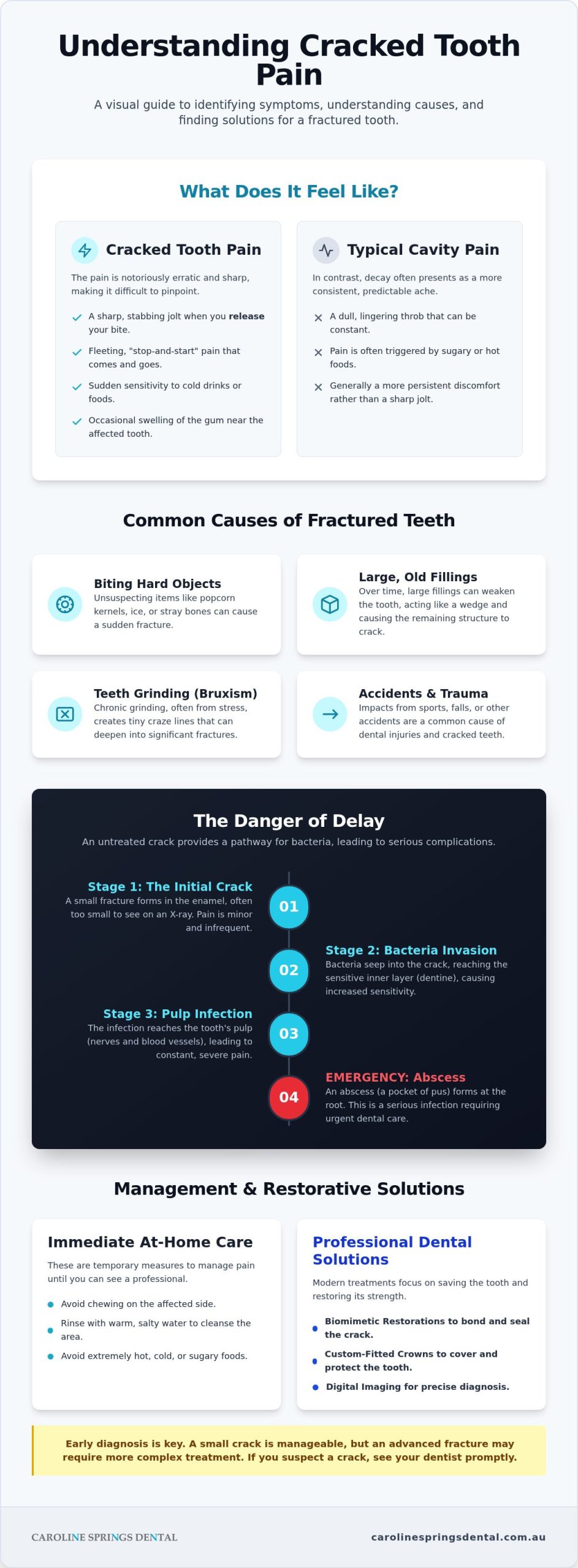
Identifying the source of dental discomfort isn’t always straightforward. While a cavity typically causes a dull, lingering ache, cracked tooth pain is notoriously erratic. You might feel a sharp, stabbing jolt one moment and absolutely nothing the next. This unpredictability often leads people to delay treatment, hoping the issue will simply resolve itself. However, the unique nature of a crack means the pain often occurs when you release pressure after biting down on food. This happens because the pressure of biting forces the crack open; when you let go, the crack snaps shut, irritating the sensitive nerves inside.
Unlike the constant throb associated with deep decay, crack-related sensations are often fleeting. This “stop-and-start” nature is exactly what makes it so dangerous. Because the pain isn’t always there, it’s easy to ignore the early warning signals. Unfortunately, every time you chew, you risk the crack spreading further toward the tooth pulp, which can turn a manageable fix into a complex dental emergency.
The Sensation of “Cracked Tooth Syndrome”
Clinical professionals often refer to this specific pattern of discomfort as Cracked tooth syndrome. It is a common condition where the fracture is often too small to be seen on a traditional X-ray but deep enough to cause significant distress. You might notice a brief, sharp pain specifically when chewing firm foods like crusty bread or nuts. Another hallmark sign is sudden sensitivity when drinking cold liquids, such as an iced coffee or cold water. In some cases, you might even notice occasional swelling of the gum tissue right next to the affected tooth, which suggests the tooth structure is under significant stress.
Why Cracks are More Than Just a Cosmetic Issue
A crack in your enamel is far more than a visual imperfection; it’s a breach in your tooth’s protective armour. These microscopic openings allow bacteria to migrate into the inner “pulp” of the tooth, where the nerves and blood vessels reside. Once the pulp becomes infected, the risk of developing a painful dental abscess increases significantly. This type of infection won’t go away on its own and often requires more intensive treatment to resolve.
Choosing to see a family dentist Caroline Springs as soon as you notice these fleeting jolts is a proactive step for both your health and your wallet. Early intervention allows for more conservative treatments before the damage reaches the root. Our goal is always to protect your natural tooth structure, ensuring your smile remains strong and functional without the need for more invasive procedures later on.
Common Causes of Fractured Teeth in the Western Suburbs
Understanding why a tooth fractures is the first step toward long-term prevention. In our community, we see several recurring factors that lead to structural damage. A common culprit is biting down on something unforgiving. This might be a rogue unpopped popcorn kernel during a movie night or a stray piece of bone in a meal. Similarly, teeth that have large, older fillings are at a higher risk. Over time, these fillings can act like a wedge, putting constant pressure on the remaining natural tooth walls until a fracture finally occurs. This structural failure is a primary driver of cracked tooth pain among adults.
When these failures happen, seeking professional treatment for cracked teeth is essential to stop the damage from reaching the sensitive inner pulp. If you’ve noticed a sudden twinge when eating, it’s often a sign that the tooth’s integrity has been compromised. Addressing these issues early can often mean the difference between a simple repair and a more complex procedure.
The Role of Bruxism and Teeth Grinding
Many residents in the Western Suburbs lead busy, high-pressure lives. This daily stress often manifests as bruxism, or chronic teeth grinding, which usually happens during sleep. Over years, this constant, heavy pressure creates “craze lines” in your enamel. While these tiny surface cracks might initially seem harmless, they can eventually deepen into significant fractures. If you wake up with a sore jaw or a dull headache, you might be grinding your teeth at night. A custom-fitted occlusal splint can provide a protective barrier, cushioning your teeth and preventing further cracked tooth pain from developing.
Lifestyle and Accidental Trauma
Our local area is incredibly active. Whether it’s weekend footy in Melton or soccer matches in Caroline Springs, physical trauma is a frequent cause of dental injuries. For active families, investing in professional custom mouthguards is one of the most effective ways to prevent a fractured tooth. Unlike store-bought versions, custom guards are designed to absorb impact specifically for your unique bite, offering superior protection during contact sports.
Even small habits can contribute to fractures over time. Abrupt temperature changes, such as sipping hot tea immediately after eating something frozen, cause your enamel to expand and contract rapidly. This thermal stress can weaken the tooth structure. If you are concerned about a recent “twinge” or want to check the health of older fillings, you can book a thorough assessment with our friendly team to catch potential issues before they escalate.
Immediate Relief: Managing Cracked Tooth Pain at Home
If you’re currently dealing with a sharp, unexpected jolt, your first priority is likely finding a way to settle the discomfort. While home remedies can provide a much-needed reprieve, it’s vital to remember they are only temporary stop-gaps. They don’t fix the physical fracture in your enamel. Managing cracked tooth pain at home is about staying comfortable until you can get into the clinic for a professional assessment. We always recommend reaching out to your dentist as soon as symptoms appear, as early intervention is the best way to prevent a small crack from becoming a major problem.
One of the most effective ways to reduce inflammation is using an external cold compress. Apply a cold pack to the outside of your cheek for about 15 minutes at a time. This helps constrict blood vessels and can numb the area slightly. Additionally, you should be mindful of your diet while the tooth is sensitive. Avoid extremely hot or cold drinks, as well as sugary or acidic foods, which can trigger a painful response from the exposed nerves.
Safe Pain Management Guidelines
In Australia, dental professionals often suggest a specific approach for managing acute dental inflammation. Combining paracetamol and ibuprofen is frequently considered the “gold standard” for over-the-counter relief, as they work through different pathways to target both pain and swelling. However, you should always consult your pharmacist first to ensure this combination is safe for your specific health profile. As noted by the American Association of Endodontists, the type and depth of a crack will dictate how much relief these medications can provide.
Another simple but effective habit is rinsing with warm salt water. This helps keep the area clean and reduces the bacterial load around the fracture. A common mistake to avoid is the “aspirin on the gum” myth. Never place an aspirin tablet directly against your gum tissue; the acidity can cause a painful chemical burn, making your situation much worse.
Practical Tips for Comfort
To keep the pressure off the affected area, try to chew exclusively on the opposite side of your mouth. This prevents the “flexing” of the crack that causes that signature sharp pain. You might also find that brushing with a sensitive toothpaste helps dull the tooth’s reaction to temperature changes. If the pain becomes constant, or if you notice swelling spreading toward your jaw or neck, you should transition from home care to an emergency dentistry visit immediately. These symptoms often indicate that the crack has allowed an infection to reach the pulp, requiring more urgent clinical attention.
Recognising a Dental Emergency in Melbourne West
Residents in Deanside, Taylors Hill, and Caroline Springs often lead active lives, which can occasionally lead to unexpected dental trauma. While we’ve explored how to manage mild discomfort, there is a clear line where cracked tooth pain shifts from a nuisance to a genuine emergency. A tooth that has split completely or become loose after a fall requires immediate clinical attention to have any chance of being saved. Similarly, if a crack has allowed bacteria to reach the root, you may experience a relentless, throbbing ache that keeps you awake at night. This is often a sign of an abscess, a serious infection that can spread to the jaw and surrounding tissues if left untreated.
Prioritising care is especially important for our younger patients and those who feel particularly nervous about dental visits. We understand that a dental crisis is overwhelming. Our team is dedicated to providing a calm, supportive environment to help lower your anxiety while we address the source of your distress. Whether it’s a sports injury from a weekend match or a sudden flare-up of an old fracture, knowing how to triage the situation can save your tooth.
Emergency Triage Checklist
If you aren’t sure whether your situation requires urgent care, follow these three steps to assess the severity of the issue:
- Step 1: Check for visible facial swelling, a persistent fever, or a foul taste in your mouth. These are common indicators of a spreading infection that needs professional intervention.
- Step 2: Evaluate your breathing and swallowing. If swelling in the mouth or jaw is making it difficult to breathe or swallow, this is a medical emergency. Call 000 immediately for hospital assistance.
- Step 3: If your symptoms are confined to the mouth but involve severe cracked tooth pain or a visibly broken tooth, contact Caroline Springs Dental Clinic right away for a priority assessment.
Local Emergency Care Access
We believe that everyone in the Western Suburbs should have access to prompt, high-quality dental care when they need it most. Caroline Springs Dental Clinic is committed to seeing emergency cases from across the region as quickly as possible. We know that an unexpected dental injury can bring financial stress along with physical pain. To help ease this burden, we offer flexible payment options, ensuring you can focus on your recovery rather than the cost of treatment.
If you are experiencing severe discomfort or have suffered a dental injury, please contact us for an emergency appointment so we can help restore your comfort and protect your smile.
Restorative Solutions: How We Fix Cracked Teeth
Once you arrive at our Caroline Springs clinic, our first goal is to determine the exact extent of the damage. We use advanced digital imaging to see beyond what is visible to the naked eye, identifying how deep a fracture actually goes. This precision is vital for resolving cracked tooth pain effectively, as the depth of the crack dictates the necessary treatment. Not every fracture requires a complex fix; a superficial craze line might only need monitoring, whereas a deeper structural crack requires immediate support to prevent the tooth from splitting further.
Our approach to restoration is always focused on preserving as much of your natural tooth as possible. By using modern materials that mimic the strength and appearance of natural enamel, we can restore both the function of your bite and the aesthetics of your smile. We understand that dental procedures can cause some worry, which is why we take a methodical, calm approach to every restorative plan.
Saving vs. Replacing a Cracked Tooth
For minor surface cracks that haven’t reached the inner pulp, a simple composite filling can often seal the area and restore the tooth’s integrity. However, when the crack is more significant, we often recommend dental crowns and bridges. A crown acts like a protective cap, encasing the tooth and holding it together under the intense pressure of biting. If the damage is so extensive that the crack reaches below the gum line, the tooth may no longer be saveable. In these instances, we can discuss dental implants as a durable, natural-looking replacement that restores your smile’s strength.
If the fracture has allowed bacteria to enter the tooth’s centre, you might require root canal treatment to save the natural structure. While many patients feel anxious about this procedure, it is actually a highly effective way to eliminate infection and stop persistent cracked tooth pain. By removing the damaged pulp and sealing the canal, we can often keep your original tooth in place for many years to come.
Your Journey to a Pain-Free Smile
We believe that restorative care should be a partnership between the dentist and the patient. During your consultation in Caroline Springs, we’ll take the time to explain every option, ensuring you feel informed and respected. Our clinic’s focus on gentle professionalism means we prioritise your comfort at every stage, from the initial digital scan to the final placement of your custom restoration. Protecting your smile is about more than just fixing a single crack; it’s about long-term health and confidence. If you’re ready to find a permanent solution for your discomfort, book your appointment online today and let us help you get back to enjoying life in the Western Suburbs without the worry of dental pain.
Secure Your Smile and Find Lasting Relief
Dealing with a fractured tooth doesn’t have to be a source of constant anxiety. By recognising the early warning signs and understanding your restorative options, you’ve already taken the most important step toward recovery. It’s vital to remember that while home care can temporarily dull the sensation, only a professional assessment can stop a crack from progressing further into the tooth’s root. At Caroline Springs Dental Clinic, we’ve spent over a decade helping families across the Western Suburbs navigate these exact challenges with a focus on gentle, patient-centred care.
Our modern clinic uses state-of-the-art diagnostic technology to pinpoint the source of your cracked tooth pain, ensuring we choose the most conservative treatment to save your natural smile. Whether you need a simple composite filling or a custom-fitted crown, our team is here to provide a stress-free experience in a welcoming environment. Don’t let a small fracture turn into a major dental emergency. Book an Emergency Appointment at Caroline Springs Dental Clinic today to regain your comfort and confidence. We look forward to helping you get back to your best.
Frequently Asked Questions
How can I tell the difference between a cavity and a cracked tooth?
Cavities often cause a dull, lingering ache or sensitivity to sweet foods; however, cracked tooth pain is usually sharp and occurs specifically when you let go after biting down. While a cavity is a hole caused by decay, a crack is a structural failure in the enamel. Because these fractures are often invisible to the naked eye, they require professional diagnostic tools to differentiate them from standard decay.
What is the best painkiller for severe tooth pain in Australia?
Australian pharmacists often recommend a combination of paracetamol and ibuprofen for acute dental inflammation, as these work through different pathways to manage discomfort. You should always speak with a healthcare professional before starting any new medication to ensure it’s appropriate for your health profile. This combination is effective for temporary relief while you wait for a clinical assessment, but it won’t fix the underlying fracture.
Can a cracked tooth heal on its own without a dentist?
No, a cracked tooth cannot heal on its own because dental enamel does not have the ability to regenerate like skin or bone. Once the structural integrity of the tooth is compromised, the fracture will likely expand under the daily pressure of chewing. Leaving it alone usually leads to more complex issues, so seeking early intervention is the only way to prevent the crack from spreading toward the root.
Is a cracked tooth considered a dental emergency if it doesn’t hurt?
A crack can certainly be an emergency even if you aren’t currently in pain. Even a painless fracture acts as a gateway for bacteria to enter the inner pulp, which can eventually lead to a sudden, severe infection. Getting an early check-up in Caroline Springs allows us to seal the tooth before cracked tooth pain develops, potentially saving you from more invasive and expensive procedures later on.
How much does it cost to fix a cracked tooth in Caroline Springs?
The cost of treatment depends entirely on the depth of the fracture and the restorative method required to fix it. A minor surface crack might only need a simple composite filling, while a deep fracture might necessitate a custom crown or root canal therapy. We suggest checking your private health insurance policy for dental benefits or discussing our flexible payment plans during your consultation to help manage the investment.
What happens if I leave a cracked tooth untreated for too long?
Ignoring a fracture often leads to a painful dental abscess or the complete loss of the tooth. As the crack deepens, it eventually reaches the nerves in the pulp, causing intense inflammation that cannot be reversed with simple fillings. In the worst-case scenario, the tooth may split so far below the gum line that extraction becomes the only viable option to protect your jaw health.
Can a cracked tooth cause pain in my jaw or ear?
Yes, it is quite common for dental issues to cause referred pain in the jaw, neck, or even the ear. Because the nerves in your face are closely interconnected, the inflammation from a fractured tooth can radiate outward, making it difficult to identify the exact source of the ache. If you experience earache alongside sensitivity when chewing, it’s worth having a thorough dental examination to rule out a fracture.
Will I need a root canal for every cracked tooth?
No, a root canal is only necessary if the crack has extended into the tooth’s pulp and caused an infection. If we catch the fracture early, we can often protect the tooth with a simple filling or a crown without needing to treat the internal nerves. Our goal is always to provide the most conservative treatment possible to maintain your natural tooth structure and ensure a pain-free result.