

Imagine it’s 8:00 PM on a Tuesday, and a sudden, throbbing ache makes it impossible to sleep or focus. Or perhaps a weekend footy match ends with a knocked-out tooth and a panicked rush to find help. Finding a reliable emergency dentist Caroline Springs shouldn’t be another source of stress when you’re already in pain.
We understand that dental crises rarely happen at a convenient time. The uncertainty of whether to head to the hospital or wait until morning can feel overwhelming, especially when you’re worried about the long-term health of your smile. You deserve a clear, calm path to recovery when things go wrong.
This guide will help you identify what constitutes a true dental emergency, provide practical tips for managing pain at home, and explain how to access urgent professional care. We’ll also explore the common procedures used to save damaged teeth, giving you a straightforward plan for fast relief and a healthy recovery.
Key Takeaways
- Learn how to distinguish between a minor toothache and a true dental emergency, such as facial swelling or uncontrolled bleeding, to ensure you get the right care quickly.
- Discover essential first aid steps you can take at home to manage pain and stabilise a knocked-out tooth before arriving at the dental surgery.
- Understand why visiting an emergency dentist Caroline Springs is often more effective than a hospital visit, as clinics have the specialised tools needed to treat the source of your pain.
- Find out how seeking immediate treatment for dental trauma can actually reduce your long-term costs by avoiding more complex restorative procedures later on.
- Access information on same-day emergency appointments for residents in the Western Suburbs, including Deanside, Taylors Hill, and Burnside.
Recognising a Dental Emergency: When to Seek Urgent Care
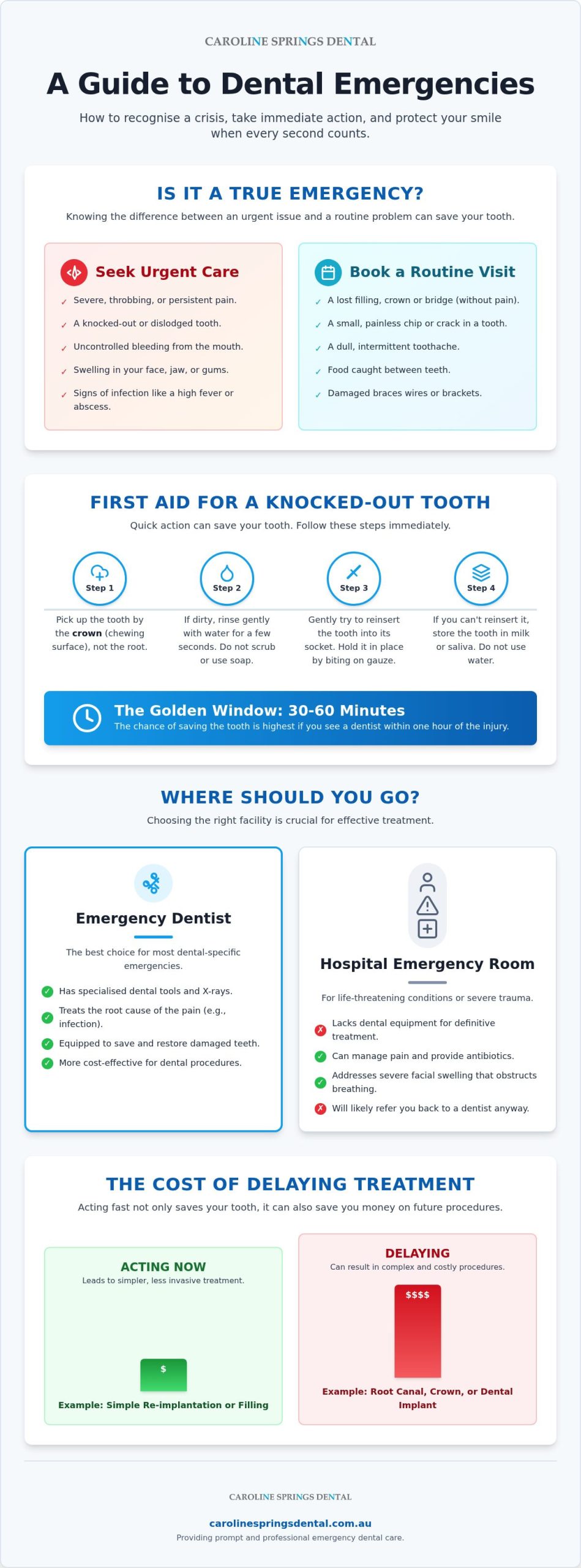
How do you know if that sudden twinge in your tooth requires an immediate trip to the dentist or if it can wait for a standard check-up? Generally, a dental emergency involves any situation that requires prompt intervention to stop persistent bleeding, alleviate excruciating pain, or save a tooth that has been knocked loose. Understanding the basics of Recognising a Dental Emergency is the first step toward protecting your long-term oral health and avoiding unnecessary complications.
Primary indicators that you need an emergency dentist Caroline Springs include visible facial swelling, uncontrollable bleeding from the gums or mouth, or a high fever that accompanies a severe toothache. While it might be tempting to wait until the next business day, delaying treatment can be risky. Dental issues don’t resolve on their own; instead, they often escalate into systemic infections that can spread to the jaw, neck, or even the bloodstream. In 2025, over 80,000 Australians were hospitalised for preventable dental issues, many of which could have been managed earlier in a clinical setting. In many cases, a tooth that could have been saved with a simple procedure on Saturday might be lost permanently by Tuesday if treatment is delayed.
It’s helpful to distinguish between “urgent” and “routine” care. Routine issues include a lost filling without pain, a small chip that isn’t sharp, or a dull ache that comes and goes. Urgent care is necessary for anything that prevents you from sleeping, eating, or working, or any trauma that has physically altered your tooth structure.
Severe Pain and Unexplained Swelling
Pain is your body’s alarm system. If you’re experiencing a throbbing sensation that radiates from the tooth toward your jawline, ear, or neck, it’s often a sign of deep-seated inflammation or infection. This type of pain rarely responds to over-the-counter medication for long and can quickly become debilitating. One of the most serious concerns is a dental abscess. A dental abscess is a pocket of infection that requires immediate drainage and treatment. If left untreated, these infections can lead to significant swelling that may eventually obstruct your airway or affect your general health, making it vital to see an emergency dentist Caroline Springs at the first sign of a persistent bulge on the gums.
Trauma: Knocked-Out or Broken Teeth
Accidents happen, whether on the sports field or at home. If a tooth is completely knocked out, time is your greatest enemy. There is a “golden window” of approximately 30 to 60 minutes to replant the tooth for the best chance of survival. Beyond this timeframe, the delicate ligaments on the root begin to die, making a successful reattachment much less likely. It’s also important to differentiate between a minor chip, which is usually cosmetic, and a deep fracture. A fracture that exposes the dental pulp—the soft centre containing nerves and blood vessels—is a major emergency that requires an immediate visit. For parents, acting quickly with children’s dental trauma is vital; even if it’s a baby tooth, the underlying adult teeth need protection from infection or displacement caused by the impact.
Common Dental Emergencies and Immediate First Aid Steps
When a dental crisis strikes, your first reaction is often panic. However, staying calm is your best tool for managing the situation. Keeping your heart rate steady helps control bleeding and allows you to think clearly while you prepare to see an emergency dentist Caroline Springs. While you’re on your way to the surgery, following a few simple steps can make the difference between saving and losing a tooth. As the American Dental Association defines, these situations require immediate action to alleviate severe pain or manage tissue damage.
For pain relief, over-the-counter anti-inflammatories like ibuprofen are typically more effective for dental issues than paracetamol alone, as they target the swelling at the source. If you’ve suffered a physical injury, restorative dentistry in Caroline Springs offers modern solutions to rebuild your smile once the initial trauma is stabilised. Don’t delay; prompt action is the key to a stress-free recovery.
How to Handle a Knocked-Out Tooth
If a tooth is knocked out, you must act with speed and care. Pick up the tooth by the crown (the chewing surface) and never touch the root, as this can damage the living cells needed for reattachment. If the tooth is dirty, rinse it gently with water for a few seconds. Do not scrub it or use soap. If possible, try to gently re-insert the tooth back into its socket and hold it there. If that isn’t an option, place the tooth in a small container of milk or even your own saliva to keep it moist until you reach the clinic.
Managing a Broken or Cracked Tooth
A fractured tooth can be incredibly sensitive. Start by rinsing your mouth with warm salt water to clean the area and kill bacteria. If the injury was caused by an impact, apply a cold compress to the outside of your cheek to keep the swelling down. If the broken tooth has a sharp edge that’s cutting your tongue or cheek, you can temporarily cover it with a piece of sugar-free gum. This simple trick provides a smooth barrier until a professional can repair the damage.
Dealing with a Severe Toothache or Abscess
A throbbing toothache often signals an underlying infection. You might be tempted to place an aspirin tablet directly against the aching gum, but you should never do this; it can cause a painful chemical burn on your soft tissues. Instead, try flossing gently to ensure no trapped food debris is causing the pressure. If the pain is caused by a deep infection, a root canal treatment is often the most effective way to remove the bacteria and save the natural tooth. If you’re unsure of your next step, our team is here to help you identify the right treatment for your specific situation.
Dental Clinic vs. Hospital ER: Making the Right Choice
When you’re in the middle of a dental crisis, the urge to rush to the nearest hospital is understandable. However, most public and private hospital Emergency Rooms are not actually equipped with dental instruments or on-site dentists. This means that while they can offer triage, they cannot perform the definitive work needed to stop your pain for good. In most cases, your first point of contact should be your local family dental clinic.
National data shows that the average time spent in an Australian emergency room for dental-related problems is approximately 2 hours and 46 minutes. Even after that wait, 56% of dental admissions result in a discharge with only a prescription for antibiotics or painkillers, leaving the underlying problem untouched. An emergency dentist Caroline Springs provides the specific clinical care required to fix the issue on the spot, rather than just masking the symptoms for a few days. By choosing a dental surgery, you’re accessing a professional who can perform immediate extractions, fillings, or nerve treatments that a general doctor simply isn’t trained to do.
When to Go Straight to the Hospital
While a dentist is the best choice for teeth, certain symptoms are medical emergencies that require a hospital’s trauma team. You should head straight to the ER or call 000 if you experience difficulty breathing or swallowing, as this suggests severe swelling that could block your airway. Other critical reasons include suspected jaw fractures, significant facial trauma involving other bones, or uncontrollable bleeding that doesn’t stop after 15 minutes of firm, continuous pressure. In these life-threatening scenarios, systemic stabilisation is the priority over dental repair.
Why the Dentist is Best for Tooth Pain
For almost any other tooth-related issue, a dental clinic is the superior option because of the specialised diagnostic tools available. We use digital X-rays to see exactly what’s happening beneath the gum line, allowing for a precise diagnosis that isn’t possible with a visual exam alone. This precision leads to immediate restorative work, which prevents further damage to your oral health. Unlike the ER, a dentist provides a long-term solution that addresses the root cause of your discomfort. Whether it’s a damaged nerve or a broken crown, we aim to provide a permanent fix that saves your natural tooth and restores your comfort in a single visit.
Managing the Costs of Emergency Dental Care
Many residents worry about the financial impact of an unexpected trip to an emergency dentist Caroline Springs. It’s a valid concern, especially since data from 2024–25 indicates that 16% of Australians who needed dental care delayed or avoided it due to cost. However, waiting usually leads to more complex and expensive treatments down the road. A small cavity that could be fixed with a simple composite filling today might require a complex root canal or extraction if an infection is allowed to spread. Addressing the problem early is the most effective way to protect both your oral health and your budget.
We believe in full transparency, even when you’re in the middle of a crisis. Our team provides clear explanations of the necessary procedures and a straightforward quote before any treatment begins. This ensures you can make informed decisions without the stress of hidden fees. You can view our full range of payment options and health funds to see how we work with different providers to make urgent care more accessible for everyone in our community.
Health Insurance and Medicare in Australia
Most private health insurance “extras” policies provide coverage for emergency consultations and basic restorative work. We utilise HICAPS technology, which allows you to claim your rebate on the spot, so you only pay the “gap” amount at the time of your appointment. Remember to bring your physical or digital health fund card with you to the surgery. For families, it’s also worth checking if your children are eligible for the Child Dental Benefits Schedule (CDBS). This government initiative provides up to $1,095 over two calendar years for essential dental services for eligible children, helping to ease the pressure on the family budget during an emergency.
Flexible Payment Plans
If you’re facing a larger upfront cost for complex trauma or multiple restorative fixes, flexible payment solutions can help spread the financial commitment. Modern clinics offer various plans that allow you to pay for your treatment over several weeks or months. Our priority is always to relieve your pain and stabilise your condition as quickly as possible. We encourage you to be open about any financial concerns during your initial triage call. This allows us to discuss the most suitable path forward and ensures that your comfort remains the top priority. If you’re currently in pain, the best first step is to book a same-day emergency appointment so we can assess the situation and provide a clear plan for relief.
Prompt Emergency Dental Care at Caroline Springs Dental Clinic
When you’re facing a dental crisis, you don’t just need a clinician; you need a partner who understands your anxiety and prioritises your comfort. At Caroline Springs Dental Clinic, we’re dedicated to being that trusted local guide for our neighbours in the Western Suburbs. Our practice serves as a central hub for residents in Deanside, Taylors Hill, and Burnside, providing a welcoming environment where clinical expertise meets community-focused care. As an emergency dentist Caroline Springs, we reserve time in our daily schedule specifically for patients in pain, ensuring you aren’t left waiting for the relief you deserve.
Our approach is built on a foundation of gentle professionalism. We know that a dental emergency is often accompanied by high stress, particularly if the issue involves complex procedures like wisdom tooth extraction or other urgent surgeries. By combining modern efficiency with a traditional focus on individual attention, we aim to lower your anxiety from the moment you walk through our doors. Whether it’s a throbbing ache or a broken restoration, our team has the on-site tools and expertise to provide functional, lasting solutions that restore your peace of mind.
Our Emergency Triage Process
Your journey to recovery starts the moment you pick up the phone. When you call us with a crisis, our trained team provides immediate, practical advice to help you manage the situation until you arrive at the surgery. We prioritise your scheduling based on the severity of your symptoms, ensuring that those in the most significant distress are seen as a matter of urgency. Once you’re at the clinic, our initial assessment focuses on rapid pain management and stabilising the condition. We take great pride in our family-oriented atmosphere; we go the extra mile to ensure children feel safe and supported during dental trauma, turning a potentially scary experience into a calm, manageable one.
Booking Your Appointment in Caroline Springs
Accessing urgent care shouldn’t be a complicated process when you’re already in discomfort. You can secure your visit by booking an appointment online through our streamlined portal or by calling our friendly reception team directly during business hours. Our clinic is centrally located with easy access and ample parking, making it a convenient destination for anyone in the Western Suburbs. Don’t let a dental emergency disrupt your life any longer than it has to. Our team is ready and waiting to help you save your smile and get back to your day with confidence and comfort.
Secure Your Smile and Find Relief Today
A dental crisis can be a frightening experience, but you don’t have to face it alone. By recognising the signs of urgent trouble and taking the right first aid steps, you can significantly improve the chances of saving your natural teeth and preventing systemic infection. While a hospital ER is a vital resource for life-threatening trauma, an emergency dentist Caroline Springs is the only professional equipped with the specific clinical tools and expertise to provide a permanent, restorative fix for the source of your pain.
We are proud to support our neighbours across Caroline Springs and the wider Western Suburbs with a gentle approach designed to calm even the most anxious patients. Don’t let pain or uncertainty compromise your oral health. With same-day emergency slots available during business hours, our team is ready to provide the fast relief and expert care you need to get back on track with confidence. Book an Emergency Appointment Now and let us help you restore your comfort today.
Frequently Asked Questions
How do I know if my toothache is a dental emergency?
A toothache is considered a dental emergency if the pain is accompanied by facial swelling, a high fever, or bleeding that won’t stop. If the discomfort is so severe that it prevents you from sleeping or working, you should contact an emergency dentist Caroline Springs immediately. Minor twinges can often wait for a standard appointment, but throbbing pain that radiates to your jaw or ear usually signals an infection that needs prompt attention.
Can I go to the hospital for a dental emergency in Melbourne?
You should only go to a Melbourne hospital emergency department if you are experiencing life-threatening symptoms like difficulty breathing, swallowing, or a suspected jaw fracture. Most hospitals aren’t equipped with dental instruments and don’t have dentists on-site to perform fillings or extractions. For any issue localised to the teeth or gums, a dental clinic is the best place to receive definitive treatment rather than just temporary pain relief.
What should I do if my child knocks out a permanent tooth?
Immediately pick up the tooth by the crown, rinse it gently with water if it’s dirty, and try to place it back into the socket. If you can’t re-insert it, store the tooth in a small container of milk or the child’s saliva to keep the root cells alive. You have a “golden window” of about 30 to 60 minutes to reach a dentist for the best chance of saving the tooth. Acting quickly is vital for your child’s long-term oral health.
Is an emergency dental appointment more expensive than a regular one?
The cost of an emergency visit depends on the complexity of the treatment required to stabilise your condition. While there is a consultation fee to diagnose the problem, seeking help early is almost always more affordable than waiting. A simple fix today prevents a minor issue from turning into a severe infection that requires more expensive restorative work. We always provide a transparent quote before starting any procedure so you know exactly what to expect.
How quickly can I get an emergency appointment at Caroline Springs Dental?
We provide same-day emergency appointments during our regular business hours to ensure you get fast relief when you need it most. When you call us, our team will triage your situation over the phone and find the earliest possible time for you to see an emergency dentist Caroline Springs. Our priority is to manage your pain and stabilise any trauma as quickly as possible to prevent further damage.
Can a broken dental crown wait until the next day?
A broken crown can often wait until the next day if you aren’t experiencing severe pain, bleeding, or significant swelling. However, you should still call our surgery for advice, as the underlying tooth may be sensitive or have sharp edges that could cut your cheek. Avoid chewing on that side of your mouth and keep the area as clean as possible until we can see you to repair or replace the restoration.
What happens if a dental abscess is left untreated?
Leaving a dental abscess untreated can lead to a serious systemic infection that spreads to your jaw, neck, or even your bloodstream. Because an abscess is a pocket of bacteria, it won’t clear up on its own and will continue to destroy the surrounding bone and tissue. Prompt treatment, such as a root canal or drainage, is essential to stop the infection from becoming a medical emergency that requires hospitalisation.
Do you offer emergency wisdom tooth removal?
Yes, our clinic offers emergency wisdom tooth extraction for patients suffering from severe pain, impaction, or infection. Wisdom tooth issues can cause intense pressure and swelling that makes it difficult to open your mouth or eat. Our experienced team can assess the position of the tooth using digital X-rays and perform the necessary surgery on-site to provide immediate relief and prevent the infection from spreading to neighbouring teeth.