


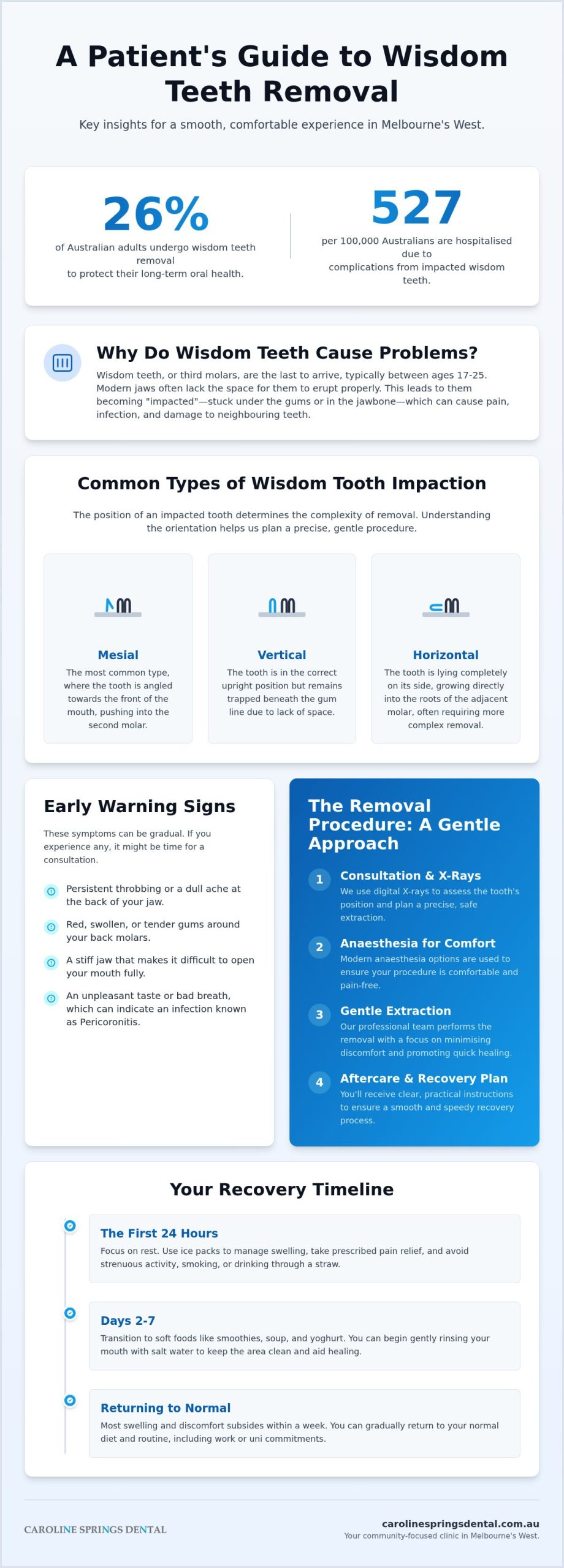
Did you know that roughly 26 per cent of Australian adults eventually undergo wisdom teeth removal to protect their long-term oral health? While it’s a very common procedure, it is completely normal to feel a bit of trepidation about the surgery. Whether you’re a student at Victoria University worried about missing classes or a busy parent in Caroline Springs concerned about the recovery, you aren’t alone in your anxiety. Many of our neighbours in the western suburbs deal with jaw stiffness and recurring infections for months before finally seeking professional help.
We understand that you want a clear, predictable path to a pain-free smile without any clinical jargon or hidden surprises. This 2026 patient guide covers everything you need to know about the extraction process right here in our local community. We’ll walk you through the early warning signs of impacted teeth, how to maximise your private health fund benefits, and what a typical recovery timeline looks like. By the end of this guide, you’ll have the confidence to address those wisdom tooth concerns and return to your daily routine with a healthy, comfortable smile.
Key Takeaways
- Learn to identify the early warning signs of impacted molars, such as persistent jaw tenderness or gum swelling, before they lead to more complex dental issues.
- Understand the step-by-step process of wisdom teeth removal, including how modern anaesthesia options and thorough X-ray assessments are used to prioritise your comfort.
- Discover a practical recovery timeline and aftercare strategies to help you manage the first 24 hours and return to your work or uni commitments as quickly as possible.
- Find out how to streamline your visit using HICAPS for on-the-spot health fund claims at our community-focused clinic in Melbourne’s West.
- Gain peace of mind by learning how a gentle, professional approach can transform a daunting surgery into a manageable step for your long-term oral health.
What Are Wisdom Teeth and Why Do They Cause Problems?
Wisdom teeth, officially known as third molars, are the final set of permanent teeth to emerge in the mouth. Most people see them arrive between the ages of 17 and 25, a period historically associated with reaching “the age of wisdom.” While they once served a vital purpose for our ancestors who consumed a diet of tough, raw foods, modern humans have evolved with smaller jaw structures. This lack of space is the primary reason why these teeth often fail to erupt properly, leading many patients in Melbourne’s West to seek professional advice on wisdom teeth removal.
When a third molar has enough room to grow in straight and aligns well with the other teeth, it can be a functional part of your bite. However, it’s far more common to encounter Impacted wisdom teeth. This occurs when the tooth is blocked or “stuck” under the gum or bone. Because these issues often start without any obvious pain, our team in Caroline Springs begins monitoring the development of these molars during the mid-teens. By using digital X-rays, we can predict how the teeth will erupt and address potential problems before they cause discomfort or infection.
The Different Types of Impaction
The way a tooth is positioned significantly influences the complexity of its extraction. A mesial impaction is the most frequent type we see; it happens when the tooth grows at an angle pointing toward the front of the mouth. Conversely, vertical impactions are positioned straight up but lack the room to break through the gum, while horizontal impactions lie on their side, pushing directly into the roots of the neighbouring molars. We also categorise these by whether they are soft tissue impactions, where the tooth is trapped just under the gum, or bony impactions, where the tooth remains partially or fully encased within the jawbone. Understanding these orientations allows us to plan a precise, gentle procedure tailored to your specific anatomy.
When “Wait and See” Is Not the Best Option
It’s a common misconception that you should only consider wisdom teeth removal if you’re in active pain. Proactive care is often the better choice for long-term health. Leaving an impacted tooth in place can lead to the development of cysts or damage the healthy second molars sitting right next to them. If you’ve spent years in braces or used Invisalign treatment to perfect your smile, the pressure from erupting wisdom teeth can sometimes cause crowding that shifts your teeth out of alignment. Removing them while the roots are only partially formed, typically in your late teens or early twenties, usually makes for a simpler procedure and a faster, more predictable recovery period.
Symptoms: Signs You Might Need Wisdom Tooth Extraction
Identifying the need for wisdom teeth removal isn’t always as straightforward as a sudden, sharp ache. For many of our patients in Caroline Springs and Taylors Hill, the signs are gradual and easy to dismiss as temporary stress or a minor cold. You might notice a dull, persistent throb at the back of your jaw or a general tenderness that makes chewing your favourite meal a bit of a chore. Some of the most frequent indicators we see in our clinic include:
- Persistent throbbing or pressure at the very back of the jaw.
- Gums that appear red, swollen, or tender to the touch.
- Bleeding gums when brushing or flossing near the second molars.
- A stiff jaw that makes it difficult to open your mouth fully.
Ignoring these signals can lead to more significant discomfort, making wisdom teeth removal a necessary step for relief. Research indicates that impacted teeth are a serious health concern, leading to the hospitalisation of 527 out of every 100,000 Australians. This pressure can radiate throughout the face, making it feel like a muscular issue or a tension headache rather than a dental concern. When your jaw feels tight or your gums are consistently inflamed, your body is likely signalling that there simply isn’t enough room for those third molars to settle in safely.
Recognising Pericoronitis and Infections
When a tooth only partially erupts, it creates a small flap of gum tissue known as an operculum. This area acts as a “food trap” that is nearly impossible to clean with a standard toothbrush or floss. Bacteria thrive in these warm, hidden spaces, leading to a localised infection called pericoronitis. You might notice an unpleasant, salty taste in your mouth or persistent bad breath that doesn’t go away even after a thorough clean. These recurring infections are a clear indicator that the Wisdom tooth extraction procedure may be the best path forward to prevent the infection from spreading to other areas of the mouth.
Subtle Signs You Shouldn’t Ignore
Sometimes the symptoms aren’t located in your jaw at all. Upper wisdom teeth sit very close to the maxillary sinuses. As they grow or become impacted, they can exert upward pressure that leads to frequent sinus headaches, facial pain, or a feeling of congestion that doesn’t respond to typical cold medicine. We also see many young adults who report mysterious earaches or a sudden change in how their teeth fit together. If you’ve noticed your front teeth starting to overlap or feel “crowded,” it could be the result of your wisdom teeth pushing your entire dental arch forward. If any of these symptoms sound familiar, it’s a good idea to chat with a professional. You can easily book a consultation with our friendly team to get a clear, reassuring picture of your oral health.
The Wisdom Tooth Removal Procedure: What to Expect
Your journey toward a healthier smile begins with a thorough initial consultation at our clinic. We use high-resolution digital X-rays to map out the exact position of your teeth and the unique shape of their roots. This assessment is vital because no two mouths are the same. For those seeking a deeper understanding of the clinical rationale behind these decisions, this evidence-based overview on wisdom teeth removal provides excellent insights into why extraction is often the most reliable path for long-term health. Once we have a clear map of your jaw, we’ll discuss anaesthesia options tailored to your comfort level.
Most wisdom teeth removal procedures are performed under local anaesthetic. This ensures the extraction site is completely numb, so you only feel slight pressure rather than pain. During the process, our dentist gently creates space to access the tooth. If a tooth is impacted, we may remove it in small sections to protect the surrounding bone and gum tissue. After the tooth is out, we meticulously clean the site and may place small dissolvable stitches to encourage proper healing. We also believe financial clarity is essential for a stress-free experience. Our clinic provides various payment options and health funds support, including HICAPS for on-the-spot claims, to help you manage the investment in your health.
Preparation for Your Appointment
A little bit of organisation goes a long way in ensuring a smooth day. If you are having local anaesthesia, you can usually eat a light meal before your visit, but we’ll confirm specific instructions during your pre-op chat. It’s essential to arrange for a friend or family member to drive you home to Deanside or Melton afterward, as you might feel a bit tired or groggy. Don’t hesitate to ask questions during your consultation. We find that patients who ask about the expected duration or specific aftercare steps feel much more relaxed when they arrive for the actual procedure.
Managing Dental Anxiety
We know that the thought of dental surgery can be intimidating for many people. Our team uses a philosophy of gentle professionalism to create a calm, supportive environment from the moment you walk through our doors. By combining modern technology with a warm, community-focused approach, we aim to make the process feel familiar rather than cold or clinical. Choosing a local Caroline Springs dentist means you are being cared for by neighbours who truly value your comfort. This personalised attention is often the key to helping patients overcome their fears and achieve a pain-free daily life.
Recovery and Aftercare: Ensuring a Smooth Healing Process
The first 24 hours are the most critical stage of your healing journey. After your wisdom teeth removal, your primary goal is to encourage a stable blood clot to form in the extraction site. This means biting firmly on the provided gauze for at least 30 minutes and avoiding any strenuous activity that could raise your blood pressure. Rest is not just a suggestion; it’s a vital part of the process. Keep your head elevated with extra pillows when you lie down to help reduce any facial swelling and prevent unnecessary pressure on the surgical sites.
Managing discomfort is straightforward when you stay ahead of the curve. We usually recommend taking your first dose of pain relief while the local anaesthetic is still active. Whether you’re using over-the-counter options or a specific prescription from our team, consistency is key during the first two days. You’ll also want to stock your fridge with soft, cool foods before your appointment. Think of things like Greek yoghurt, mashed avocado, or lukewarm pumpkin soup. For a more comprehensive look at what to expect, you can read our detailed recovery guide to help you prepare.
The Do’s and Don’ts of Aftercare
To keep the healing site protected, you must avoid using straws or smoking for at least a week. The suction created by these actions can dislodge the blood clot, leading to significant complications. After the first 24 hours, you can begin gentle salt-water rinses to keep the area clean. Mix half a teaspoon of salt in a glass of warm water and let it soak over the area rather than swishing vigorously. Most patients can return to light walks within a few days, but it’s best to hold off on the gym or high-impact sports until our team gives you the all-clear during a follow-up.
Preventing and Identifying Dry Socket
Dry socket is a condition where the protective blood clot is lost, exposing the underlying bone and nerves. It is notoriously painful and usually presents as a throbbing ache that intensifies around day three or four after surgery. You might also notice a dull pain radiating toward your ear or an unpleasant odour from the site. While it’s a manageable issue, it does require a quick visit to our clinic so we can apply a soothing dressing to the area. If your pain isn’t improving with regular medication, don’t tough it out. If you have questions about your healing or want to discuss wisdom teeth removal for yourself or a family member, book a consultation with our gentle team today.
Why Choose Caroline Springs Dental Clinic for Your Extraction?
Choosing where to undergo wisdom teeth removal is a significant decision that impacts both your comfort and your long-term health. Unlike large, impersonal dental franchises, Caroline Springs Dental Clinic operates as a dedicated local hub for families across Melbourne’s West. We have spent years building genuine relationships with residents in Burnside, Taylors Hill, and St Albans, providing a level of care that feels personal rather than clinical. Our goal is to ensure you feel like a valued neighbour, not just another number on a daily schedule.
This community-first approach is backed by our capacity to manage your entire dental journey under one roof. From initial assessments to restorative dentistry, we provide the comprehensive support needed to keep your smile functional and bright. We also understand the importance of financial convenience, which is why we offer HICAPS for on-the-spot health fund claims. Whether you need a routine check-up or emergency assistance for a sudden toothache, our team is ready to step in with the gentle professionalism you deserve.
Community-Focused Dental Care
We believe that the best dental outcomes happen when there is a foundation of trust between the patient and the practitioner. By creating personalised treatment plans, we address the specific concerns of every individual, from teenagers facing their first surgery to adults managing complex impactions. You will see the same friendly faces at every visit, which helps to significantly lower the anxiety often associated with wisdom teeth removal. We don’t just focus on the immediate extraction; we look at how these changes affect your long-term oral health and jaw alignment.
Booking Your Consultation
We have made the first step toward a pain-free life as simple as possible. Our easy online booking system allows you to find a time that fits your busy schedule without the back-and-forth of multiple phone calls. When you arrive for your first assessment, please bring any previous dental X-rays you might have and a list of your current medications. Our team will handle the rest, guiding you through the assessment with the care and expertise you would expect from a trusted local partner. You can rest easy knowing you are in safe, expert hands right here in Caroline Springs.
Take the Next Step Toward a Comfortable Smile
Addressing your third molars early is one of the most effective ways to avoid the jaw stiffness and recurring infections that often accompany impacted teeth. By recognising the early symptoms and following a structured recovery plan, you can ensure that wisdom teeth removal is a straightforward part of your health journey rather than a source of anxiety. Our team is here to support you with gentle, community-focused care that prioritises your comfort and long-term oral health at every stage.
As a trusted local family practice, we make the entire process as seamless as possible for our neighbours in Melbourne’s West. From using HICAPS for on-the-spot health fund claims to providing clear, reassuring aftercare instructions, we handle the details so you can focus on your recovery. You deserve to live your life without the distraction of persistent dental pain or the worry of future crowding. Book your wisdom tooth consultation at Caroline Springs Dental Clinic today and gain the confidence that comes with expert, local care. We look forward to helping you maintain a healthy, vibrant smile for years to come.
Frequently Asked Questions
How much does wisdom teeth removal cost in Melbourne?
The cost for removing wisdom teeth in Melbourne is determined by the complexity of the case and the number of teeth involved. A simple extraction for a tooth that has already erupted usually involves a different fee structure than a complex, bony impaction. During your consultation, we provide a detailed breakdown of the costs based on your specific X-rays. We also offer HICAPS for on-the-spot health fund claims to help manage your out-of-pocket expenses effectively.
What is the best age to have your wisdom teeth removed?
The ideal time for wisdom teeth removal is generally between the ages of 17 and 25. During these years, the tooth roots aren’t yet fully developed and the surrounding jawbone is less dense, which often leads to a smoother procedure and a faster recovery. Early monitoring in the mid-teens allows us to identify potential issues before they cause pain. However, we successfully perform extractions for adults of all ages who experience sudden discomfort.
How long does the wisdom tooth extraction procedure take?
A standard wisdom tooth extraction procedure typically takes between 20 and 90 minutes depending on the number of teeth and the complexity of their position. A single, straightforward extraction is quite quick, while removing four impacted teeth requires more time for careful cleaning and stitching. This timeframe includes the initial numbing process to ensure you’re comfortable. We focus on a steady, methodical pace to prioritise your safety and a predictable outcome.
Can I drive myself home after the surgery?
You shouldn’t drive yourself home if you’ve had any form of sedation or if you feel physically shaken after the procedure. Even with a local anaesthetic, the physical stress and natural adrenaline drop can leave you feeling tired or groggy. We strongly recommend arranging for a friend or family member to drive you home to Deanside or Burnside. It’s much safer to have someone support you until you’re settled comfortably on your couch.
When can I return to work or school after an extraction?
Most patients can return to work or school within two to three days after their extraction. If your daily routine involves heavy lifting or intense physical activity, you might need up to a week of rest to prevent complications like bleeding. Everyone heals at a different pace, so it’s best to listen to your body’s signals. We can provide a medical certificate for your employer or university to help you manage your time off properly.
Is wisdom tooth removal covered by Medicare or private health funds?
Medicare doesn’t usually cover extractions for adults, but private health funds with “major dental” extras often provide significant rebates. Eligible children aged 0-17 may be able to access benefits through the Child Dental Benefits Schedule (CDBS), which provides up to $1,158 over two years. We use HICAPS at our front desk so you can claim your health fund benefit on-the-spot. This reduces your out-of-pocket expenses immediately without the need for manual paperwork.
What can I eat during the first few days of recovery?
You should eat soft, cold foods like yoghurt, smoothies, and lukewarm soups during the first few days of your recovery. Avoid using straws, as the suction can dislodge the protective blood clot and lead to a painful dry socket. Excellent options include mashed pumpkin, avocado, or scrambled eggs once you feel ready for slightly firmer textures. Just remember to chew on the opposite side of the extraction site to keep the area undisturbed and clean.
What happens if I decide not to have my wisdom teeth removed?
Deciding not to remove impacted teeth can lead to cysts, chronic infections, and permanent damage to neighbouring molars. Over time, the pressure from these third molars can also cause your other teeth to shift, potentially undoing years of orthodontic work. While not every wisdom tooth requires extraction, ignoring a problematic one often results in more complex and expensive emergency surgery later. Regular check-ups allow us to monitor their position and protect your health.