


Did you know that nearly one in four Australian children between the ages of six and fourteen have already experienced decay in their permanent adult teeth? It is a confronting statistic for any parent, especially when you are doing your best to manage daily brushing routines and healthy lunchboxes. Many local families are now turning to fissure sealants for children as a proactive way to stop cavities before they even start. You likely worry about your little one needing invasive fillings or developing a fear of the dentist, but there is a much gentler way to protect their growing smile.
We understand these concerns and believe that dental visits should be a positive, stress-free experience for your family. Fissure sealants provide a painless, effective shield that protects the deep grooves in permanent molars from decay for years to come. In this guide, we will explain exactly how sealants work, the best age to consider them, and how this simple treatment can save you from more complex and costly procedures down the track. You will discover how easy it is to give your child’s adult teeth a head start on a healthy, cavity-free life.
Key Takeaways
- Understand how sealants act as a protective barrier, filling deep grooves in molars where toothbrushes often struggle to reach effectively.
- Discover why applying fissure sealants for children is a completely pain-free process that requires no drilling or needles, ensuring a positive dental experience.
- Identify the ideal “Goldilocks window” for treatment, which typically begins around age six when the first permanent molars emerge.
- Learn why preventative sealants are a more cost-effective and durable solution than waiting to treat decay with traditional restorative fillings.
- Explore how a holistic approach to preventative care can shield your child’s adult teeth from damage and boost their long-term confidence.
Understanding Fissure Sealants: A Proactive Shield for Your Child’s Teeth
When your child’s permanent molars finally emerge, they bring a brand-new set of challenges for their daily oral hygiene. These back teeth are designed for heavy-duty chewing, but their complex surfaces also make them the most likely place for cavities to develop. Dental sealants act as a proactive barrier, sealing off the vulnerable parts of the tooth from food particles and acid-producing bacteria. Think of it as a protective raincoat for the tooth. By applying this thin, BPA-free plastic coating, we can effectively stop the “filling cycle” before it even begins. Once a tooth is drilled and filled, it often requires larger restorations later in life; keeping the natural tooth structure intact is always our primary goal. This preventative approach is why we often recommend fissure sealants for children as a standard part of their long-term health plan.
The Anatomy of a Molar: Why Fissures are Decay Magnets
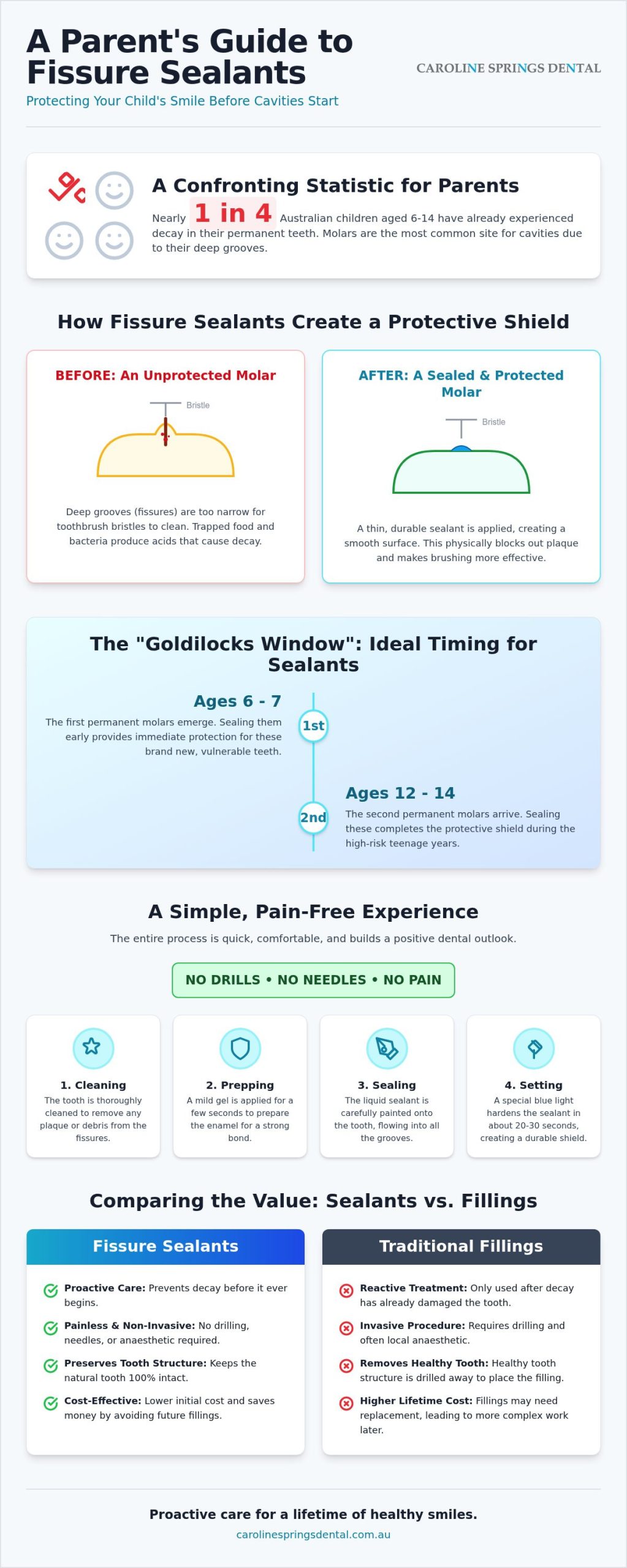
If you look closely at a molar, you will see a landscape of peaks and valleys. These valleys, known as pits and fissures, are often much deeper and narrower than they appear. In fact, many of these grooves are actually thinner than a single bristle on a toothbrush. This means that no matter how well your child brushes, they simply cannot reach the bottom of these microscopic crevices to clear out plaque. Bacteria thrive in these protected spaces, feasting on sugar and producing acids that eat away at the enamel. Because newly erupted permanent teeth are not yet fully mineralised, they are particularly soft and susceptible to this damage. By filling these valleys with a smooth resin, we level the playing field and make the tooth surface much easier to keep clean with a standard toothbrush.
Who Should Get Sealants? Identifying the Ideal Candidates
The Australian Dental Association recommends fissure sealants for children as their permanent molars arrive, typically between the ages of six and fourteen. This period is the “Goldilocks window” because the teeth are most vulnerable shortly after they erupt. While children’s dentistry is our main focus for this treatment, teenagers and even some adults can benefit if they have particularly deep grooves and no existing fillings. Our team assesses each tooth individually to see if a sealant will provide the best long-term protection for your family’s smiles. We often find that sealing the first permanent molars around age six and the second molars around age twelve provides the most comprehensive shield against decay during these high-risk years.
The Sealant Procedure: A Simple, Pain-Free Experience
Many parents feel a sense of relief when they learn that applying fissure sealants for children is a completely non-invasive process. Unlike traditional restorative work, there is absolutely no drilling involved, and your child won’t need any local anaesthetic or numbing. It’s a quick, comfortable appointment that usually takes less than ten minutes per tooth. Because the procedure is so straightforward, it often serves as a wonderful way to build your child’s confidence in the dental chair. The American Dental Association on sealants notes their high efficacy in preventing caries, and part of that success comes from how easily they can be applied during a routine visit.
Step-by-Step: What Your Child Will Experience
We follow a methodical yet gentle process to ensure the sealant stays firmly in place for years. Here is exactly what happens during the visit:
- Cleaning: We start by thoroughly cleaning the tooth surface with a small, rotating brush to remove any lingering plaque or food debris.
- Prepping: A mild “etching” gel is applied to the chewing surface for a few seconds. This creates a microscopic texture that helps the sealant bond securely to the enamel.
- Sealing: We wash and dry the tooth before painting on the liquid resin. It flows into every deep pit and fissure, much like water filling a tiny crack.
- Setting: We use a special blue LED “magic light” to cure the material. This hardens the sealant in about 20 to 30 seconds.
Once the material has set, we check your child’s bite to make sure everything feels normal and comfortable. If the coating feels a bit high, we can easily smooth it down in seconds. If you’re ready to protect your little one’s smile, you can easily book an appointment online with our friendly team.
The Gentle Dentist Approach: Managing Dental Anxiety
We know that a child’s first few clinical experiences shape their lifelong attitude toward oral health. Our team uses positive, age-appropriate language to explain each step, often referring to the procedure as painting on tooth vitamins or giving their teeth a protective shield. We maintain a calm, unhurried environment at our Caroline Springs clinic, where parents are always welcome to stay in the room. This presence provides vital reassurance and helps the child feel safe. By focusing on comfort and clear communication, we ensure that preventative care like fissure sealants for children remains a stress-free milestone in their health journey.
Why Timing Matters: When Should Your Child Get Sealants?
Timing is the most critical factor in the success of preventative dental care. For most families, the ideal window to apply fissure sealants for children is immediately after the permanent molars have fully erupted but before decay has any chance to settle into the grooves. Waiting for even a tiny spot of decay to appear before acting often defeats the purpose of the treatment. Once the enamel is compromised, a restorative filling becomes necessary to stop the spread. By following the American Dental Association guidelines on sealants, we aim to protect these teeth while they are at their most vulnerable. This ensures the protective barrier is in place long before the first cavity has a chance to form.
The 6-Year and 12-Year Milestones
The arrival of the first permanent molars around age six is a major dental milestone that often goes unnoticed by parents. Unlike other adult teeth, these molars do not replace a baby tooth; they simply erupt at the very back of the mouth. Because no baby teeth fall out to make room for them, many parents assume they are still primary teeth and might not prioritise their protection. However, these teeth are at the highest risk for early decay because they are notoriously difficult for a six-year-old to reach effectively with a toothbrush. A second wave of protection is usually needed around age twelve when the second set of permanent molars emerges. During our children’s dentistry assessments, we also keep a close eye on the premolars. If these teeth have deep pits, they may also benefit from a quick application to ensure the entire chewing surface of the mouth is shielded.
Can You Seal Baby Teeth?
While sealants are primarily designed for permanent teeth, there are specific scenarios where we might recommend them for primary (baby) teeth. If a child is at a very high risk for decay or has particularly deep grooves in their baby molars, sealing them can be a wise investment. Baby teeth play a vital role in holding space for adult teeth and guiding them into the correct position as they grow. If a baby tooth is lost prematurely due to decay, it can lead to significant crowding and orthodontic issues later on. We do not seal every baby tooth as a matter of course. Instead, we look at the individual needs of each child to determine if this extra layer of protection is a cost-effective way to prevent painful infections and future complications.
Comparing the Value: Sealants vs. Traditional Fillings
Choosing fissure sealants for children is ultimately a choice between proactive prevention and reactive restoration. While a dental filling is an excellent way to repair a tooth that has already suffered damage, it still involves removing a portion of the natural enamel. An intact tooth that has never been drilled remains structurally superior and much more resistant to future issues. This is crucial because every time a filling is replaced over a person’s life, the hole in the tooth inevitably gets larger. Financially, the investment in a sealant is significantly lower than the cost of a multi-surface filling. Beyond the numbers, there is a massive psychological win for your child. By choosing sealants, you help them avoid the more invasive procedures that often trigger dental anxiety, fostering a much healthier and more positive relationship with their oral health.
The Child Dental Benefits Schedule (CDBS) in Australia
Many local families can access these preventative treatments through the Australian Government’s Child Dental Benefits Schedule (CDBS). As of 1 January 2026, this programme provides up to $1,158 in benefits over a two-calendar-year period for eligible children. Fissure sealants for children are typically fully covered under this cap, making it an incredibly accessible option for parents in Melbourne’s Western Suburbs. We recommend checking your child’s eligibility through Medicare or by speaking with our team about your payment and health fund options. If you aren’t sure if your child is eligible for the CDBS, you can book a consultation today to find out.
Maintenance: Do Sealants Last Forever?
Sealants are incredibly durable, but they aren’t indestructible. With proper care and regular brushing, they can protect a tooth for anywhere from five to ten years. During this time, they endure the daily pressure of chewing and grinding. Occasionally, a sealant might chip or wear down in certain spots, especially if a child has a diet high in very hard or sticky foods. If this happens, we can easily touch it up or replace it during a routine check-up without any discomfort. This is why regular visits are so important; they allow us to monitor the integrity of the shield and ensure no bacteria have managed to sneak underneath. Maintaining your child’s sealants is a simple, stress-free part of their broader preventative dental plan that ensures their adult teeth stay healthy for the long haul.
Preventative Care at Caroline Springs Dental Clinic
Choosing a local dentist who understands your family’s needs is the first step toward a lifetime of healthy smiles. At Caroline Springs Dental Clinic, we are deeply committed to the families of Caroline Springs, Deanside, and Taylors Hill. We don’t just see ourselves as clinicians; we are your partners in health. By establishing a “Dental Home” for your child, we can track their development from their first baby tooth through to their final permanent molars. This consistency allows us to recommend treatments like fissure sealants for children at the exact moment they will be most effective, ensuring no window of opportunity for prevention is missed.
Our approach goes beyond just fixing problems as they arise. We believe in a holistic strategy that looks at every aspect of your child’s lifestyle. For instance, we often recommend combining sealants with custom fit dental mouthguards if your little one is active in local sports. While sealants protect the chewing surfaces from decay, a mouthguard protects the entire tooth structure from physical trauma on the footy field or netball court. Together, these tools provide a comprehensive safety net for your child’s developing smile.
Comprehensive Children’s Dentistry in Melbourne’s West
Integrating sealants into a wider preventative dentistry for children plan ensures that every angle of their oral health is covered. During your visit, our team takes the time to educate kids on proper brushing and flossing techniques in a way that feels fun and engaging. We want them to leave our clinic feeling empowered to look after their own teeth. By serving the local community with modern, accessible solutions, we aim to make high-quality dental care a predictable and stress-free part of your family’s routine.
Ready to Protect Your Child’s Smile?
We’ve made it simple to prioritise your child’s oral health with easy online booking and flexible appointment times designed for busy parents. You can find detailed information on our payment options and health funds on our website to help you plan your visit with transparency. When you come in for your child’s first sealant appointment, please bring along any relevant health fund cards and a list of any questions you might have. Our friendly team is here to guide you through the process and ensure you feel completely comfortable with the care your child receives. Applying fissure sealants for children is one of the most effective ways to invest in their future confidence; let’s work together to keep their smile bright.
Give Your Child a Lifetime of Healthy Smiles
Protecting your child’s permanent teeth doesn’t have to be a source of stress or anxiety. By opting for fissure sealants for children, you are choosing a simple, pain-free shield that stops decay before it starts. This proactive step keeps the natural tooth structure intact and avoids the need for more invasive fillings later in life. Our family-friendly clinic in Caroline Springs specialises in creating positive dental experiences for our youngest patients. We make the process as smooth as possible with on-site Hicaps and CDBS processing, ensuring your family can access essential care without any paperwork headaches. With our specialised children’s dentistry experience, we’ll guide you through every milestone, from those first six-year molars to the arrival of the second set at twelve. It’s an investment in their health that builds confidence and a happy relationship with the dentist. Ready to get started? Book Your Child’s Preventative Check-up Today and give them the gift of a cavity-free future.
Frequently Asked Questions
Do fissure sealants hurt to have put on?
Fissure sealants for children are completely painless to apply. Since the procedure only involves cleaning the tooth and painting on a protective resin, there is no need for any drilling or local anaesthetic. Most kids find the experience quite easy and stress-free, often describing it as feeling like having their teeth painted. We focus on making the visit comfortable so your child feels relaxed and positive throughout the entire process.
Are dental sealants safe for my child?
Yes, dental sealants are a very safe and widely recommended preventative treatment. They are made from a medical-grade plastic resin that is specifically designed to be biocompatible with the mouth. Modern materials used in Australian clinics are typically BPA-free and meet strict therapeutic standards. By creating a physical barrier against bacteria, they provide a safe way to prevent cavities without the need for more invasive restorative work later in life.
How long do fissure sealants last on average?
On average, fissure sealants can last anywhere from five to ten years with proper oral hygiene and care. While they are very durable, they do face constant wear and tear from daily chewing and grinding. We check the condition of the sealants during every six-monthly check-up to ensure they remain intact. If a sealant does wear down or chip, we can easily touch it up or replace it to maintain that vital protective shield.
Can my child eat normally after getting sealants?
Your child can eat and drink normally as soon as they leave our clinic. Because we use a specialised curing light to harden the resin instantly, the sealant is fully set before the appointment ends. There is no waiting period or restricted diet required after the visit. We simply suggest they continue to avoid very sticky or hard lollies, as these can occasionally pull at the sealant or the tooth itself over time.
What happens if a fissure sealant falls off?
If a sealant falls off or chips, the tooth simply returns to its original state without the extra protection. It does not cause any pain or damage to the underlying enamel. However, it does mean that food and bacteria can once again settle in those deep, vulnerable grooves. If you notice a sealant is missing, just let us know at your next visit so we can reapply it and restore the protective barrier.
Is there an alternative to fissure sealants?
There is no direct “coating” alternative that provides the same physical barrier as a sealant. However, maintaining excellent oral hygiene and using fluoride treatments can help strengthen the enamel. While fluoride makes the tooth more resistant to acid, it cannot physically fill the deep pits and fissures where food gets trapped. For children with deep grooves, sealants remain the most effective way to prevent decay in those specific hard-to-reach areas.
Does the CDBS cover the cost of fissure sealants?
Yes, the Child Dental Benefits Schedule (CDBS) typically covers the full cost of fissure sealants for children who meet the eligibility criteria. As of January 2026, eligible families can access up to $1,158 in benefits over a two-year period for basic dental services. This government initiative makes essential preventative care highly accessible. We can process your CDBS claim on-site at our Caroline Springs clinic to make the experience convenient for you.
Can sealants be applied over small cavities?
Sealants are strictly a preventative tool and are not usually applied over existing decay. If a small cavity is already present, we would typically recommend a composite filling to remove the bacteria and restore the tooth. Applying a sealant over decay could trap the bacteria inside, allowing the cavity to grow undetected. We always thoroughly examine each tooth to ensure it is healthy and clean before applying the protective resin coating.