

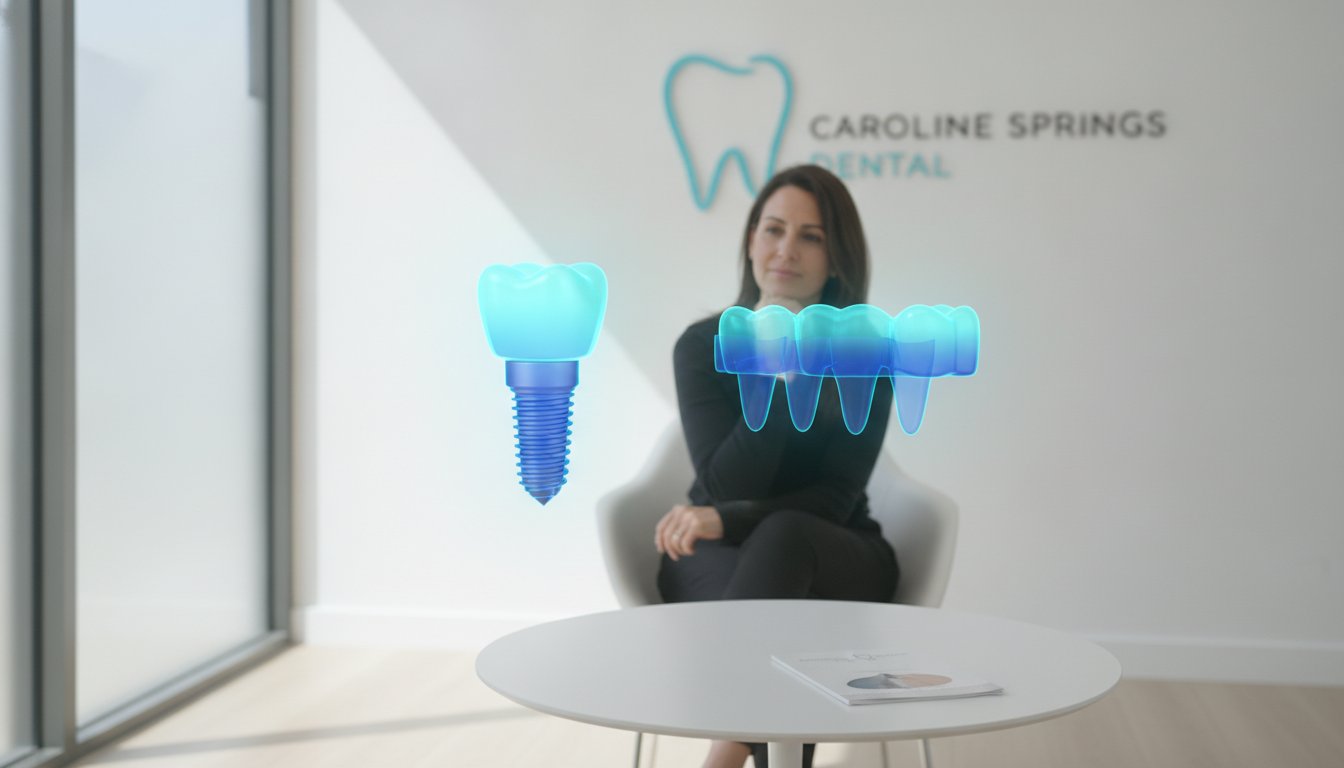
Did you know that you can lose up to 25% of your jawbone width in just twelve months after losing a tooth? It’s a startling figure that highlights why choosing the right replacement is about more than just filling a gap. You’re likely looking for a result that feels natural and won’t require a redo in a few years, but the choice between a dental bridge vs implant often comes with a bit of anxiety. Whether you’re worried about the surgical process or feeling confused about which option offers the best long-term value, those concerns are completely valid.
We want to help you feel confident and cared for as you navigate these options. In this guide, you’ll discover the essential differences between bridges and implants to help you secure a functional bite and a smile that looks truly yours. We will look at how each choice affects your neighbouring teeth, compare their lifespans based on the latest 2026 data, and explain why one might be a more sustainable investment for your oral health over the next twenty years.
Key Takeaways
- Understand the structural differences between a bridge that relies on neighbouring teeth and a titanium implant that acts as a standalone artificial root.
- Evaluate the long-term value of each treatment, comparing the typical 10–15 year lifespan of a bridge against the potential lifetime durability of an implant.
- Discover how to protect your facial structure by learning why implants are the only tooth replacement option that actively prevents jawbone shrinkage.
- Weigh up the dental bridge vs implant timeline to decide if you prefer a rapid aesthetic fix or a more gradual, permanent restoration.
- Apply a clear decision framework to choose the best path forward based on your bone density, lifestyle, and oral health goals.
Understanding Your Options: What Are Dental Bridges and Implants?
Losing a tooth can feel like a bit of a setback, but it is a common experience for many Australians. Leaving a gap might seem okay at first, but it can lead to your remaining teeth shifting out of place, which often creates new problems for your bite and alignment. Over time, the lack of a tooth root can even cause your facial structure to lose its natural support, leading to a sunken appearance. To help you decide between a dental bridge vs implant, we first need to look at how these two modern solutions actually function within your mouth.
The primary difference between the two comes down to how they are supported. A bridge relies on the strength of the teeth next to it, whereas an implant is entirely self-supporting, standing on its own artificial root. Both are excellent ways to restore your confidence and dental health, but they take very different paths to get there. Choosing the right one depends on your unique needs, the health of your surrounding teeth, and your long-term goals for your smile.
How a Dental Bridge Works
A dental bridge is a prosthetic tooth held in place by the teeth on either side of the gap. To understand What is a Dental Bridge?, think of it as a three-unit structure where two crowns are bonded onto your natural “abutment” teeth to support a fake tooth, or pontic, in the middle. This process usually involves gently reshaping the anchor teeth so the crowns can fit securely over them. We might suggest a Cantilever bridge if you only have one anchor tooth available, or a Maryland bridge for front teeth where aesthetics are the priority. It is a popular non-surgical dental crown and bridge restoration that can be completed in just a few visits, making it a convenient choice for busy families.
The Anatomy of a Dental Implant
A dental implant is designed to mimic the natural structure of a tooth from the root up. It consists of three parts: a titanium screw, an abutment connector, and a custom porcelain crown. The process relies on osseointegration, which is when your jawbone naturally fuses with the titanium post. This creates a foundation so secure it becomes a permanent part of your dental anatomy. Because dental implants don’t require any work on the neighbouring teeth, they are often seen as the gold standard for preserving your natural smile. They act just like a real tooth, providing the stimulation your jawbone needs to stay strong and healthy over the long term.
The Head-to-Head Comparison: Pros, Cons, and Lifestyle Impact
Choosing between a restoration that stays in your mouth for a decade or one that lasts a lifetime is a big decision. When you’re weighing up a dental bridge vs implant, it’s often the small, daily moments that matter most. It’s about how you feel when you bite into a crisp apple or how much time you spend in front of the bathroom mirror each night. While both options restore the look of your smile, they offer different experiences when it comes to your long-term comfort and routine.
Durability is a major factor for most of our patients. According to current clinical data, dental bridges typically need to be replaced every 10 to 15 years. In contrast, dental implants are designed to be a permanent solution. Long-term studies show that implants have survival rates of approximately 92% even at the 20-year mark. This makes them a “once and done” choice for many. For a deeper look at the technical trade-offs, you can read this comprehensive comparison of bridges and implants which explores how each affects your neighbouring teeth.
Chewing power is another area where implants truly shine. Because they are anchored directly into the jawbone, they restore almost 100% of your natural bite force. Bridges are very strong, but they do have slight limitations because they rely on the support of other teeth. If you’re still unsure which path is right for your lifestyle, you can always book a chat with our team to see the options in person.
Daily Maintenance: Bridge vs Implant
Cleaning a dental bridge requires a bit of extra homework. Because the prosthetic tooth sits just above the gum line, you’ll need to use special tools like “bridge needles” or floss threaders to clean underneath it. This is vital to prevent decay from forming under the supporting crowns. Implants are much simpler for those who prefer a “set and forget” routine. You simply brush and floss them exactly like your natural teeth. Regular check-ups at a professional dental centre remain essential for both to ensure the surrounding gums stay healthy and firm.
Sensory Feel and Comfort
Many patients worry that a replacement tooth will feel like a foreign object. Implants usually feel indistinguishable from your natural teeth because they don’t move or put pressure on neighbouring structures. A bridge can sometimes feel slightly “connected” because it spans across three or more teeth. Rest assured that modern porcelain and zirconia materials ensure both options match your natural tooth colour perfectly for a seamless look. If you have a minor chip or imperfection on a neighbouring tooth that you’d like to address at the same time, composite bonding for chipped teeth can be a quick, single-visit solution to complete your smile makeover.
Procedure and Recovery: What to Expect at Our Caroline Springs Clinic
Many patients from Caroline Springs and the surrounding Western Suburbs tell us that the “unknown” of a dental procedure is what causes the most stress. We understand that anxiety. Our goal is to make your path to a complete smile as predictable and comfortable as possible. When comparing the procedure for a dental bridge vs implant, the biggest difference isn’t just the technique; it is the timeline. One offers a rapid result, while the other is a gradual journey toward a permanent foundation.
A bridge is often the preferred choice for those looking for a non-surgical restorative dentistry solution. It wraps up quickly, usually in just two appointments over a few weeks. A dental implant, however, is a surgical procedure that requires a bit more patience. While the implant process takes longer, it is designed to mimic the natural root of your tooth, providing a level of stability that a bridge cannot match. Our gentle approach ensures that regardless of which path you choose, you’ll feel cared for and respected throughout the process.
The Dental Bridge Timeline
The journey toward a bridge is straightforward. During your first visit, we gently prepare the adjacent teeth by removing a small amount of enamel to make room for the crowns. We then take precise impressions to send to our ceramics lab. You’ll leave with a temporary bridge to keep your smile functional while your custom piece is crafted. A few weeks later, you’ll return for the final fit of your dental crown and bridge restoration. It is a fast, effective way to close the gap and restore your confidence.
The Dental Implant Journey
Implants require a longer commitment, primarily because of the 3 to 6 month healing period required for the bone to fuse with the titanium post. This phase is crucial for the long-term success of the restoration. We know that many patients worry about having a visible gap during this time, but rest assured, we provide temporary options so you can smile and eat comfortably while you heal. Most patients are pleasantly surprised to find that the surgical placement is quite manageable. In fact, many report that the recovery is no more uncomfortable than a standard tooth extraction. Once healing is complete, we reveal your new, custom-made crown, giving you a tooth that looks and feels like it has always been there.

Beyond the Price Tag: Long-Term Oral Health and Bone Preservation
When you look at the dental bridge vs implant decision, it is natural to focus on the immediate result. However, the true value of your choice lies in how it protects your mouth over the next few decades. A missing tooth is more than just a gap; it represents a missing root. Your jawbone relies on the constant stimulation from that root to stay dense and strong. Without it, the bone begins a process called resorption, where it gradually shrinks away. This can lead to your other teeth shifting or even becoming loose over time.
Thinking about long-term value means looking at how each restoration interacts with your overall health. While a bridge effectively fills the space, it doesn’t address what is happening beneath the gum line. An implant, by contrast, acts as a functional replacement for the root, ensuring your jaw stays healthy. This difference is why many of our patients view an implant as an investment in their future wellness rather than just a cosmetic fix.
Protecting Your Neighbouring Teeth
One of the most significant trade-offs with a bridge is the “sacrificial tooth” factor. To anchor a bridge, we have to remove healthy enamel from the teeth on either side of the gap. This is a permanent change to teeth that might otherwise be perfectly healthy. Over time, these anchor teeth carry the full chewing load for the missing tooth, which can lead to extra strain or a higher risk of decay at the gum line. Choosing restorative dentistry in Caroline Springs that focuses on preserving your natural structure often leads patients toward implants. Because an implant is completely self-supporting, it does not require any modification to your other teeth. It is the most conservative choice for your long-term dental health. It’s also worth noting that sometimes a tooth can be saved before extraction becomes necessary — if you’re experiencing severe tooth pain, exploring root canal treatment in Caroline Springs may allow you to preserve your natural tooth and avoid the need for a replacement altogether.
Preventing Facial Sagging and Bone Loss
The impact of bone loss goes beyond your bite. When the jawbone resorbs, it can eventually lead to a “sunken” facial appearance as the soft tissues lose their underlying support. This is often what causes premature aging in the lower face. Implants are the only restoration that prevents this because the titanium post fuses with your bone, providing the same stimulation as a natural root. It’s a startling fact that your jawbone can lose up to 25% of its width in the first year after tooth loss without an implant to keep it active. While the initial investment for an implant is higher, it often saves you money in the long run by avoiding the periodic replacement costs of a bridge, which typically needs to be replaced every 10 to 15 years. If you want to protect your smile and your facial structure, book a consultation with our gentle team to see if you’re a candidate for an implant.
Making the Right Choice for Your Smile and Budget
Deciding on a dental bridge vs implant is a personal journey that involves balancing your immediate needs with your long-term health goals. While we have explored the clinical benefits of both, the right choice ultimately depends on what matters most to you right now. For some, a rapid aesthetic fix is the priority. For others, the goal is a “once and done” solution that protects the jawbone for decades. Choosing between these options isn’t about finding a one-size-fits-all answer; it’s about finding the one that fits your lifestyle, health, and budget.
A bridge might be your best path forward if you prefer a non-surgical approach or if you need to restore your smile quickly for an upcoming event. It is also an excellent alternative for patients who may have limited bone density in their jaw, making them less suitable for surgery without additional procedures. Conversely, an implant is often the superior choice for a single missing tooth when the neighbouring teeth are healthy and untouched. We believe in providing clear, honest guidance so you can make an informed decision. To help make these treatments accessible, we offer transparent payment options for our local families in Caroline Springs.
Factors to Discuss With Your Dentist
Your physical health plays a significant role in which restoration will be most successful. During your visit, we will look closely at the health of your gums and the volume of bone available to support an implant. Certain lifestyle factors or health conditions can also influence the healing process. We will chat about:
- Your current bone volume and whether it can support a titanium post.
- Health conditions such as diabetes that might slow down the osseointegration process.
- Whether you smoke, as this can impact the long-term success of an implant.
- Your personal comfort levels with surgical versus non-surgical restorative dentistry.
Your Local Caroline Springs Consultation
We take a modern, patient-first approach to planning your restoration. Using advanced digital imaging, we can show you exactly how each option will look and function within your mouth. This level of precision allows us to create a personalised plan that considers your unique dental history and your goals for the future. We see ourselves as your partners in health, ensuring you feel respected and heard at every step. If you are ready to close the gap and regain your confidence, we invite you to book a consultation with our friendly team today. Let’s work together to find the most durable, natural-looking solution for your smile.
Ready to Restore Your Smile and Confidence?
Choosing between a dental bridge vs implant is a big step toward reclaiming your quality of life. We’ve explored how implants offer a permanent, bone-preserving foundation, while bridges provide a reliable and rapid way to restore function without surgery. The right choice for you depends on your unique health goals and your lifestyle needs. You deserve a solution that feels natural and stands the test of time.
Our team has been serving the Caroline Springs community for years, combining surgical expertise in implants with a gentle touch for custom bridge restorations. We pride ourselves on being a family-friendly clinic where your comfort is always the priority. We’ll take the time to listen to your concerns and create a plan that works for you. If you’re ready to take that next step, we’d love to help you find the perfect fit for your smile.
Book Your Restorative Consultation at Caroline Springs Dental and let’s get started on your journey to a healthier mouth today.
Frequently Asked Questions
Which is cheaper: a dental bridge or an implant in Australia?
A dental bridge generally has a lower upfront cost than an implant, though the long-term value often shifts in favour of the implant. Because bridges typically require replacement every 10 to 15 years, the cumulative cost over several decades can exceed the one-off investment of a permanent implant. When weighing up a dental bridge vs implant, it’s helpful to consider your budget over the next twenty years rather than just the next few months.
Is a dental implant procedure painful?
You shouldn’t feel pain during the procedure because we use local anaesthetic to completely numb the area. Most of our patients describe the sensation as similar to having a filling or a routine extraction. Any mild tenderness during the healing phase is usually easily managed with standard over-the-counter pain relief from your local chemist, and we’ll provide clear aftercare instructions to keep you comfortable.
How long does a dental bridge last compared to an implant?
While a dental bridge usually lasts about 10 to 15 years before needing a refresh, a dental implant is built to last a lifetime with proper care. Research from 2026 indicates that implants maintain a success rate of over 92% even after twenty years. This durability makes them a popular choice for those seeking a permanent restoration that won’t need regular replacing.
Can I get an implant if I have been missing a tooth for a long time?
It’s definitely possible, but we may need to check your jawbone density first. If you’ve been missing a tooth for a long time, the bone might have thinned, but modern bone grafting techniques can often restore enough volume for a successful implant. Recent 2026 studies show that implants placed with bone grafting have success rates as high as 97.83%, which is very encouraging for many patients in this situation.
Do dental bridges look natural?
Yes, they look very natural because we use advanced materials like porcelain that mimic the way light reflects off real tooth enamel. We carefully match the colour and shape to your surrounding teeth so the bridge blends in perfectly with your smile. Most people won’t even realise you have a restoration unless you choose to tell them.
What happens if I don’t replace a missing tooth at all?
If you don’t replace a missing tooth, your surrounding teeth will likely begin to tilt and drift into the empty space. This movement can mess up your bite and make it harder to clean your teeth properly, increasing the risk of decay. You also face the risk of jawbone resorption, which can eventually lead to a sunken facial appearance as the bone structure fades.
Is a dental implant covered by private health insurance in Melbourne?
Many private health funds in Australia do provide some level of cover for implants, typically under their “Major Dental” or “Restorative” categories. Every policy is different, so it’s a good idea to check your specific extras cover for any waiting periods or annual limits. We can provide you with the necessary item codes to make checking with your insurer a simple process.
Can a dental bridge be replaced with an implant later on?
Transitioning from a bridge to an implant is a common request, especially when an old bridge begins to fail or the anchor teeth need extra support. We would simply remove the old bridge and assess whether a bone graft is needed before placing the implant post. It’s a great way to upgrade to a more permanent, self-supporting solution that doesn’t rely on your neighbouring teeth for strength.