

Imagine waking up in the middle of the night with a relentless, throbbing pain that radiates from your tooth all the way to your jawline. It’s the kind of discomfort that makes even a simple sip of cold water feel unbearable. If you’re experiencing this right now, you’re likely facing a serious infection that requires immediate dental abscess treatment to prevent further complications. We understand how overwhelming and frightening this can feel, especially when the pain starts to impact your ability to sleep or focus on your family here in the Western Suburbs.
You probably want nothing more than for the pressure to disappear and to know that your smile is safe. We agree that nobody should have to suffer through such intense dental distress without a clear plan for relief. In this guide, you’ll learn how to identify the critical warning signs and discover the best path toward a healthy recovery. We will preview the clinical steps our Caroline Springs team takes to provide fast pain relief, explain how we aim to save your natural tooth through restorative care, and outline what you can expect as you heal to ensure the infection is completely cleared.
Key Takeaways
- Learn how to recognise the critical warning signs of a dental abscess to ensure you seek urgent care before the infection spreads.
- Understand why professional dental abscess treatment is the only way to fully clear an infection, as antibiotics alone are often just a temporary fix.
- Discover the clinical steps involved in the drainage process, which is the most effective way to provide immediate relief from intense pressure and pain.
- Explore how our restorative approach focuses on saving your natural tooth through gentle procedures like root canal therapy.
- Find out how our Caroline Springs clinic serves as a supportive hub for families across the Western Suburbs facing sudden dental emergencies.
What is a Dental Abscess and Why is it an Emergency?
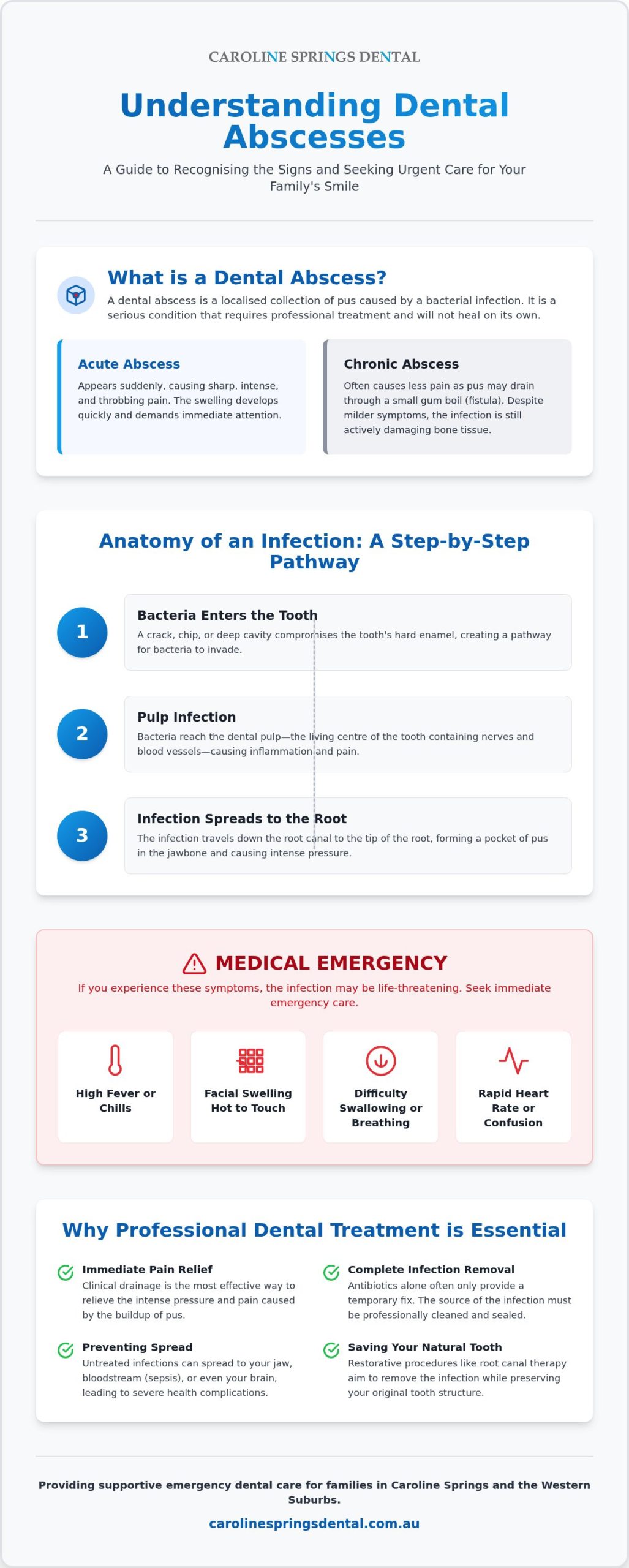
A dental abscess is far more than a standard toothache. It is a localised collection of pus that requires clinical drainage to resolve completely. When bacteria invade the soft tissue inside your tooth or the surrounding gums, your body’s immune system sends white blood cells to fight back. This battle creates intense pressure, leading to the throbbing pain many patients describe as unbearable. Understanding What is a Dental Abscess helps clarify why immediate dental abscess treatment is necessary for your long-term health.
Infections generally fall into two categories: acute and chronic. An acute abscess appears suddenly, causing sharp pain and swelling that demands your attention right away. Chronic abscesses are often trickier. They might cause less pain because the pus is slowly draining through a small opening in the gum called a fistula. However, just because the pain is dull doesn’t mean you’re safe. Both types require professional care because an abscess will never self-heal or disappear on its own. Without intervention, the infection continues to eat away at the supporting bone.
The Anatomy of a Dental Infection
Your teeth are protected by hard enamel, but they aren’t invincible. When a tooth is cracked or has deep decay, bacteria find a pathway into the dental pulp. This pulp is the living centre of your tooth, containing sensitive nerves and blood vessels. Once bacteria reach this area, the infection can spread down to the root tip and into the jawbone. We often see this in patients who have delayed root canal treatment, allowing a simple cavity to evolve into a complex emergency.
When an Abscess Becomes Life-Threatening
An untreated abscess is a ticking clock. If the bacteria move beyond the tooth, they can enter your bloodstream or spread to the deep tissues of your face and neck. This can lead to a condition called sepsis, which is a medical emergency. You should seek emergency dentistry immediately if you notice these red-alert symptoms:
- High fever or persistent chills
- Visible facial swelling that feels hot to the touch
- Difficulty swallowing or restricted breathing
- A rapid heart rate or general confusion
Waiting until Monday is simply not an option when your breathing or swallowing is affected. These signs suggest the infection is spreading toward your airway or brain. Our team in Caroline Springs prioritises these cases to ensure you receive the dental abscess treatment needed to stop the infection in its tracks and protect your systemic health.
Identifying the Types and Symptoms of Oral Abscesses
Not all dental infections look or feel the same. The specific location of your pain provides our clinical team with a vital roadmap to determine the best course of dental abscess treatment. While you might just feel a general sense of throbbing, the source usually dictates whether we focus on the internal structure of the tooth or the supporting gum tissue. Identifying these differences early can be the factor that saves your smile from permanent damage.
One common sign patients notice is a small, pimple-like bump on the gums. Clinically known as a sinus tract, this is actually a drainage tunnel for the infection. While it might occasionally release pressure and reduce pain, it’s a clear signal that bacteria are actively destroying tissue beneath the surface. Many people mistakenly believe that if the pain suddenly vanishes, the problem has resolved itself. In reality, the absence of pain often means the infection has successfully killed the nerve inside the tooth. The bacteria remain, silently spreading toward the jawbone without the warning of a toothache.
Periapical Abscess (At the Tip of the Root)
A periapical abscess occurs at the very tip of the tooth root. This type is frequently the result of bacteria entering the inner pulp through a deep cavity or a crack in the enamel. It can also stem from a previous, failed root canal treatment where bacteria managed to re-enter the site. You might notice a darkened or discoloured tooth, sharp pain when biting down, or a lingering sensitivity to hot and cold temperatures. Because the infection is deep within the bone, restorative care is usually the priority to clear the canal and preserve your natural tooth structure.
Periodontal Abscess (In the Gums)
Unlike root infections, a periodontal abscess originates in the space between the tooth and the gum. This is often linked to advanced gum disease or a piece of food, like a popcorn kernel, becoming trapped in a deep gum pocket. The symptoms are usually more localised to the soft tissue, appearing as red, swollen, or bleeding gums that feel tender to the touch. Professional cleaning and scaling are essential components of dental abscess treatment options for this type of infection. If you’ve noticed persistent gum tenderness, it’s a good idea to book a consultation before the inflammation spreads to the surrounding bone.
Modern Dental Abscess Treatment Options
When you arrive for dental abscess treatment, our primary objective is twofold: eliminating the bacterial infection and preserving as much of your natural tooth structure as possible. Some patients believe a course of antibiotics from a GP is enough to solve the problem, but these medications are merely a temporary ‘band-aid’. Because antibiotics cannot easily reach the source of the infection inside a tooth that no longer has a functional blood supply, clinical intervention is the only permanent solution. We use precise digital X-rays to assess the depth of the infection and check for any surrounding bone loss. This allows us to choose the most predictable path to recovery. Seeking Emergency Dental Care promptly often determines whether we can save the tooth or if we must consider more invasive options.
Comparing the long-term benefits of saving a tooth versus the cost of an extraction is a vital part of our consultation. While an extraction might seem like a quick fix, the subsequent need for replacements to prevent teeth from shifting can be more complex over time. We focus on providing clear, honest guidance so you can make an informed decision about your oral health.
Root Canal Therapy: Saving Your Natural Smile
Root canal therapy is the gold standard for saving a tooth affected by a periapical abscess. By carefully removing the infected pulp and sealing the canals, we stop the pain at its source. Despite the persistent myth that root canals are painful, the procedure actually provides immediate relief from the throbbing pressure of the abscess. Once the internal infection is cleared and the tooth is stabilised, we often recommend dental crowns and bridges. These restorations strengthen the remaining structure, ensuring your smile remains functional and aesthetic for years to come.
Tooth Extraction: When the Tooth Cannot Be Saved
In certain situations, the infection may have caused too much structural damage for the tooth to be viable. If the tooth is severely fractured or the supporting bone is compromised, a tooth extraction may be the safest way to prevent the infection from spreading further. Our team prioritises your comfort during this process, focusing on gentle techniques and socket preservation. After the site has healed, we can discuss permanent replacement options such as dental implants. These modern solutions look and feel like natural teeth, helping you regain your confidence and chewing ability.
The Treatment Journey: What to Expect at Your Appointment
Walking into a clinic when you’re in significant pain can feel overwhelming. Our team’s priority is to move you from a state of distress to comfort as quickly as possible. When you arrive for dental abscess treatment, we start with a thorough clinical assessment. This usually involves digital imaging to see exactly where the pus has collected and how far the infection has travelled. We take the time to explain our findings, ensuring you feel like a partner in your own care rather than just a patient in a chair.
Step 1: Immediate Pain Management and Drainage
The first goal is always to stop the throbbing. We use a local anaesthetic to thoroughly numb the affected area, ensuring the procedure is a comfortable experience. Once you’re comfortable, the dentist often makes a tiny incision in the swollen gum tissue or accesses the infection through the tooth itself. This allows the built-up pus to drain, which provides almost instant relief from the intense pressure that causes most abscess-related pain. Many of our patients describe a profound sense of ease the moment this pressure is released.
Step 2: Removing the Source of Infection
Drainage provides relief, but it doesn’t remove the cause. To ensure the infection doesn’t return, we must clean the area thoroughly. If it’s a periapical abscess, this involves cleaning the root canals; if it’s periodontal, we focus on the deep gum pocket. We then apply medicated dressings directly to the site to kill any lingering bacteria. A temporary seal is placed to protect the area, allowing your body’s natural healing processes to take over. If you are currently in pain, please reach out to our team for emergency dentistry to begin this recovery process.
Aftercare and Recovery Tips
Your recovery continues at home after you leave our Caroline Springs clinic. It’s normal to feel some minor tenderness as the anaesthetic wears off, which can usually be managed with over-the-counter pain relief recommended by your dentist. To protect the site of your dental abscess treatment and prevent further irritation, follow these simple steps:
- Stick to soft foods like lukewarm soups, yoghurts, or mashed vegetables for the first 48 hours.
- Avoid chewing on the side of the mouth where the treatment was performed.
- Maintain your oral hygiene routine but be very gentle around the treated site.
Most patients feel significantly better within a day. However, if you notice increasing swelling, a return of the fever, or if your symptoms don’t improve within 48 hours, call us immediately for a follow-up. We are here to support you through every stage of your healing journey.
Emergency Dental Care in Caroline Springs and the Western Suburbs
Our clinic serves as a dedicated health hub for families throughout the Western Suburbs, providing a reliable point of contact when the unexpected happens. Whether you are living in Deanside, Burnside Heights, or Taylors Hill, our central location ensures that professional dental abscess treatment is never far away. We understand that a dental emergency creates significant stress for the whole household. By combining clinical precision with a warm, community-focused approach, we aim to lower your anxiety and get your health back on track as efficiently as possible.
Serving the Melbourne West Community
Residents in neighbouring areas like Fraser Rise, Melton, and Sydenham often rely on our team for urgent interventions. We maintain dedicated emergency dentistry slots in our daily schedule to ensure that patients in pain aren’t left waiting. This is particularly important for our nervous patients who may have avoided the dentist in the past. We pride ourselves on a gentle, inclusive style of care that respects your concerns and focuses on positive outcomes. You’ll find that our team acts as a trusted local guide, walking you through the recovery process with patience and transparency.
Affordable Care and the Child Dental Benefits Schedule (CDBS)
When a child experiences a dental emergency, the priority is fast, effective relief in a setting that feels safe and family-oriented. We proudly support the Child Dental Benefits Schedule (CDBS), which can help cover the costs of dental abscess treatment for eligible children. This initiative currently provides up to $1,095 over a two-year period for basic dental services, ensuring that financial barriers don’t stand in the way of your child’s health. To further support our local community, we provide flexible payment options and health fund claims on-site, working with major providers to minimise your out-of-pocket expenses.
While we are always ready to assist during a crisis, we also encourage our patients to focus on long-term preventative care. Regular check-ups and professional cleans are the most effective ways to spot decay or gum pockets before they develop into a serious abscess. By staying proactive, you can save your natural teeth and avoid the discomfort of a future emergency. If you are currently feeling the pressure of a potential infection, please Book your emergency assessment at Caroline Springs Dental so we can provide the fast relief you need.
Secure Your Smile and Find Fast Relief
A dental abscess is a serious health matter that requires prompt clinical attention to protect your systemic health. By recognising the early signs of infection and understanding that antibiotics alone aren’t a cure, you’ve already taken the first step toward recovery. Whether we save your tooth through root canal therapy or perform a gentle extraction, our goal is always to restore your comfort and confidence. Professional dental abscess treatment is the only way to ensure the infection is fully cleared and your smile is protected for the long term.
We provide emergency dental slots daily to ensure you don’t have to endure severe pain for a moment longer than necessary. Our team has been serving Caroline Springs and the wider Western Suburbs since opening, offering compassionate care to every patient who walks through our doors. You don’t have to manage this discomfort alone; we are here to guide you through every step of the process with empathy and expertise.
Book your emergency dental assessment at Caroline Springs Dental today and let us help you get back to feeling like yourself again. We look forward to seeing you soon and helping you regain your health and peace of mind.
Frequently Asked Questions
How do I know if my toothache is actually a dental abscess?
A dental abscess is usually marked by a persistent, throbbing pain that doesn’t subside with standard over-the-counter relief. You might notice a visible swelling in your gums or a small, pimple-like bump that releases a bitter fluid. Other clear indicators include extreme sensitivity to hot and cold temperatures and a general feeling of being unwell. If you experience a foul taste or smell coming from a specific tooth, it’s a sign that an infection is present.
Can a dental abscess go away on its own with salt water rinses?
No, a dental abscess will never go away on its own, even with regular salt water rinses. While warm salt water can help soothe irritated gum tissue and temporarily reduce bacteria on the surface, it cannot reach the infection trapped deep inside the tooth or bone. Professional dental abscess treatment is the only way to physically drain the pus and eliminate the source of the bacteria to prevent the infection from spreading further.
Will I need antibiotics for a dental abscess treatment?
Antibiotics are frequently prescribed to prevent the infection from spreading to your jaw or bloodstream, but they are not a standalone cure. Because the infection is often tucked away inside a tooth with no remaining blood flow, the medication cannot reach the bacteria effectively. We use antibiotics as a supportive measure alongside clinical drainage or root canal therapy to ensure the site heals properly and the infection is fully eradicated from your system.
Is a dental abscess considered a medical emergency that requires a hospital visit?
Most dental abscesses are best managed by a dentist, but you should head to a hospital emergency department if you experience difficulty breathing or swallowing. These are signs that the swelling is impacting your airway. You should also seek immediate medical help if you develop a high fever, a rapid heartbeat, or severe facial swelling that is spreading toward your eye. These symptoms suggest the infection has become systemic and requires urgent medical intervention.
How much does it cost to treat a dental abscess in Melbourne?
The cost of treating a dental abscess in Melbourne varies significantly depending on whether the tooth can be saved with root canal therapy or requires an extraction. Factors like the complexity of the infection and the need for follow-up restorations also influence the total. We recommend checking your private health insurance “extras” cover or seeing if your child is eligible for the CDBS, which can help manage the out-of-pocket expenses for these urgent dental procedures.
Can a dentist save a tooth that has a large abscess at the root?
Yes, we can often save a tooth with a large root abscess through expert root canal therapy. The goal of this dental abscess treatment is to remove the infected pulp, disinfect the canals, and seal the area to prevent reinfection. As long as the surrounding bone structure is still strong enough to support the tooth, restorative care is usually our preferred option. This allows you to keep your natural smile and maintain proper jaw alignment.
How long does the pain last after an abscess is drained?
Most patients feel a profound and immediate sense of relief the moment the pressure is released through drainage. While the intense, throbbing ache usually vanishes instantly, you may experience some mild tenderness or bruising in the area for 24 to 48 hours as the tissues begin to heal. This minor discomfort is easily managed with soft foods and standard pain relief. We will provide specific aftercare instructions to ensure your recovery is as smooth as possible.
What happens if I ignore a dental abscess for too long?
Ignoring an abscess can lead to life-threatening complications such as sepsis or the spread of infection to the jawbone and surrounding tissues. Over time, the bacteria will continue to destroy the bone that holds your tooth in place, eventually making an extraction inevitable. The infection can also travel to other parts of your body, including the heart or brain. Early intervention is essential to protect both your oral health and your general health and wellbeing.