


What if the fix for a damaged tooth felt less like a medical ordeal and more like a steady path back to your favourite foods? It’s completely natural to feel a bit of a flutter in your stomach when a dentist suggests something more involved than a standard filling. You might be worried about the time commitment or whether those dental drills will be uncomfortable. Understanding the dental crown procedure steps can transform that uncertainty into peace of mind, especially when you realise how gentle and organised the modern process has become at our local centre.
We believe that dental care should be transparent and stress-free. That’s why we’ve created this guide to show you exactly what happens behind the scenes, ensuring there are no surprises during your visits. You’ll learn how we prepare your tooth with precision, why high-quality materials like zirconia are worth the investment, and how we ensure your new smile feels natural. From the initial consultation to the final fitting, we’ll outline the entire timeline so you can feel completely at ease while restoring your health and confidence for years to come.
Key Takeaways
- Learn why a custom-made crown is often the superior choice over a standard filling for long-term tooth preservation and structural strength.
- Discover the clear, two-visit timeline of the dental crown procedure steps, designed to keep you comfortable and informed throughout the entire process.
- Compare high-quality materials like porcelain and zirconia to find the perfect balance of durability and a natural-looking finish for your smile.
- Understand how modern local anaesthetic and a gentle, patient-focused approach ensure a pain-free experience, even if you feel nervous about dental visits.
- Master the simple aftercare habits and dietary tips needed to protect your investment and ensure your new crown lasts for many years to come.
What is a Dental Crown and Why is it Necessary?
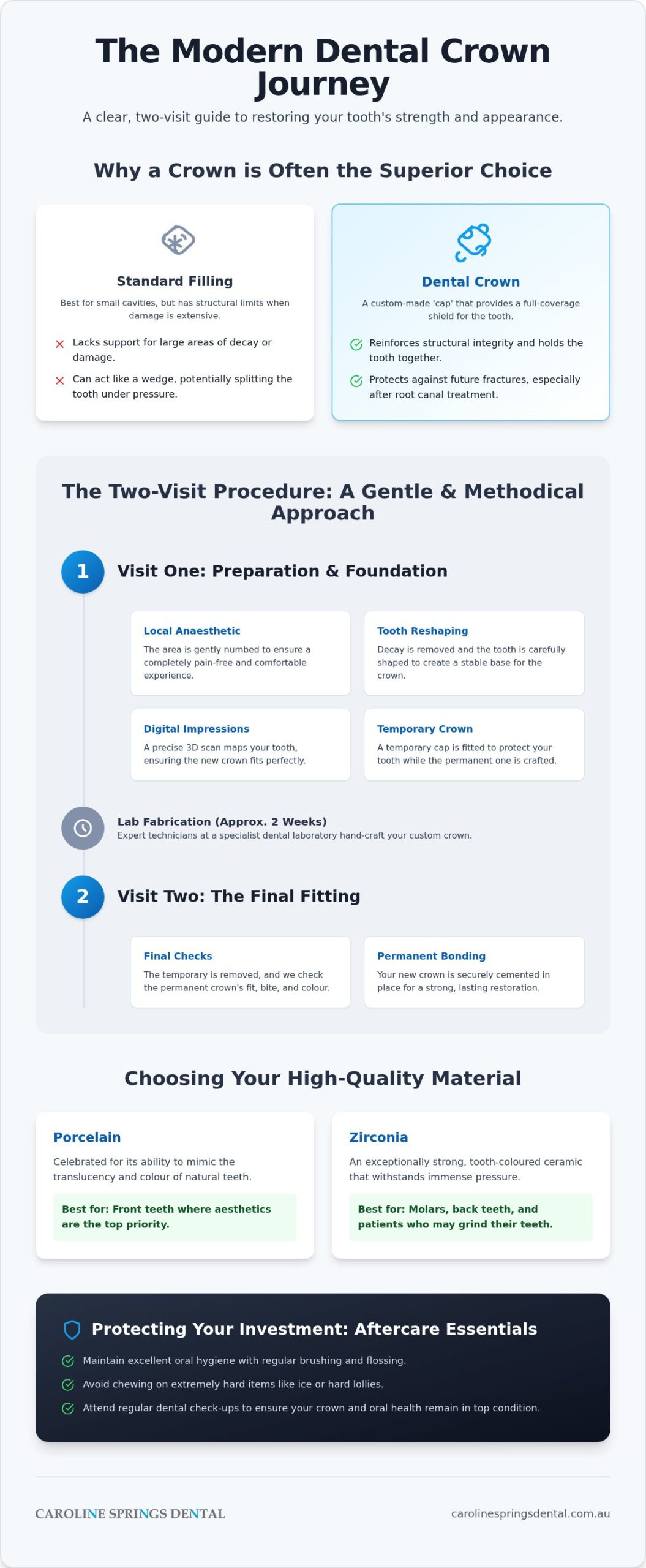
Think of a dental crown as a bespoke, high-strength “cap” that we custom-make to fit over your existing tooth. It’s one of the most reliable forms of dental restoration available today, designed to return a damaged tooth to its original shape, size, and function. While a filling replaces a small part of a tooth, a crown provides a full-coverage shield. Understanding the dental crown procedure steps helps you see how this treatment acts as a long-term investment in your oral health rather than just a temporary fix.
We often recommend crowns in several key scenarios. You might have a tooth that’s already cracked or a large area of decay that makes a standard filling risky. In our Caroline Springs clinic, we see many patients who want to avoid the loss of a tooth. The ultimate goal is preservation. By reinforcing what remains of your natural tooth, we can help you avoid more invasive procedures like extractions or implants down the track. It’s about keeping your smile intact and functional for as long as possible.
Filling vs. Crown: When a ‘Cap’ is the Better Choice
A standard composite filling is excellent for small cavities, but it has structural limitations. When a large portion of a tooth is missing, a filling can’t provide the same support. In fact, a large filling can sometimes act like a wedge, potentially splitting the tooth under the pressure of a heavy bite. A crown avoids this by encircling the tooth and holding it together. Structural integrity refers to the tooth’s ability to resist the immense mechanical forces of chewing without splitting or breaking. By choosing a crown, you’re essentially placing a protective helmet on a vulnerable tooth, preventing future fractures.
The Role of Crowns in Restorative Dentistry
Crowns are incredibly versatile tools. They are often used as anchors for dental bridges, helping to fill gaps left by missing teeth. They also play a vital role in saving teeth after root canal treatments. Many patients feel confused about why they need a crown after a root canal. Once the blood supply is removed during that procedure, the tooth can become brittle over time. Without the reinforcement of a crown, the tooth is far more likely to fracture during a normal meal. Beyond strength, modern materials allow us to match the crown’s colour and translucency to your surrounding teeth, making the restoration look completely natural.
The Dental Crown Procedure Steps: A Detailed Walkthrough
Knowing the dental crown procedure steps helps take the mystery out of your visit. At our Caroline Springs surgery, we prioritise your comfort above all else. Most patients find that the process is far more straightforward than they imagined. By breaking the treatment into two distinct appointments, we ensure that every detail, from the fit to the final colour, is perfect for your smile. This methodical approach allows us to work closely with a specialist dental laboratory where expert technicians hand-craft your restoration to match your existing teeth.
Visit 1: Preparation and Impressions
Your first appointment is all about setting the foundation for a successful restoration. We’ll start by numbing the area with a local anaesthetic. You might feel a slight pressure during this stage, but you shouldn’t feel any pain. Once you’re completely comfortable, your dentist removes any decay or old filling material to ensure the tooth is healthy. We then carefully reshape the tooth to create a stable, tapered base. This preparation is vital; it creates the necessary space for the crown to sit flush with your other teeth without feeling bulky or unnatural.
Next, we take highly accurate impressions. In many cases, we use advanced digital scanners to create a 3D map of your mouth, which is much more comfortable than the traditional putty moulds. These scans are sent to the laboratory, along with specific instructions regarding the shade and shape. To finish the first visit, we’ll fit a temporary crown. This temporary cap protects your prepared tooth and keeps your smile looking normal while your permanent dental crown and bridge restoration is being crafted.
Visit 2: Fitting Your Permanent Crown
About two weeks later, you’ll return for the final fitting. We’ll gently remove the temporary crown and clean the underlying tooth. This is the exciting part where you get to see the final result. Before bonding it in place, we’ll check the fit, your bite alignment, and how the colour blends with your natural teeth. We want to ensure it feels just like a real tooth when you talk and chew. Once we’re both happy with the appearance and comfort, we use a high-strength dental cement to bond the crown permanently. If you’re feeling a little nervous about how a crown might feel, you can always book a consultation with our friendly team to chat through the process in person.
Choosing the Right Material: Porcelain vs. Zirconia vs. Metal
Once we have mapped out the dental crown procedure steps for your specific case, the next big decision is selecting the right material. This choice isn’t just about how the tooth looks; it’s about how it stands up to the daily pressure of chewing and speaking. In modern Australian dentistry, we’ve moved away from the one-size-fits-all approach. Whether we are treating a front tooth that is central to your smile or a back molar that does all the heavy lifting, the material we select will influence both the longevity and the final cost of your treatment.
Porcelain and Zirconia: The Gold Standard for Aesthetics
For teeth that are visible when you talk or laugh, porcelain veneers and all-ceramic crowns are often the preferred choice. These materials are favoured for their ability to blend seamlessly with your natural teeth. One of the reasons porcelain is so popular is that it allows light to pass through and reflect off the underlying structure, perfectly mimicking the translucent quality of natural tooth enamel. It creates a result that is virtually indistinguishable from the rest of your smile.
If you have a habit of grinding your teeth at night, we might suggest zirconia instead. Zirconia is an incredibly tough, metal-free ceramic that offers the best of both worlds: it’s nearly as strong as metal but maintains a beautiful, tooth-coloured finish. When researching a Dental Crown Procedure, you’ll find that zirconia has become a top-tier option because it resists wear and tear without irritating the surrounding gum tissue. It’s a fantastic solution for patients who need maximum durability without sacrificing their appearance.
Metal Alloys and PFM: When Strength is the Priority
While aesthetics are a priority for many, some situations require the uncompromising strength of metal. Porcelain-Fused-to-Metal (PFM) crowns offer a middle ground. They feature a metal core for structural support with a porcelain layer on top for a more natural appearance. However, over time, a thin dark line can sometimes appear at the gumline as the tissue recedes, which is why they are less common for front teeth nowadays.
For back molars that aren’t visible, gold alloys remain a fantastic option. Gold is exceptionally biocompatible and expands at a similar rate to natural teeth, which helps maintain a perfect seal over many years. It is also “kind” to the opposing teeth, meaning it won’t wear down your natural enamel as quickly as some harder ceramics might. We’ll always guide you through these options during the initial dental crown procedure steps, matching the material to your specific health needs and budget to ensure you feel confident in the long-term value of your restoration.
Recovery and Aftercare: Protecting Your Investment
Completing the final dental crown procedure steps is a significant milestone for your oral health, but the days following your appointment are just as important for long-term success. Think of your new crown as a high-precision restoration that needs a little time to settle into its new home. While the materials we use are incredibly durable, your gums and the supporting tooth structure require a gentle touch during the initial healing phase to ensure everything bonds perfectly.
The First 48 Hours: Managing Sensitivity
It’s completely normal to feel some mild sensitivity once the anaesthetic wears off. You might notice a bit of tenderness in the gum tissue surrounding the new restoration. If you experience minor discomfort, standard over-the-counter pain relief usually does the trick. We suggest sticking to softer foods for the first day or two to give the area a rest. It’s best to avoid sticky lollies, chewing gum, or very hard nuts until you’re fully accustomed to the feel of the crown.
One thing to watch for is how your teeth come together when you close your mouth. Does the new crown feel like it’s hitting slightly before your other teeth? If your “bite” feels uneven once the numbness has completely faded, please let us know. A quick, painless adjustment at our Caroline Springs surgery ensures the biting pressure is distributed correctly, which prevents future soreness and protects the crown from unnecessary stress.
Daily Maintenance for a Long-Lasting Crown
A common misconception is that a crown doesn’t need much care because it’s not a natural tooth. While the porcelain or zirconia itself won’t decay, the natural tooth structure underneath it is still vulnerable. The most critical area is the “margin”, the tiny seam where the crown meets your gumline. If plaque is allowed to build up here, bacteria can sneak under the restoration and cause new cavities or gum disease.
Maintaining your restoration is straightforward if you stick to a solid routine:
- Brush twice a day with a soft toothbrush, focusing on the area where the crown meets the gum.
- Floss daily to remove trapped food. When flossing around a crown, try sliding the floss out sideways rather than pulling it up to avoid catching any edges.
- Schedule routine dental cleaning to clear away hardened tartar that your brush can’t reach.
Regular professional check-ups allow us to monitor the integrity of your crown and catch any minor issues before they turn into costly problems. If you have any questions about your recovery or want to ensure your smile stays in top shape, book your next check-up with our friendly team today.
Why Choose Caroline Springs Dental for Your Restorative Care?
Deciding where to have your restorative work done is a choice that affects your comfort today and your health for years to come. At our practice, we don’t just see you as a patient on a chart. We see you as a neighbour. Our team acts as a Trusted Local Guide, combining clinical precision with the warm hospitality you’d expect from a community-centred clinic. We understand that many people feel a bit of trepidation when they hear the word “procedure”, so we’ve designed every aspect of our care to be as reassuring and transparent as possible.
By using high-quality materials like porcelain and zirconia, we ensure your restorations are both beautiful and built to last. Our commitment to modern technology means your dental crown procedure steps are efficient and precise, reducing time in the chair without compromising on the final result. Whether you’re coming in for a single crown or more complex restorative care, you’ll find a team that listens to your concerns and respects your time.
Serving Caroline Springs and the Western Suburbs
We’re proud to serve families from Caroline Springs and all our surrounding suburbs, including Taylors Hill, Burnside, and Deer Park. Our central location makes it easy to pop in without a massive commute into the city. We know that between school runs and work commitments, your time is precious. That’s why we organise our appointments to be as streamlined as possible, ensuring you get the care you need when you need it. While we excel at restorative work, we also place a heavy emphasis on children’s dentistry and preventative care to help your whole family maintain healthy smiles from the start.
Payment Options and Health Fund Claims
We believe that high-quality dentistry should be accessible and straightforward. To help make your experience stress-free, we provide detailed treatment plans and transparent pricing before any work begins. You’ll never have to guess about the investment required for your dental crown procedure steps. For your convenience, we offer on-the-spot health fund claims via HICAPS. This means you can receive your rebate immediately from major Australian health funds, leaving you only with the gap to pay on the day.
If you’re concerned about the cost of restorative work, we invite you to explore our various payment options designed to suit different budgets. Our goal is to ensure that financial worries never stand in the way of your oral health. From the moment you walk through our doors to the final fitting of your new crown, you can expect a level of care that is both professional and deeply personal.
Ready to Restore Your Smile with Confidence?
Restoring a damaged tooth is about more than just aesthetics; it’s about reclaiming your comfort and protecting your long-term oral health. By understanding the dental crown procedure steps, you can move forward with peace of mind, knowing that modern techniques and high-quality materials like porcelain and zirconia are designed to feel as natural as your original teeth. Whether you’re dealing with a cracked tooth or reinforcing a tooth after a root canal, the journey is predictable, gentle, and focused entirely on your wellbeing.
At our family-friendly clinic in Caroline Springs, we pride ourselves on providing a stress-free environment, especially for those who feel a bit nervous about dental visits. We use only the finest materials to ensure your restoration is both durable and beautiful. Our team is here to guide you through every stage of the process with empathy and expertise, ensuring you feel cared for at every turn.
Are you ready to get your smile back on track? Book Your Restorative Consultation Today and take the first step toward a healthier, more confident you. We look forward to welcoming you to our local centre soon.
Frequently Asked Questions
Is the dental crown procedure painful?
The procedure itself is not painful because we use a local anaesthetic to completely numb the area before we begin. You might feel some slight pressure or vibration during the preparation stage, but you shouldn’t feel any sharp sensations. Most of our patients find the experience very similar to getting a standard filling. After the anaesthetic wears off, some mild gum tenderness is normal, but this usually fades quickly.
How many appointments are needed for a dental crown?
A standard restorative journey typically requires two separate appointments. During the first visit, we prepare the tooth and take precision impressions to send to our dental laboratory. You’ll leave with a temporary cap to protect the site. About two weeks later, you’ll return for the second visit to have your permanent crown fitted and bonded. Following these methodical dental crown procedure steps ensures the laboratory has enough time to hand-craft a restoration that fits your bite perfectly.
How long does a dental crown typically last?
While individual results vary based on your oral hygiene habits, a high-quality crown typically lasts between five and fifteen years. Some patients find their restorations last even longer with meticulous care. Factors like teeth grinding or consuming very hard foods can impact longevity. We recommend regular check-ups and professional cleans at our centre to monitor the condition of the crown and the health of the underlying tooth structure, ensuring your investment remains secure.
What happens if a dental crown falls off or breaks?
If your crown becomes loose or breaks, you should contact our surgery as soon as possible to organise a repair. Please don’t attempt to glue it back yourself with household adhesives, as this can damage the tooth. If the crown is still intact, keep it safe and bring it to your appointment. We’ll assess whether it can be re-cemented or if a new restoration is required to keep the underlying tooth protected from decay and sensitivity.
Can I get a crown on the same day as a root canal?
It’s common to begin the preparation for a crown on the same day your root canal treatment is finished. Once the internal infection is cleared, the tooth needs the immediate structural support a crown provides. While we prepare the tooth and fit a temporary cap immediately, you’ll still wait for the permanent porcelain or zirconia crown to be custom-made by our laboratory technicians before the final fitting at your next visit.
What is the average cost of a dental crown in Melbourne?
The cost of a crown in Melbourne can vary depending on the material used and the complexity of the preparation required. High-performance materials like zirconia or porcelain-fused-to-metal have different price points. We provide a fully transparent treatment plan after your initial consultation, so you’ll know exactly what to expect before any work begins. Many patients also utilise their private health insurance extras to help cover a portion of the restorative costs via HICAPS.
Will my dental crown look like a natural tooth?
Yes, modern dental crowns are designed to be virtually indistinguishable from your natural teeth. We use advanced materials like porcelain and zirconia that mimic the translucency and light-reflecting properties of real enamel. During the consultation phase, we take the time to carefully match the shade of the crown to your surrounding teeth. This ensures your new restoration blends seamlessly into your smile, whether it’s a front tooth or a back molar that we are restoring.
Are there any alternatives to getting a dental crown?
Depending on the damage, there may be alternatives to a full-coverage crown. For smaller areas of decay, a composite filling or a dental onlay might be sufficient to restore the tooth. If the issue is purely cosmetic, porcelain veneers could be an option. However, if the tooth’s structural integrity is compromised by a large crack or a previous root canal, a crown is usually the most reliable long-term solution to prevent further damage.