


Imagine it’s a Saturday afternoon at the local footy oval in Caroline Springs when your child takes a tumble and knocks out a permanent tooth. Or perhaps it’s 2:00 am, and a sharp, throbbing ache is making sleep impossible. When a dental emergency strikes, the panic can be overwhelming, especially when you aren’t sure whether to head to the hospital or wait for a clinic to open. It’s a stressful position to be in, and your first priority is simply finding a way to stop the pain and save your tooth.
We understand how frightening these moments are for families in Deanside and the surrounding Western Suburbs. You’re certainly not alone, as recent figures show that roughly 30% of public dental care in Victoria is dedicated to urgent treatments rather than routine check-ups. This guide will help you breathe a sigh of relief by teaching you exactly how to identify a true crisis and perform immediate first aid that could determine the long-term survival of your smile. We’ll walk through the essential steps for managing broken teeth, explain what to expect regarding procedures, and show you how to access the urgent care you need to get back to feeling like yourself again.
Key Takeaways
- Recognise the specific symptoms of a true dental emergency, such as facial swelling or uncontrolled bleeding, to ensure you seek professional help without delay.
- Master immediate first aid techniques for knocked-out or fractured teeth to significantly increase the chances of saving your natural smile.
- Use our decision matrix to determine whether your injury requires a trip to the Sunshine Hospital Emergency Department or if your local Western Suburbs dentist is the better choice for definitive care.
- Learn how to manage dental trauma in children and why custom mouthguards are the best defence for young players at local sports clubs in Caroline Springs.
- Understand the link between regular check-ups and preventing future ‘surprise’ pain, helping you avoid the stress of urgent restorative treatments.
What Constitutes a True Dental Emergency?
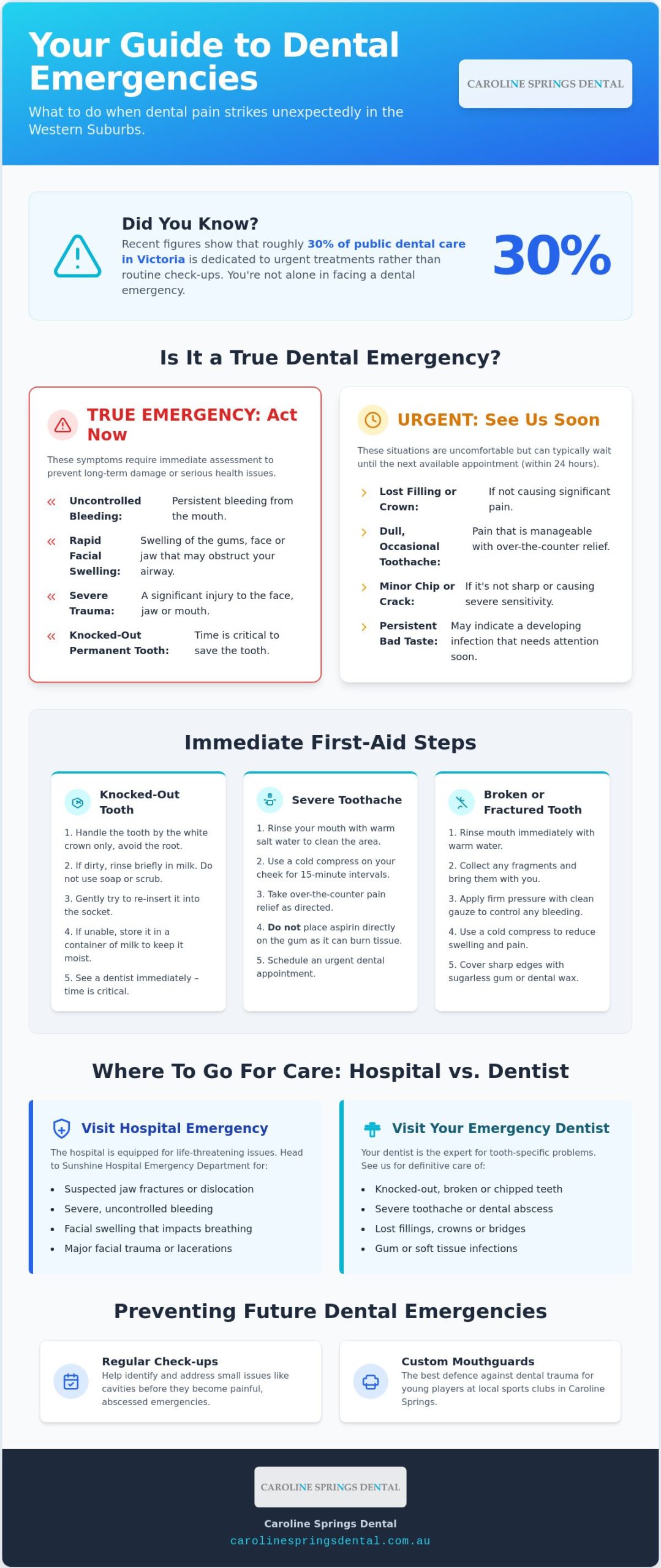
When you’re faced with sudden oral pain, the first question is usually whether you need to drop everything and find a dental emergency clinic immediately. It’s a common dilemma for families in Caroline Springs and Deanside. When you are trying to understand What is a dental emergency?, it helps to distinguish between a situation that requires an immediate response to save a tooth and one that is simply uncomfortable. Generally, a true emergency involves uncontrolled bleeding, severe trauma to the jaw, or rapid facial swelling that could potentially obstruct your airway. These symptoms require an immediate clinical assessment to prevent long-term damage or systemic health issues.
The distinction between ‘urgent’ and ’emergency’ is often a matter of hours. While a true emergency requires action right now, an urgent case is typically one where you should be seen within 24 hours. Data from the Australian Dental Association Victorian Branch shows that approximately 30% of public dental services in Victoria are for emergency treatments. This highlights how often these situations arise. In the public system, critical cases like facial swelling are classified as Triage Category 1, meaning they should be assessed within that first day. Ignoring even a minor, nagging ache is risky. What starts as a small cavity can quickly evolve into a painful abscess or a spreading infection. Our team acts as your trusted local guide, providing calm triage over the phone to help you decide on the best course of action.
Signs You Need Urgent Dental Care
Severe toothache that prevents sleep or daily activities is a clear signal that something is wrong. If a permanent tooth is knocked out, time is your biggest enemy; you have a very narrow window to have that tooth replanted successfully. You should also watch for signs of a dental infection, such as swelling of the gums or face, or a persistent foul taste in your mouth. These symptoms suggest that the problem has moved beyond the surface and requires professional intervention to protect your overall health.
Non-Emergencies: What Can Wait Until Morning?
Not every dental mishap requires a midnight trip to the clinic. If you’ve lost a filling or a crown but aren’t experiencing significant pain, it can usually wait until the next available business hour. Similarly, a dull, occasional ache that responds well to over-the-counter pain relief doesn’t typically constitute a crisis. Minor chips to the enamel that aren’t sharp against your tongue or causing sensitivity are also situations that we can usually address during a standard priority appointment the following morning.
First Aid Steps for Common Dental Emergencies
The moments following a dental injury are often filled with shock and confusion. Whether it’s a tumble at the park or a sudden crack while eating, knowing exactly what to do can be the difference between losing and saving a tooth. Managing a dental emergency at home is primarily about stabilisation and pain management. While your first instinct might be to panic, taking methodical steps will help you stay calm and protect your oral health until you can reach our clinic for professional care.
How to Save a Knocked-Out Tooth
If a permanent tooth is knocked out, you must act fast to maximise replantation success. Handle the tooth only by the white crown, avoiding the root to protect sensitive cells. If it’s dirty, rinse it briefly in milk without scrubbing or using soap. Gently try to place the tooth back into its socket or keep it in a small container of milk to keep it moist while you travel to the clinic.
Managing Severe Toothache and Swelling
Sudden, intense pain can be debilitating, especially when it prevents sleep. Start by rinsing with warm salt water to clear debris from around the tooth. Use a cold compress on the outside of your cheek for 15 minutes at a time to reduce swelling and numb the area. Never place aspirin directly against the gum; this is a dangerous myth that causes painful chemical burns. Instead, swallow pain medication as directed and focus on keeping the area clean until your appointment.
For a fractured or broken tooth, try to find any missing fragments and bring them with you in a clean container. Rinse your mouth with warm water and, if the remaining tooth has a sharp edge that is cutting your tongue, you can temporarily cover it with a piece of sugarless chewing gum or dental wax. If you are experiencing bleeding from the gums or a bitten lip, apply firm pressure with a clean piece of gauze for about ten minutes. If the bleeding doesn’t stop or the pain remains unmanageable, treating your dental emergency quickly is essential for a full recovery and to prevent further infection. Our team is here to support you with gentle, empathetic care when things go wrong. You can book an urgent assessment to get the relief you deserve and ensure your smile is properly protected.
Emergency Dental Care for Children and Teens
Seeing your child in pain is a distressing experience for any parent. Whether it’s a tumble at the playground or a collision during a weekend match at the Caroline Springs Recreation Reserve, a child’s dental emergency requires a gentle, specialised approach. Because young mouths are constantly changing, the way we treat an injury depends entirely on whether the damaged tooth is a primary “baby” tooth or a permanent one. Our goal is always to provide immediate relief while protecting the future of their adult smile.
Baby Teeth vs. Permanent Teeth Accidents
One of the most critical rules in paediatric dentistry is that we never replant a knocked-out baby tooth. Attempting to force a primary tooth back into the socket can accidentally damage the developing permanent tooth bud sitting directly underneath it. However, if a baby tooth is simply chipped, a white restoration can be used to repair the shape and prevent sensitivity. Parents should also monitor the tooth’s colour in the weeks following a bump; a grey or dark purple tint can indicate internal damage that requires a professional assessment. For many families, these treatments are supported by the Child Dental Benefits Schedule (CDBS), which provides up to $1,158 in benefits over two years for eligible children, a program confirmed to continue until at least 31 December 2026.
Sports Trauma and Prevention
In the Western Suburbs, many of our young patients are active in local footy, soccer, or basketball clubs. While “boil-and-bite” mouthguards from the chemist are popular, they often fit poorly and can even dislodge during an impact, posing a choking risk. A custom-fitted mouthguard provides far superior protection by absorbing the force of a blow and spreading it across the entire jaw. This preventative measure is a cornerstone of preventative dentistry for children, as it significantly reduces the risk of fractured teeth or jaw injuries. If your teen wears braces or Invisalign and a bracket or attachment comes loose during sport, it is important to see us quickly to ensure their orthodontic progress isn’t interrupted.
We focus on creating a family-friendly atmosphere to lower a child’s anxiety during these high-stress moments. By using simple, non-threatening language and a calm, methodical pace, we help your child feel respected and safe throughout the triage process. Restoring a child’s confidence after an accident is just as important as fixing the tooth itself, ensuring they don’t develop a long-term fear of the dentist.
The Triage Process: Hospital vs. Emergency Dentist
When you’re in the middle of a dental emergency, it’s hard to know whether to call an ambulance or your local dentist. In the Western Suburbs, Sunshine Hospital is a vital resource for our community, but it isn’t always the right destination for tooth-related issues. Understanding the triage process helps you get the correct care quickly, saving you hours of waiting in a busy emergency room. While a hospital can manage systemic trauma, a dental clinic is specifically designed to restore your smile and provide definitive treatment.
When to Head Straight to the Hospital
You should go directly to the hospital emergency department if you experience difficulty breathing or swallowing caused by severe facial swelling. These are signs that an infection may be spreading toward your airway and requires immediate medical intervention. Other reasons for an A&E visit include a suspected jaw fracture or significant facial bone trauma from a serious accident. If you have heavy bleeding that doesn’t stop after 15 minutes of firm pressure, the hospital is the safest place to stabilise your condition.
Why See a Dentist for Tooth Pain?
While hospitals are excellent at providing immediate pain relief and antibiotics, they are rarely equipped with on-staff dentists to perform dental restorations. Most hospital staff cannot fix a broken crown or perform complex extractions. Handling a dental emergency locally in Caroline Springs ensures you have access to specialised diagnostic tools, like digital X-rays, which allow us to see exactly what’s happening beneath the gum line. This local care saves time and significantly reduces the stress of navigating a large public health system.
Once we’ve assessed the damage, our priority is pain management followed by a long-term solution. If an infection has reached the nerve, a professional root canal treatment can often save the tooth from needing to be pulled. We understand that unexpected dental work can bring financial concerns, especially since statistics show that 61% of dental expenditure in Australia is paid out-of-pocket. That’s why we offer various payment options and work with private health funds to make your recovery as smooth as possible. If you’re currently in pain, you can book a priority emergency appointment to get the professional care you need today.
Preventing Future Dental Emergencies in the Western Suburbs
While we are always here to help during a crisis, the most comfortable dental emergency is the one that never happens. Many residents in Burnside and Melton don’t realise that a sudden, throbbing toothache is often the final stage of a long-term problem that could have been spotted months earlier. By prioritising routine check-ups, you allow us to identify “silent” issues like micro-cracks in your enamel or old fillings that are starting to leak. Replacing a failing filling before it breaks during a meal is a simple way to ensure a stress-free and predictable patient experience rather than an urgent, painful surprise during a family dinner or a weekend away.
The Power of Preventative Care
Preventative care is especially vital for the younger members of our community. Through dedicated children’s dentistry, we can establish healthy habits and catch alignment issues before they lead to accidental trauma. For example, treating a small cavity with a simple filling today can prevent the need for a more complex wisdom tooth extraction or a root canal later in life. For local athletes, a custom-fitted mouthguard is the single best investment you can make to prevent sports-related trauma. Unlike shop-bought versions, our custom guards are designed to fit your unique bite, providing maximum protection for your teeth and jaw during high-impact activities.
Next Steps: Booking Your Urgent Appointment
If you are currently experiencing pain or have suffered an injury, don’t wait for the symptoms to worsen. Statistics from 2024-25 indicate that 1 in 4 Australians aged 15 and over delayed seeing a dental professional when they needed one, with cost being a factor for 16% of that group. Delaying care often leads to more complex and costly problems that could have been avoided. When you contact us, please have your dental history and private health fund details ready so we can streamline your triage process and get you into the chair as quickly as possible. Our team is committed to providing gentle, empathetic care to get you back on your feet. You can book your emergency consultation at Caroline Springs Dental online or call our clinic directly for immediate assistance.
Protecting Your Family’s Oral Health
Navigating a dental emergency is far less daunting when you have the right information and a local team you can trust. By knowing how to perform immediate first aid and recognising when a situation requires professional triage, you’ve already taken the most important steps toward saving your tooth and managing pain effectively. Whether it’s a sports injury at a local club or a sudden, unexplained infection, acting quickly is always the key to a positive outcome.
Our team is highly experienced in restorative treatments and children’s dentistry, ensuring every member of your family receives gentle, empathetic support. We provide same-day emergency triage for residents across Caroline Springs, Burnside, and Taylors Hill to help you find relief as soon as possible. If you or a loved one needs immediate assistance, please contact Caroline Springs Dental for urgent care. We are here to guide you through the process with care and clinical excellence, helping you return to your daily life with a healthy, confident smile.
Common Questions About Dental Emergencies
Is a chipped tooth considered a dental emergency?
A chipped tooth is generally considered an urgent matter rather than a true emergency unless the fracture has left a sharp edge cutting your tongue or is causing significant pain. If the chip is purely cosmetic and painless, it can usually wait for the next available routine appointment. However, if you notice sensitivity to hot or cold, it may indicate the inner layers of the tooth are exposed and require prompt attention to prevent further damage.
How much does an emergency dental visit cost in Melbourne?
The cost of an urgent visit varies depending on the complexity of the treatment required to stabilise your condition. While public dental fees for non-concession holders in Victoria are set at $273 as of July 2026, private clinic fees are based on specific procedures such as digital X-rays or temporary fillings. We recommend checking with your provider for a transparent estimate based on your specific triage needs and the restorative options required to fix the problem permanently.
What should I do if my child knocks out a baby tooth?
If your child knocks out a baby tooth, do not attempt to replant it in the socket, as this can damage the permanent adult tooth developing underneath. Instead, keep the area clean and contact us for a priority assessment to ensure no fragments are left behind and the surrounding teeth are unaffected. It is a good idea to bring the tooth with you so we can confirm it has come out entirely and discuss any necessary follow-up care.
Can I go to the hospital for a severe toothache?
You should only go to the hospital for a toothache if you are experiencing severe facial swelling that makes it difficult to breathe or swallow. Hospitals are generally not equipped with dentists and typically provide only temporary pain relief or antibiotics. For definitive treatment of a dental emergency, such as a root canal or extraction, a dental clinic is the more appropriate choice for long-term resolution and professional restorative care.
Do I need an appointment for a dental emergency at Caroline Springs Dental?
Yes, we recommend calling ahead so we can triage your situation over the phone and prepare for your arrival. We maintain dedicated daily slots for any dental emergency to ensure you are seen as quickly as possible. Calling first allows our team to provide immediate first aid advice that could be crucial in saving a damaged or knocked-out tooth before you even reach the clinic in Caroline Springs.
Will my private health insurance cover emergency dental work?
Most private health insurance policies with “extras” cover will include a benefit for emergency dental assessments and common treatments like fillings or extractions. The exact amount of cover depends on your specific policy and remaining annual limits. We provide HICAPS facilities on-site, allowing you to claim your benefit immediately and only pay the remaining gap during your visit, making the process as stress-free as possible during a difficult time.
What happens if I have a dental emergency after hours?
If a crisis occurs after our clinical hours, you should evaluate the severity using the triage steps mentioned earlier in this guide. For life-threatening symptoms like uncontrolled bleeding or difficulty breathing, please head straight to the nearest hospital emergency department. For other urgent issues, you can leave a message or use our online booking system to secure the earliest available priority slot for the next morning to ensure you receive professional care quickly.
Can a dentist save a tooth that has been knocked out for an hour?
It is possible to save a tooth that has been out for an hour, but the chances of successful replantation decrease significantly after the first 30 to 60 minutes. The survival of the tooth depends heavily on how it was stored; keeping it in a container of milk or back in the socket is essential for keeping the root cells alive. Regardless of the time elapsed, you should still seek immediate professional care to explore all possible restorative options.