


You’ve just finished your appointment and you’re heading home to Caroline Springs with a bit of gauze and a lot of questions. It’s natural to feel a bit anxious about the wisdom teeth removal recovery process, especially when you’re worried about things like dry socket or when you can finally tuck into something more substantial than lukewarm soup. Most patients find that the first few days are the most challenging, but with the right plan, you can manage this period without any unnecessary stress.
We believe that healing shouldn’t be a guessing game. You deserve a recovery that’s as smooth and predictable as possible. This 2026 guide will show you exactly what to expect, from managing the initial peak of discomfort in those first 6 to 12 hours to knowing when it’s truly safe to head back to the gym or the office.
We’ll walk you through a day-by-day healing timeline, provide a clear list of safe foods, and share expert tips to keep you comfortable at home. By the time you’ve finished reading, you’ll have the confidence to know you’re healing correctly and the peace of mind that your smile is in good hands.
Key Takeaways
- Learn why the first 24 hours are vital for your wisdom teeth removal recovery and how to protect the essential blood clot for a smooth healing process.
- Understand the day-by-day healing timeline so you can recognise peak swelling days and feel confident that your recovery is progressing normally.
- Discover how to stay ahead of discomfort with effective pain management strategies and nutritious soft-food options available at your local chemist.
- Get clear guidance on avoiding complications like dry socket by following simple aftercare rules that protect your surgical sites.
- Find out how choosing a local clinic in the Western Suburbs ensures you have easy access to professional support and personalised follow-up care close to home.
Navigating the First 24 Hours After Wisdom Tooth Extraction
The moment you leave our clinic, your body begins a complex and highly coordinated healing process. While you might still feel a bit groggy or numb, these initial hours are the most significant for your long-term wisdom teeth removal recovery. Think of this first day as the foundation of your healing; if the foundation is solid, the rest of the week usually follows suit. It’s completely normal to feel a little apprehensive about what comes next, but knowing what to expect can turn that anxiety into confidence.
As the local anaesthetic begins to wear off, usually within two to four hours, you’ll start to regain sensation in your jaw and lip. It’s best to have your first dose of pain relief before the numbness completely fades, as research shows managing discomfort is much easier when you stay ahead of it. While you rest, keep your head elevated with a couple of extra pillows. This simple change in position uses gravity to reduce blood pressure in the head and neck, which helps to minimise the initial swelling that typically peaks later in the week.
Immediate Post-Op Care: The Golden Hour
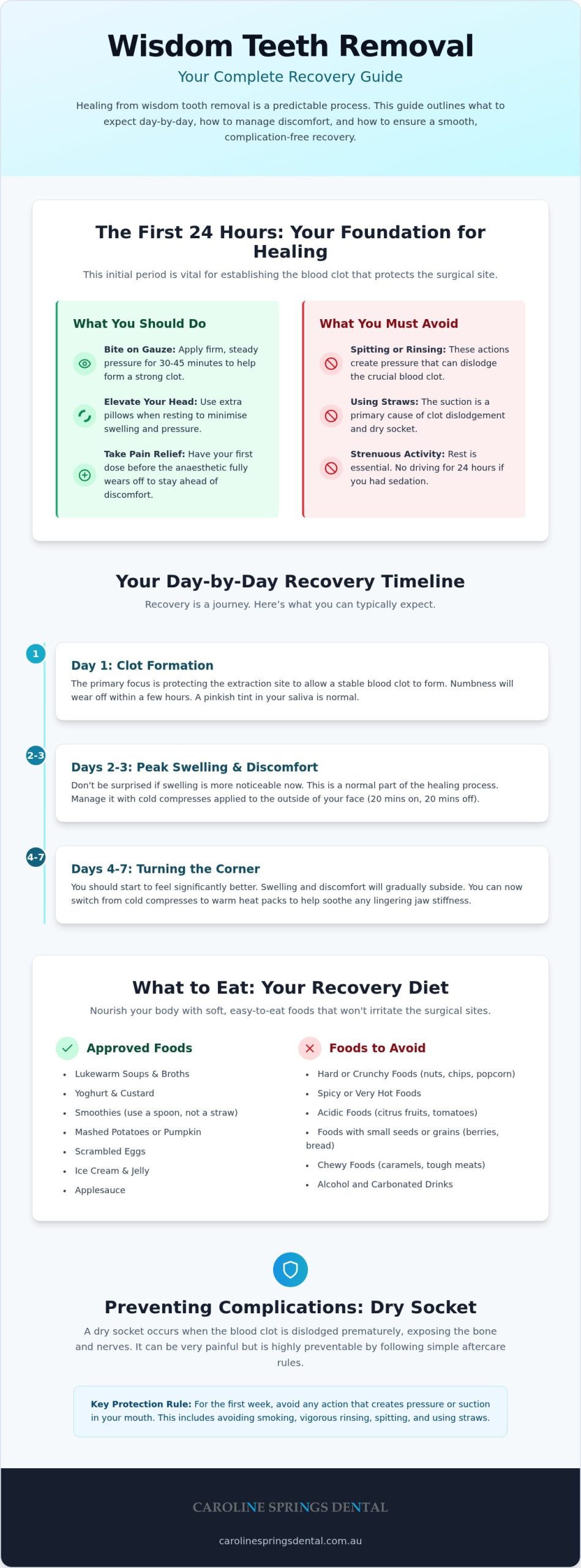
The “Golden Hour” refers to the first sixty minutes after your wisdom tooth extraction. During this time, your primary job is to maintain firm, steady pressure on the gauze packs placed over the surgical sites. Biting down firmly helps to stop any minor bleeding and encourages a strong clot to form. We recommend keeping the original gauze in place for at least 30 to 45 minutes before checking the site.
You must avoid the temptation to spit, rinse your mouth, or use straws during this first day. These actions create suction or pressure that can easily dislodge the forming clot. If you’ve had sedation, ensure you have a friend or family member ready to drive you home to Caroline Springs or Deanside. You shouldn’t operate a vehicle or make important decisions for at least 24 hours, so use this time to catch up on your favourite shows and let your body focus entirely on repair.
Establishing the Blood Clot: Why It Is Crucial
Think of the blood clot as a biological bandage. It’s a natural protective layer that covers the newly exposed bone and nerve endings in the socket. Without this clot, the site is vulnerable to various complications of tooth extraction, such as dry socket, which can be quite painful. Clot stabilisation is the process where the initial blood mass firms up to seal the socket, a delicate phase that requires 24 hours of undisturbed rest.
It’s common to see some oozing during the first 24 hours; this often looks like more blood than it actually is because it mixes with your saliva. A pinkish tint to your spit is perfectly normal. However, if you experience bright red, heavy bleeding that doesn’t slow down after biting on fresh gauze, it’s time to give us a call. Our team is just down the road and always ready to provide the reassurance and care you need to ensure your wisdom teeth removal recovery stays on the right track.
Your Wisdom Teeth Recovery Timeline: What to Expect Each Day
Recovery is a journey, not a race. While the first 24 hours focus on the critical task of clot formation, the following days are about managing your body’s natural inflammatory response. Understanding wisdom teeth removal recovery as a set of predictable stages allows you to plan your week without the stress of the unknown. Most patients find that having a clear Your Wisdom Teeth Recovery Timeline helps them stay calm even when the “chipmunk cheeks” appear on day two.
Days 1–3: Managing Peak Swelling and Discomfort
Many patients are surprised when they wake up on day two or three looking more swollen than they did immediately after the surgery. This is a perfectly normal biological reaction as your body sends extra blood and repair cells to the extraction sites. During these first 48 hours, cold compresses are your best friend. Apply them to the outside of your face for 20 minutes on and 20 minutes off to help constrict blood vessels and limit the puffiness. Once you pass the 72-hour mark, you can switch to warm heat packs. This transition helps to relax the jaw muscles and soothe any lingering stiffness as the initial inflammation begins to subside.
Days 4–7: Turning the Corner and Resuming Activity
This is typically the period where you’ll start to feel like yourself again. You can gradually move beyond liquids and start introducing soft foods like lukewarm mashed pumpkin, scrambled eggs, or flaky fish. For most students and office workers, a 3-day rest period is the “sweet spot” before returning to regular duties. However, if you’re an athlete or a regular at the local gym, you should remain cautious. High-intensity exercise or contact sports can cause blood pressure spikes that might disturb the healing sockets. We generally recommend waiting at least a full week before returning to heavy lifting or vigorous training to ensure your wisdom teeth removal recovery stays on a steady path.
Week 2 and Beyond: Long-term Healing
By the second week, the visible “hole” in your gum will begin to look shallower as new, pink tissue fills the space. While the surface might feel closed and the pain has likely vanished, the bone underneath is still busy remodelling, a process that can take several months to complete. It’s common to feel occasional minor “twinges” during this time as the area settles. If you notice a persistent foul taste or bad breath at this stage, it could be food debris trapped in the healing site. If you have any lingering questions about how your gums are looking, you can always book a quick follow-up chat with our team to ensure everything is healing exactly as it should be.
Pain Management and Nutrition: A Practical Guide to Comfort
Achieving a stress-free wisdom teeth removal recovery depends on two main factors: how you manage discomfort and how you fuel your body. While your mouth needs time to rest, your system requires specific nutrients to repair tissue and keep your energy levels steady. Many patients worry about the pain “hitting” them as soon as they get home, but by following a structured approach, you can keep your comfort levels high and your healing on track.
Staying hydrated is equally vital, though the method you use to drink is more important than the volume. You must avoid using straws for at least a week, as the suction can easily dislodge the protective blood clot. Instead, take small sips directly from a glass or use a spoon. Keeping your fluids up helps your body flush out the medications and prevents the fatigue that often accompanies the first few days of rest.
Effective Pain Relief Strategies at Home
The most successful way to handle post-operative soreness is to “stay ahead” of it. This means taking your prescribed or recommended relief before the local anaesthetic completely wears off. Preventative pain management involves taking scheduled doses every four to six hours for the first two days rather than waiting for sharp discomfort to return. Most Australian chemists stock paracetamol and ibuprofen, which can often be “cycled” or taken in a specific sequence under professional guidance to provide continuous coverage.
Beyond medication, natural comfort measures play a significant role in your Pain Management and Nutrition plan. Once the first 24 hours have passed, you can begin gentle salt water rinses. Dissolve half a teaspoon of salt in a cup of lukewarm water and let it soak over the extraction sites; don’t swish vigorously. Combine this with plenty of sleep, as your body does its best repair work while you are in deep rest.
The Wisdom Tooth Diet: What to Eat (and Avoid)
Your diet will evolve as your jaw regains its range of motion. For the first 48 hours, stick to cool liquids and very soft options like smoothies, yoghurt, or lukewarm pureed soups. Avoid anything hot, as heat can increase blood flow to the area and cause throbbing. From day three to five, you can move on to “fork-mashable” foods such as scrambled eggs, mashed pumpkin, or well-cooked pasta. These provide the protein and carbohydrates needed for tissue regeneration without requiring heavy chewing.
There is a “Danger List” of foods you should strictly avoid for at least seven days. This includes popcorn, nuts, seeds, and spicy dishes, as small particles can become trapped in the healing sockets and lead to irritation or infection. While we focus on your immediate comfort now, maintaining your oral health is a lifelong journey. You can learn about our restorative dentistry services to see how we help keep your entire smile healthy and functional long after your wisdom teeth removal recovery is complete.
Avoiding Complications: Dry Socket and Infection Prevention
While most of our patients in Caroline Springs enjoy a straightforward wisdom teeth removal recovery, it’s vital to stay vigilant about the signs of potential complications. Most issues are rare; however, they are often preventable if you follow your aftercare instructions to the letter. Distinguishing between the expected soreness of healing and a genuine complication like dry socket ensures you get the right help at the right time without unnecessary stress.
Infection is another concern that can sometimes surface several days after you think you’ve finished the hardest part of healing. Your body is working hard to seal the extraction sites, but bacteria can still find their way in if the area isn’t kept clean. By staying observant and maintaining a gentle routine, much like the professional hygiene standards at Dental Plus, you can ensure your path to a full recovery remains smooth and predictable.
Identifying and Preventing Dry Socket
Alveolar Osteitis, or dry socket, is the most frequent complication following an extraction. It happens when the protective blood clot is lost before the underlying tissue has had enough time to cover the bone. This typically manifests as a sudden, intense throbbing pain that starts three to four days after your surgery. A key indicator is pain that radiates from the jaw up towards the ear on the same side. For smokers and those who vape, the risk is significantly higher. The physical act of inhaling creates suction that can pull the clot right out of its place; chemicals in the vapour also restrict blood flow, so you must abstain for at least 72 hours to protect your healing site.
Oral Hygiene While Your Gums Are Healing
Keeping your mouth clean is essential for preventing infection, but you must be careful not to be too enthusiastic. Continue brushing your remaining teeth as usual, but use a soft-bristled brush and move slowly as you approach the back of your mouth. To clean the surgical areas, use the “gentle tilt” method with a lukewarm salt water solution. Take a small sip, tilt your head so the liquid pools over the extraction site, and then simply lean over the basin and let the water fall out. Never spit or swish vigorously, as this pressure is exactly what causes the complications we want to avoid.
You should monitor your progress closely and contact our clinic immediately if you experience any of these “red flag” symptoms:
- A persistent fever or feeling of being generally unwell;
- Visible pus or a thick yellow or grey discharge from the socket;
- Difficulty breathing or swallowing;
- Severe pain that isn’t relieved by your prescribed medication;
- Uncontrolled bleeding that doesn’t stop with firm pressure.
If you are experiencing any of these signs, our team is just down the road to provide emergency dentistry support and get your wisdom teeth removal recovery back on track.
Professional Wisdom Tooth Care in Caroline Springs and Melbourne’s West
When you’re planning your wisdom teeth removal recovery, where you choose to have the procedure matters as much as how you manage the gauze. Selecting a clinic close to home provides more than just a shorter commute; it offers a sense of security and continuity of care that’s hard to find elsewhere. We’ve spent years serving families across Caroline Springs, Burnside, Taylors Hill, and Fraser Rise, building a reputation for gentle, community-focused dentistry that puts patient comfort first.
Our team provides comprehensive pre-operative consultations to ensure your recovery plan is tailored specifically to your health history and lifestyle. We don’t believe in a one-size-fits-all approach. By understanding your concerns and goals before the day of the procedure, we can provide the specific guidance you need to feel calm and prepared, making your wisdom teeth removal recovery as predictable as possible.
If your recovery plan requires additional home-based assistance or specialised care, you may wish to check out WithCare Support Services, a registered NDIS provider serving the Melbourne community.
Why Local Expertise Matters for Your Extraction
The convenience of choosing a dentist in the Western Suburbs cannot be overstated. No one wants to navigate heavy traffic on the Western Ring Road or the Melton Highway while they’re still feeling groggy from sedation. Being just down the road means you can be tucked up on your own sofa in Deanside or Taylors Hill within minutes of finishing your appointment. This proximity also means that if you have any minor concerns or questions during those first few days, you’re only a short drive away from a professional face-to-face check-in.
We also understand the practical side of dental care for local families. Our team is well-versed in working with various Australian health funds and offers a range of flexible payment options to ensure that essential care remains accessible. You’ll receive personalised attention from a team that likely already knows your family’s dental history, providing a level of trust and familiarity that large, impersonal city clinics often lack.
Booking Your Follow-up and Long-term Oral Health
The journey doesn’t end once the extraction is over. A post-operative check-up is a vital part of the process, allowing us to confirm that the gum tissue is closing correctly and that no food debris is causing irritation. This visit is also a great time to discuss how your wisdom tooth care fits into your broader family dentistry routine. We view ourselves as your partners in long-term health, ensuring that every procedure we perform contributes to a lifetime of confident smiles.
If you’re noticing those familiar twinges of wisdom tooth discomfort or if it’s simply time to get an expert opinion on your third molars, don’t wait for the pain to become an emergency. Taking a proactive step now can save you from a lot of stress later. Book your wisdom tooth consultation at Caroline Springs Dental today and let us help you move toward a healthy, pain-free future with the care and respect you deserve.
Taking the Next Step Toward a Comfortable Recovery
Navigating your wisdom teeth removal recovery doesn’t have to be a stressful experience. By protecting the initial blood clot and staying ahead of discomfort with a structured pain management plan, you’re already halfway to success. It’s important to be patient with your body as it moves through the natural inflammatory process; remember to keep those surgical sites clean with gentle care and stick to soft, nutritious foods while you heal.
At Caroline Springs Dental, we’ve spent years providing expert restorative and surgical dentistry to our community in the Western Suburbs. We pride ourselves on offering empathetic care for even the most nervous patients, ensuring you feel supported from your very first consultation. We’re committed to making your dental journey as predictable and stress-free as possible.
If you have questions about your third molars or want to ensure your path to healing is in expert hands, you can Book Your Wisdom Tooth Consultation at Caroline Springs Dental today. We look forward to helping you achieve a healthy, pain-free smile with the personalised attention you deserve.
Frequently Asked Questions
How many days should I take off work for wisdom teeth recovery?
Most patients find that taking three to four days off is the ideal balance for a smooth wisdom teeth removal recovery. If your job involves heavy lifting or intense physical activity, you may need a full week of rest to prevent blood pressure spikes that could disturb the healing sockets. For those with desk-based roles, returning after 48 to 72 hours is often possible if your discomfort is well-managed.
What can I eat after wisdom teeth removal on day 1?
On your first day, stick to cool or lukewarm liquids and very soft foods that require no chewing at all. Excellent options include Greek yoghurt, smooth apple sauce, or lukewarm pureed soups that have been strained. It’s vital to avoid hot drinks or spicy foods during these first 24 hours, as heat can increase swelling and potentially interfere with the essential blood clot formation.
Is it normal to have a ‘hole’ in my gum after wisdom tooth extraction?
Yes, it is completely normal to see a small indentation or ‘hole’ where the tooth was removed. This is the empty socket, which will gradually fill with new gum tissue and eventually new bone over the coming weeks. While the surface of the gum usually looks much smoother after about 14 days, the deeper remodelling process continues beneath the surface for several months.
When can I start exercising again after getting my wisdom teeth out?
You should wait at least three to four days before attempting light exercise, such as a gentle stroll around your local park. For high-intensity training, heavy lifting at the gym, or contact sports, we recommend waiting at least seven to ten days. Elevating your heart rate too early can cause the extraction site to throb or bleed, which can delay your overall wisdom teeth removal recovery.
How do I know if I have a dry socket or just normal pain?
Normal post-operative pain typically peaks within the first 72 hours and gradually improves with medication and rest. In contrast, dry socket usually presents as a sudden, intense throbbing pain that begins three or four days after the procedure. This pain often radiates toward the ear and is frequently accompanied by a foul taste in the mouth or persistent bad breath that wasn’t there before.
Can I brush my teeth the day after wisdom tooth surgery?
You can and should brush your teeth the day after your surgery, but you must be extremely careful. Use a soft-bristled toothbrush and avoid the surgical sites entirely for the first few days to prevent disturbing the clots. When you need to rinse, do not spit; instead, lean over the basin and let the water or gentle salt solution fall naturally from your mouth.
What should I do if the bleeding doesn’t stop after an hour?
If minor oozing continues, place a fresh, damp gauze pad or a moistened black tea bag over the site and bite down firmly for another 45 minutes. The tannic acid in the tea bag can help constrict blood vessels and encourage clotting. However, if you experience heavy, bright red bleeding that does not slow down with firm pressure, you should contact our clinic or an emergency dentist immediately.
How long after wisdom teeth removal can I drink coffee or tea?
You should wait at least 24 hours before having coffee or tea, and it must be lukewarm or cool rather than hot. High temperatures can dissolve the developing blood clot and lead to painful complications like dry socket. Always drink directly from a cup and avoid using straws for at least seven days, as the suction can easily dislodge the protective clot from the socket.