


Did you know that roughly 85% of people will need their wisdom teeth removed at some point in their lives? While many expect a week of discomfort, following a structured 72 hour protocol can virtually eliminate the risk of complications like dry socket. If you’re currently preparing for your procedure or sitting at home in Caroline Springs wondering when you can finally enjoy a proper meal again, you aren’t alone. Managing your wisdom tooth extraction recovery doesn’t have to be a guessing game filled with anxiety or missed days at work. It’s a process that, when handled with the right steps, is often much simpler than patients imagine.
We understand that the thought of dental surgery can feel a bit daunting, especially when you’re worried about pain or knowing which foods are safe to eat. This guide provides everything you need to master your healing journey with confidence and ease. We’ll walk you through a comprehensive day by day timeline, effective pain management strategies, and expert tips for a smooth, pain free result. You’ll learn exactly how to maintain your oral hygiene and precisely when it’s time to reach out to your dentist for a chat.
Key Takeaways
- Learn why the first 24 hours are vital for protecting the blood clot and how to apply firm pressure to manage initial bleeding effectively.
- Discover our day-by-day wisdom tooth extraction recovery timeline so you know exactly what to expect regarding swelling and healing milestones.
- Master pain management by organising your medication schedule early and understanding the steps to prevent the discomfort of a dry socket.
- Transition safely from “liquid gold” meals to soft food staples like mashed pumpkin and avocado without irritating your surgical sites.
- Recognise the specific red flags, such as persistent fever or radiating pain, that indicate it’s time to call your local dentist for advice.
The First 24 Hours: A Critical Checklist for Smooth Healing
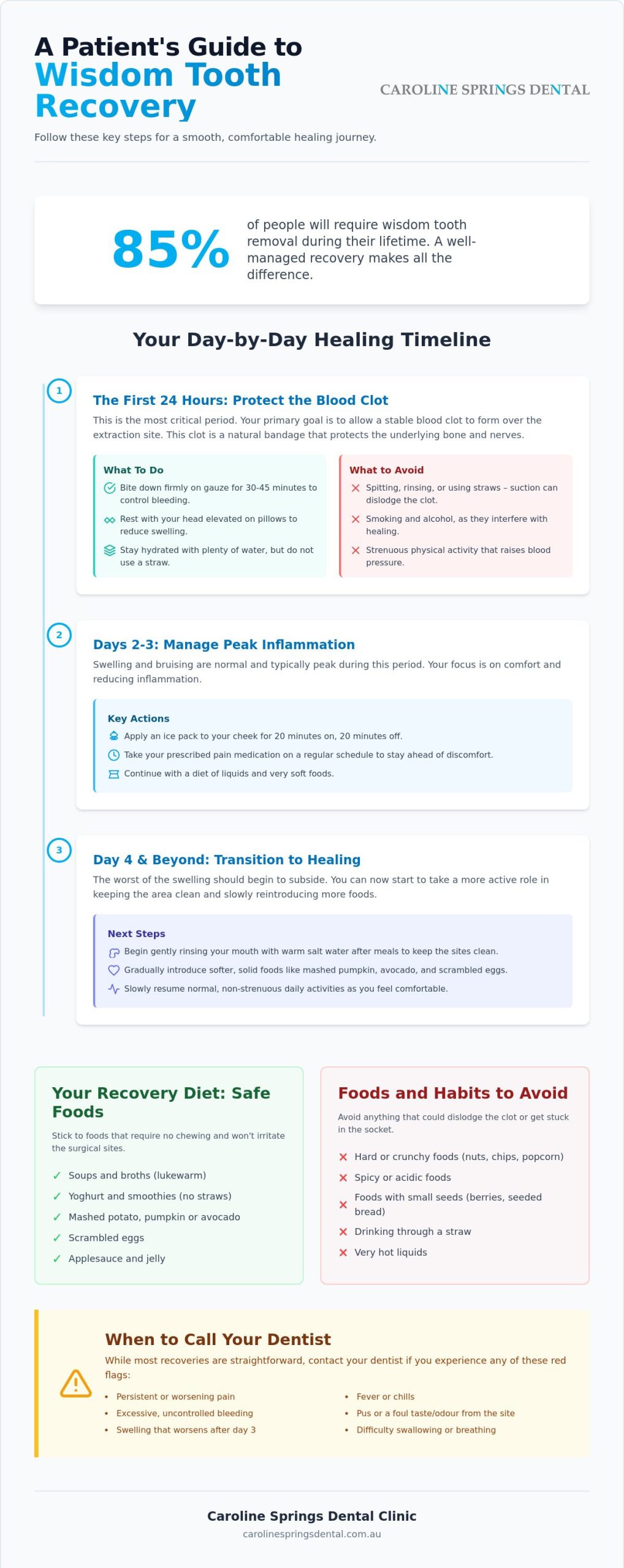
The first day following your procedure is the most influential period for your entire wisdom tooth extraction recovery. It’s when your body begins the delicate process of knitting tissue back together. Your main priority during these initial hours is protecting the surgical site and allowing a stable blood clot to form. This clot acts as a natural bandage, sealing the area to keep nerves and bone protected while the healing begins. If this stage is managed carefully, you set yourself up for a much faster and more comfortable experience.
When you leave the clinic, you’ll likely have gauze packs placed over the extraction sites. It’s vital to keep biting down with firm, steady pressure for about 30 to 45 minutes. If bleeding continues after you remove the first set, replace the gauze with a fresh, damp pad and continue the pressure. This simple action is your first line of defence against post-operative complications such as prolonged bleeding or delayed healing.
There are three things you must avoid at all costs: spitting, using straws, and smoking. The suction created by these actions can easily dislodge the newly formed blood clot. If that clot is lost, you risk developing a dry socket, which is a painful condition that significantly delays your progress. Even if you notice a metallic taste or a bit of oozing, resist the urge to rinse vigorously or spit; instead, gently dab your mouth with a clean tissue or let any excess fluid fall into the sink without force.
Managing the Immediate Post-Op Window
You can usually remove your initial gauze packs once the active bleeding has subsided to a slow ooze. The blood clot is the hero of your recovery because it provides the essential framework for new tissue to grow and prevents the underlying bone from being exposed to air or food. While it’s tempting to clean your mouth thoroughly, avoid any rinsing for the first 24 hours to ensure that the clot remains undisturbed and secure. If you’re concerned about your progress, you can find more details on our tooth extraction service page.
Rest and Activity Restrictions
“Taking it easy” isn’t just a suggestion; it’s a physiological requirement for a smooth wisdom tooth extraction recovery. When you engage in physical exertion, your heart rate and blood pressure rise, which can lead to increased throbbing and renewed bleeding at the surgical site. Plan to spend your first day resting on a couch or bed with your head elevated above your heart using a few extra pillows. This elevation helps reduce swelling and keeps the pressure in your jaw manageable. You can usually resume very light walking around your home by the evening, but keep the gym and heavy lifting off your schedule for at least a few days.
Your Day-by-Day Wisdom Tooth Recovery Timeline
Understanding the roadmap of your wisdom tooth extraction recovery helps take the guesswork out of the healing process. While the first day is all about stability, the following week involves managing your body’s natural inflammatory response. Most patients find that having a clear schedule of what to expect reduces the urge to worry about every small sensation. You can find excellent general guidance on recovery from wisdom tooth removal from major health authorities to supplement your specific clinical instructions.
Day one often feels like a waiting game. As the local anaesthetic wears off in the first few hours, you’ll start to feel a dull ache, which is your signal to begin your pain management routine as directed. Keep your activity low and your fluids high, focusing on staying hydrated without using a straw. This is the period where the blood clot is most vulnerable, so treat your mouth with extra care.
Day 1 to 3: The Peak Inflammation Phase
Don’t be surprised if you wake up on day two or three looking a bit like a chipmunk. Swelling and even some light bruising are completely normal signs that your immune system is working hard to repair the surgical site. Swelling typically peaks around 48 to 72 hours after the procedure. To keep this manageable, use an ice pack for 20 minutes on and 20 minutes off during your waking hours. This helps constrict blood vessels and numbs the area naturally. If you have questions about your specific symptoms, our team is always happy to provide patient information to put your mind at rest.
By day four, the worst of the swelling usually begins to subside. This is the ideal time to start gentle salt water rinses after meals to keep the area clean. Mix about half a teaspoon of salt into a cup of warm water and let it soak over the site rather than swishing aggressively. You’ll likely notice you can open your mouth a little wider each day as the initial tightness begins to fade.
Day 4 to 14: The Road to Full Function
Pain Management and Preventing Dry Socket
Managing your comfort during wisdom tooth extraction recovery is about staying ahead of the pain curve rather than chasing it. While some tenderness is a natural part of the healing process, it should never feel unmanageable. Most patients find that the most intense sensations occur as the local anaesthetic begins to wear off, which is why we recommend organising your first dose of pain relief before the numbness has completely faded. By establishing a steady medication schedule in those early hours, you can keep the discomfort at a dull ache rather than a sharp distraction.
The most common concern during this stage is a condition called dry socket, or alveolar osteitis. Dry socket occurs when the blood clot meant to protect your healing jaw is lost or fails to form, leaving the underlying bone and sensitive nerves exposed to the air and food particles. This exposure causes a throbbing pain that often radiates toward the ear and can be far more intense than standard post-operative soreness. Following a precise schedule for wisdom tooth extraction aftercare is the best way to ensure that clot stays exactly where it belongs.
The Science of Dry Socket Prevention
Preventing dry socket is largely a matter of physics. When you use a straw or smoke, you create a vacuum in your mouth; this negative pressure can literally pull the blood clot out of the socket. It’s also vital to maintain gentle oral hygiene. While you should avoid the surgical site itself for the first 24 hours, keeping the rest of your mouth clean prevents bacteria from causing infections that can break down the clot. If you’re experiencing sharp, radiating pain but haven’t had an extraction recently, you might be looking for information on root canal treatment Caroline Springs instead, as the sensations of deep dental pain can sometimes be confused.
Medication and Home Remedies
Your dentist will provide specific advice on which over the counter or prescribed analgesics are right for you. A common mistake is placing an aspirin tablet directly on the gum near the extraction site; you should never do this, as it can cause a chemical burn on the delicate tissue. After the first 48 hours, you can transition from ice packs to natural comfort measures like warm compresses. Applying a gentle heat pack to the side of your face for 15 minutes at a time helps improve blood flow to the area, which can soothe aching muscles and speed up the final stages of your wisdom tooth extraction recovery. Knowing the difference between the expected dull ache of healing and the sharp, persistent pain of a complication is the key to a stress free journey.
The Wisdom Tooth Diet: What to Eat and Avoid
Dietary choices play a massive role in the speed and comfort of your wisdom tooth extraction recovery. While it might feel restrictive at first, viewing your meals as recovery fuel helps you stay focused on the end goal: a healthy, pain free smile. For the first few days, your mantra should be cool, soft, and nutritious. Choosing the right textures ensures you don’t accidentally disturb the surgical site while providing your body with the energy it needs to knit tissue back together.
Safe Food List for the First 72 Hours
During the first 24 hours, often called the liquid gold phase, you should stick to lukewarm or cold liquids. It’s vital to avoid hot drinks like coffee or boiling soup because high temperatures can actually dissolve the blood clot before it has a chance to stabilise. Focus on lukewarm pumpkin or vegetable soup (strained to remove chunks), Greek yoghurt, custard, and smoothies. Remember to eat your smoothies with a spoon rather than a straw to avoid creating suction.
As you move into days two and three, you can begin incorporating more texture. Protein and Vitamin C are essential for tissue repair, so try to include these soft staples in your routine:
- Mashed avocado or well cooked mashed pumpkin
- Silken tofu or very soft scrambled eggs
- Hummus or smooth bean mashes
- Flaky, poached white fish that requires no chewing
Gradual Reintroduction of Solids
Knowing when to move back to your regular diet is often a matter of the fork-tender test. If you can easily mash the food with the back of a fork, it’s likely safe to eat. When you do start chewing, try to keep the food on the opposite side of your mouth to protect the surgical sites. This gradual transition helps prevent jaw fatigue and keeps the healing sockets clear of debris.
Even as you feel better, some foods remain off-limits for at least two weeks. Anything with small seeds, like strawberries or sesame, can become trapped in the socket. Spicy seasonings can irritate raw tissue, while sharp edges like corn chips and crusty bread can cause physical trauma to the area. Popcorn and nuts are particularly risky because small fragments can easily become lodged in the healing site, potentially leading to infection. If you have any concerns about your progress or need specific advice on your wisdom tooth extraction recovery, you can always book a follow-up appointment with our team to ensure your healing is on track.
When to Call Your Caroline Springs Dentist
While most patients enjoy a smooth and predictable wisdom tooth extraction recovery, it’s vital to stay vigilant about how your body is responding. Most discomfort peaks and then gradually fades within a few days. However, if you notice your symptoms are getting worse instead of better after the third day, it might be time for a professional review. We always prefer our patients to call with a “just in case” question rather than sit at home feeling anxious or in pain.
Keep an eye out for specific red flags that require a prompt call to our clinic. A persistent fever, for instance, is often a sign that your body is fighting an infection. While a small amount of oozing is normal in the first 24 hours, bleeding that remains heavy and bright red despite firm pressure needs immediate attention. Similarly, a foul taste or persistent bad breath that doesn’t go away with gentle salt-water rinsing could indicate that food particles or bacteria have become trapped in the socket, requiring a professional clean.
If you experience severe, throbbing pain that radiates from the extraction site toward your ear or temple, this is a classic sign of a dry socket. Another symptom to watch for is prolonged numbness. While the local anaesthetic usually wears off within a few hours, if you still feel “pins and needles” or a lack of sensation in your lip, chin, or tongue after 24 hours, please let us know. This allows us to monitor any nerve sensitivity and ensure your healing is progressing as it should.
Identifying Urgent Complications
Distinguishing between normal post-op swelling and a burgeoning infection can be tricky. Normal swelling should be relatively soft and start to decrease after day three. If the area becomes hard, red, or hot to the touch, or if you notice any “salty” or foul discharge from the site, these are clear indicators that an infection may be present. For urgent concerns or unexpected issues, you can refer to our guidance on dental emergencies to help you decide on the next best step.
Local Care in the Western Suburbs
Choosing a local family dentist right here in Caroline Springs makes your post-operative care much simpler. You don’t want to be stuck in heavy traffic when you need a quick check-up or a bit of reassurance. Our team is committed to providing gentle, restorative care that prioritises your comfort and long-term health. We view ourselves as your partners in this journey, ensuring every member of your family feels cared for and respected. Ready to book your consultation? Contact Caroline Springs Dental Clinic today to ensure your wisdom tooth extraction recovery is as smooth and stress-free as possible.
Embrace a Smooth Path to Healing
Mastering your wisdom tooth extraction recovery is entirely possible when you have the right information and a proactive plan. By focusing on clot stability during the first 24 hours and gradually reintroducing soft, nutritious foods, you’re taking the most important steps toward a pain-free result. Healing is a journey that requires patience; however, following a structured timeline ensures you’ll be back to your normal routine in Caroline Springs before you know it.
Our team has been serving the local community and the Western Suburbs for many years, bringing expertise in gentle restorative care and children’s dentistry to every appointment. We don’t just perform the procedure; we provide comprehensive aftercare support for all our surgical patients to ensure you feel supported at every stage. If you’re looking for a dental partner who prioritises your comfort and long-term health, we’re ready to assist you. Book your wisdom tooth consultation at Caroline Springs Dental Clinic today to get started. You’ve got this, and we’re here to make sure your recovery is as easy and predictable as it can be.
Frequently Asked Questions
How long does it take to recover from wisdom teeth removal surgery?
Most patients feel back to their usual selves within 7 to 10 days, though the full wisdom tooth extraction recovery for the underlying bone can take several months. You’ll likely experience the peak of discomfort and swelling in the first 72 hours. By the end of the first week, the soft tissue has usually healed enough for you to resume most daily activities comfortably.
When can I start eating solid food again after extraction?
You can typically begin reintroducing solid foods between day 4 and day 7, depending on your comfort and ability to chew. It’s best to start with “fork-tender” items like soft pasta or well-cooked vegetables before moving to tougher textures. Always avoid crunchy or sharp foods like corn chips and nuts for at least two weeks to prevent irritating the healing surgical site.
Is it normal to have a hole in my gums after wisdom tooth surgery?
Yes, it is completely normal to see a small indentation or “hole” where the tooth was removed. This is the empty socket, and it will gradually fill in with new gum tissue and eventually bone over the coming months. Keep the area clean by using gentle salt-water rinses to prevent food debris from becoming trapped while the tissue slowly closes over the gap.
How do I know if I have a dry socket or just normal pain?
Normal pain is a dull ache that improves daily, while a dry socket causes intense, throbbing pain that often starts 3 to 5 days after surgery and radiates toward your ear. You might also notice a foul taste or visible bone in the socket. If your pain suddenly increases or feels unmanageable with your prescribed medication, you should contact our clinic for a professional review.
Can I brush my teeth the night of the surgery?
You can gently brush your other teeth on the night of your surgery, but you must avoid the teeth directly next to the extraction site. Be extremely careful not to spit or rinse vigorously, as the pressure can dislodge the vital blood clot. Instead, let any excess toothpaste fall out of your mouth into the sink naturally to ensure the surgical area remains undisturbed.
When is it safe to return to school or work in Caroline Springs?
Most patients are ready to return to school or work within 2 to 3 days, provided their role doesn’t involve heavy physical exertion. If your job requires significant lifting or talking, you might prefer to wait until the peak swelling subsides around day 4. Our team can provide a medical certificate if you need a few extra days for your wisdom tooth extraction recovery.
Why does my breath smell bad after wisdom tooth removal?
Bad breath is usually caused by bacteria or tiny food particles becoming trapped in the socket during the early stages of healing. It can also be a byproduct of the natural inflammatory process or old blood within the site. If the smell is persistent and accompanied by severe pain or a foul discharge, it’s important to have it checked to rule out a possible infection.
How long should I keep the gauze in my mouth?
You should keep the initial gauze pad in place for approximately 30 to 45 minutes, maintaining firm and steady pressure with your jaw. If the site is still oozing after you remove the first pad, replace it with a fresh, damp piece of gauze for another 30 minutes. Once the active bleeding has slowed to a minor ooze, you can stop using the gauze entirely.