


What if your child’s first trip to the dentist was actually the highlight of their week? Many Melbourne parents feel a genuine knot of anxiety when booking a dental checkup for toddlers, often worrying about potential tears, tantrums, or even feeling a bit of guilt over dummy use. It’s completely natural to feel overwhelmed by conflicting advice on the right age to start or how to manage a little one who simply won’t sit still.
We understand these common concerns and believe that early oral health should be a positive, stress-free experience for the whole family. This guide will help you master the art of the “happy visit” by providing practical tips to use at home before your appointment. We will walk you through exactly what happens during the checkup and explain how to check your eligibility for the $1,158 Child Dental Benefits Schedule (CDBS) for 2026. By the end of this article, you’ll have the confidence and tools to build a foundation for your child’s lifelong healthy smile.
Key Takeaways
- Learn why the “First Year, First Visit” rule is the gold standard for preventative care and why waiting until preschool age can be a missed opportunity.
- Discover how to pick the perfect time of day for an appointment and which non-scary words to use when talking about the dentist at home.
- Understand exactly what happens during a dental checkup for toddlers, including the gentle “knee-to-knee” exam that lets your child stay in the comfort of your lap.
- Master the “spit, don’t rinse” habit and get actionable strategies to help your toddler overcome toothbrushing tantrums.
- Find out if your child is eligible for the $1,158 Child Dental Benefits Schedule (CDBS) to help cover the cost of essential preventative treatments.
When Should Your Toddler Have Their First Dental Checkup?
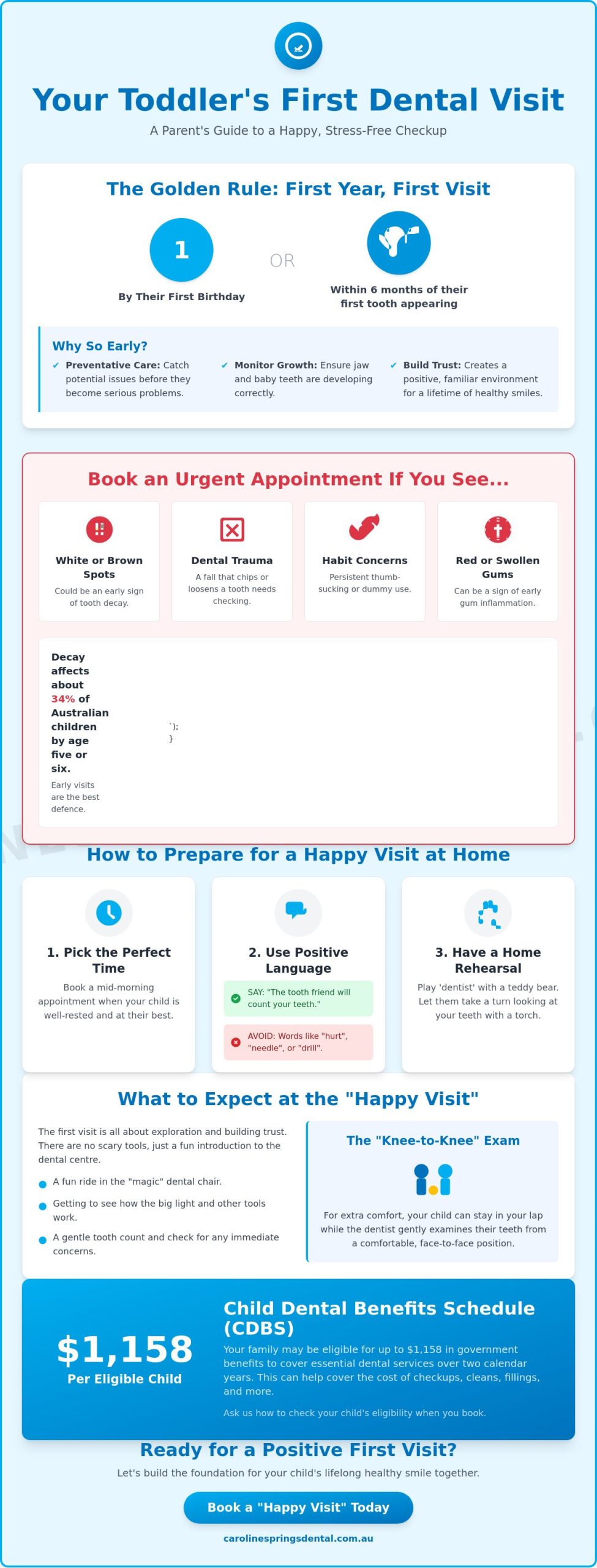
Most Melbourne parents are surprised to learn that a child’s first trip to the clinic should happen much earlier than they expect. The Australian Dental Association recommends the “First Year, First Visit” rule. This means booking a dental checkup for toddlers by their first birthday or within six months of their first tooth appearing. It might feel early, especially if they only have a few tiny teeth, but this timing is crucial for long-term oral health.
Waiting until your child is three or four years old often means missing the window for simple preventative care. Pediatric dentists and family practitioners emphasize this early start because it allows us to monitor jaw development and ensure baby teeth are erupting correctly. These primary teeth aren’t just temporary; they act as essential placeholders for adult teeth. If a baby tooth is lost too early due to decay, it can cause crowding or alignment issues when permanent teeth eventually arrive. Starting early also helps desensitise your little one to the unique sights, sounds, and smells of a dental practice, turning a potentially scary environment into a familiar, friendly place.
The “Happy Visit” Philosophy
At our centre, we view the first appointment as a “Happy Visit.” This isn’t about clinical procedures or scary tools. Instead, it’s an exploration session designed to build trust. We focus on making the experience fun, perhaps giving them a ride in the “magic chair” or showing them how the big light works. Our team uses this time to bond with your toddler, ensuring they feel safe and respected. This gentle introduction is a core part of our children’s dentistry approach, where the goal is a positive emotional connection rather than just a physical exam.
Signs Your Toddler Needs an Urgent Appointment
While the first birthday is the standard milestone, some situations require an earlier visit. You should book an appointment immediately if you notice any of the following:
- White spots or brown stains: These can be early signs of enamel erosion or decay, which affects about 34% of Australian children by age five or six.
- Dental trauma: If your toddler has a tumble and chips a tooth or knocks it loose, it needs professional assessment to protect the underlying adult tooth.
- Habit concerns: If you’re worried about how persistent thumb-sucking or dummy use might be affecting their palate or tooth alignment.
- Gingivitis signs: Red, swollen, or bleeding gums can indicate early-stage gum disease, which is more common in young children than many realise.
Early intervention is always the gentlest path. By staying proactive, you can ensure your child’s first dental checkup for toddlers is a celebration of health rather than a response to pain.
How to Prepare Your Toddler for the Dentist at Home
A successful dental checkup for toddlers is often the result of a little bit of “theatre” at home. Preparation should start several days before the actual appointment to help your child feel like they are heading off on a small adventure rather than into the unknown. The goal is to make the dental clinic feel like a familiar place before you even park the car.
Timing is everything. When booking your visit, try to aim for a mid-morning slot. Most little ones are at their best after breakfast but well before the midday nap or the dreaded afternoon “witching hour.” A well-rested child is much more likely to be curious and cooperative. During the lead-up, use storybooks featuring favourite characters visiting the dentist. These books help familiarise them with the “big chair” and the idea of someone looking into their mouth in a non-threatening way.
The language you use at home sets the emotional tone. Avoid using words like “hurt,” “needle,” or “drill,” even if you are trying to reassure them that these things won’t happen. Instead, focus on the positive. Tell them the dentist is a “tooth friend” who wants to count their beautiful teeth and give them a special shine. If you need more tips on framing these conversations, you can explore our approach to children’s dentistry to see how we keep things light and fun.
Step 1: The Home Rehearsal
Role play is a powerful tool for toddlers. Grab a torch and a small hand mirror to play “dentist” with their favourite teddy bear or doll. Let your child be the dentist first, “counting” the teddy’s teeth with the torch. Then, swap roles. Encourage your child to “open wide like a lion” while you take a quick peek. Making this a shared, giggly activity takes the mystery out of the process. You can even make toothbrushing a “team event” in the bathroom to reinforce that looking after teeth is just a normal part of the day.
Step 2: Managing Your Own Anxiety
It is quite common for parents to feel a bit of “dental dread” based on their own past experiences. However, toddlers are incredibly perceptive and will mirror your emotional state. Stay calm, keep your descriptions simple, and treat the visit as a routine errand, like going to the supermarket. Most importantly, never use the dentist as a threat for not brushing or for eating too many sweets. We want your child to see the clinic as a safe, welcoming space where they are the star of the show. By keeping your own vibes positive, you’re already halfway to a stress-free visit.
What to Expect During the Appointment
Walking into the clinic for a dental checkup for toddlers doesn’t have to feel like a high-stakes event. Our team focuses on making the environment feel predictable and safe. One of the most effective ways we do this is through the “knee-to-knee” examination. Instead of being placed alone in a large, intimidating chair, your toddler sits on your lap, facing you. They then lean their head back onto the dentist’s lap. This setup ensures they can see your face the entire time, providing a sense of security while allowing us a clear view of their developing smile.
We also use a technique called “show-tell-do.” Before any tool is used, we show it to your child, explain what it does in fun terms, and then use it. A mirror might be a “tooth camera,” and the air tool might be a “gentle wind.” This transparency helps remove the fear of the unknown. During this time, we also provide hands-on advice for parents. Cleaning those tricky back molars can be a struggle, so we’ll show you the best angles to ensure those hard-to-reach spots stay cavity-free.
The Physical Examination Process
The exam itself is quick and gentle. We count each tooth to ensure they are erupting on schedule and check for early signs of enamel wear, which is a key part of any dental checkup for toddlers. We also look at gum health and jaw alignment. Diet plays a massive role here; we often discuss “sippy cup” habits, as frequent access to juices or milk can lead to early decay. If necessary, we might suggest a gentle fluoride treatment to help strengthen the enamel against acids.
Parental Guidance and Education
This appointment is as much for you as it is for your child. We often discuss dummy use or thumb-sucking, as these habits can influence the shape of the palate and the alignment of future adult teeth if they continue too long. We can also suggest ways to manage teething pain that won’t compromise their oral health. For a deeper dive into long-term care, you might find our Preventative Dentistry for Children: A Parent’s Complete 2026 Guide helpful. It covers everything you need to know about keeping those little smiles bright as they grow.
Maintenance Between Checkups: Healthy Habits for Toddlers
The real work of protecting your child’s smile happens in the months between each dental checkup for toddlers. While the professional exam ensures everything is on track, daily habits are what truly prevent decay. Establishing a consistent routine now is much easier than trying to fix poor habits later in childhood. It’s about creating a positive environment where oral hygiene feels like a natural part of the day, just like putting on shoes or washing hands.
One simple habit that makes a massive difference is the “spit, don’t rinse” rule. After brushing with a pea-sized amount of low-fluoride toothpaste, encourage your toddler to spit out the excess but avoid rinsing with water. This allows a tiny amount of fluoride to remain on the teeth, providing ongoing protection against acids. We often see parents struggle with the “I don’t want to brush” phase. If you’re facing a tantrum, try to give your child a sense of control. Let them choose between two different coloured toothbrushes or pick the song you’ll listen to while brushing. Turning it into a game or a shared “copycat” activity often diffuses the tension.
Hydration is another key pillar of preventative care. In Australia, we are fortunate that most tap water is fluoridated to a level that helps strengthen developing enamel. Whenever possible, choose tap water over bottled water or fruit juices. Even “healthy” toddler snacks can be deceptive. Dried fruits like sultanas are incredibly sticky and high in concentrated sugar; they cling to the deep grooves of molars for hours. If your child does have a sticky treat, follow it up with a piece of cheese or a cup of water to help neutralise the acids.
Brushing Techniques for Tiny Teeth
For children aged 18 months to five years, use a pea-sized amount of low-fluoride toothpaste (around 500 ppm). Focus on gentle, circular motions over the teeth and gums rather than a vigorous scrubbing action. It is a common misconception that toddlers can brush independently once they have the motor skills to hold the brush. In reality, most children need active parental assistance until at least age seven to ensure they are reaching those tricky back sections effectively.
Dietary Choices for Strong Enamel
What your toddler eats is just as important as how they brush. Foods like plain yoghurt and cheese are excellent because they are low in sugar and high in calcium, which aids in dental remineralisation. For children who have particularly deep grooves in their permanent molars later on, we might discuss Fissure Sealants for Kids: The Complete 2026 Parent’s Guide as a preventative measure. For now, focus on limiting “sticky” sweets and encouraging crunchy vegetables that help stimulate saliva flow.
Ready to set your little one on the path to a lifetime of healthy smiles? Book an appointment with our friendly team today to discuss a personalised care plan for your child.
Choosing a Gentle Children’s Dentist in Caroline Springs
Finding the right environment for a dental checkup for toddlers is just as vital as the clinical care they receive. While high-volume dental centres might feel efficient, they often lack the personalised, patient-led approach that a nervous two-year-old needs. A family-oriented clinic like Caroline Springs Dental Clinic offers a different experience. It’s a place where the team takes the time to learn your child’s name, remembers their favourite toy, and understands that a little bit of extra patience goes a long way in building lifelong trust.
Seeing the same dentist for the whole family also creates a sense of continuity. When your toddler sees you sitting comfortably in the same chair and chatting with the same friendly faces, it normalises the experience. It stops being a “scary medical appointment” and becomes just another part of your family’s health routine. Our clinic is designed to feel like a warm, community-focused space rather than a cold, clinical office, making it the ideal setting for those first formative visits.
Medicare and the CDBS in Australia
We believe that every child deserves access to high-quality dental care without financial stress. The Child Dental Benefits Schedule (CDBS) is a fantastic government initiative that helps make this a reality for many Australian families. For the 2026-2027 period, the CDBS benefit cap is $1,158 per eligible child over two consecutive calendar years. This funding can be used for essential preventative services, including a dental checkup for toddlers, cleaning, and x-rays.
To be eligible in 2026, your child must be between 0 and 17 years old, be eligible for Medicare, and your family must receive a relevant government payment such as Family Tax Benefit Part A. You can easily check your current eligibility and remaining balance through your MyGov account or the Express Plus Medicare mobile app. If you’re looking for a Friendly Children’s Dentist Caroline Springs, our team can help you understand how to utilise these benefits for your child’s next visit.
Why Local Families Trust Caroline Springs Dental Clinic
Our commitment to gentle, empathetic care is why so many parents in Caroline Springs, Taylors Hill, Deanside, and St Albans choose us as their partner in oral health. We don’t rush our “Happy Visits.” We let the child set the pace, ensuring they feel in control of the situation at all times. This patient-led philosophy helps lower anxiety and prevents the development of dental phobias that can last into adulthood. Ready to start your child’s journey toward a healthy smile? You can book an appointment online today and give your toddler the positive dental experience they deserve.
Setting the Stage for a Lifetime of Healthy Smiles
Preparing for a dental checkup for toddlers is a significant milestone that shapes how your child views oral health for years to come. By starting early, using positive language at home, and choosing a supportive environment, you’re transforming a clinical appointment into a fun “Happy Visit.” Remember that these first steps don’t just protect baby teeth; they build the confidence your child needs for every future visit. Consistency is key, and the habits you establish today will serve them well into adulthood.
As a family-friendly clinic serving Melbourne’s West, we pride ourselves on our gentle children’s dentistry and patient-led approach. We understand the unique needs of little ones and offer CDBS bulk billing for eligible patients to ensure essential care is accessible for our community. Our team is here to guide you through every stage of your child’s dental development with genuine care and professional expertise.
Book Your Toddler’s First “Happy Visit” Today and let’s make their first experience one they’ll actually enjoy. We look forward to welcoming your family to our Caroline Springs centre and helping your little one start their journey with a bright, healthy smile.
Frequently Asked Questions
At what age should a toddler first see a dentist?
Your child should have their first visit by their first birthday or within six months of their first tooth appearing. This “First Year, First Visit” rule is the standard recommendation from the Australian Dental Association. Starting at this age ensures that oral health is monitored from the very beginning and helps your child feel at ease in the dental chair before any complex care is required.
What if my toddler won’t open their mouth during the checkup?
Please don’t feel embarrassed if your child is hesitant; it is a completely normal reaction for a toddler. Our team is trained to be patient and uses play-based techniques to encourage curiosity. If they won’t open wide, we focus on a “happy visit” where they might just sit in the chair or look at the tools, ensuring they leave with a positive memory for next time.
Is the first dental visit covered by Medicare?
The visit is covered if your child is eligible for the Child Dental Benefits Schedule (CDBS). This Medicare program provides a benefit cap of $1,158 over two calendar years for essential preventative services. While standard Medicare doesn’t typically cover dental, the CDBS is a specific initiative designed to help Australian families access a dental checkup for toddlers without out-of-pocket costs.
Should I brush my toddler’s teeth before their first appointment?
Yes, you should brush their teeth as part of your usual morning routine before coming in. It helps the dentist get a clear view of the enamel and gums while reinforcing the idea that dental care is a normal part of the day. If you find brushing at home difficult, we can use the appointment time to show you gentle techniques that make the process easier for both you and your child.
How often should a toddler have a dental checkup?
We generally recommend a checkup every six months to stay ahead of any potential issues. Since 34% of Australian children aged five to six have experienced tooth decay, frequent visits are essential for early detection. These regular six-monthly catch-ups also help desensitise your child to the clinical environment, making dental health a predictable and stress-free part of their life.
Can I stay in the room with my toddler during the exam?
You are more than welcome to stay right by your child’s side throughout the entire appointment. Most toddlers feel much safer when they can see their parent, and we often perform the exam while they sit comfortably on your lap. This collaborative approach allows us to explain what we see in real-time and answer any questions you have about their dental development.
What happens if the dentist finds a cavity in a baby tooth?
If decay is found, we will discuss gentle treatment options like a bonding or composite filling to restore the tooth. It is vital to treat cavities in baby teeth because they act as placeholders for adult teeth. Leaving decay untreated can lead to pain or infections that may affect the permanent teeth developing underneath, so early intervention is always the kindest choice.
How do I know if my child is eligible for the CDBS?
Eligibility is assessed by Services Australia at the beginning of each calendar year. Your child must be aged between 0 and 17, be eligible for Medicare, and your family must receive a relevant government payment such as Family Tax Benefit Part A. You can confirm your eligibility and check your remaining balance quickly through your MyGov account or the Medicare mobile app.